

Why postpartum recovery needs support: a guide for new mums
TL;DR:
- Postpartum recovery involves physical, hormonal, and emotional healing, requiring substantial support from partners and community. Strong partner involvement significantly reduces risks of depression, anxiety, and physical complications during the first three months after birth. Consistent, proactive help and social support are vital for emotional wellbeing and physical healing.
Postpartum recovery is defined as the physical, hormonal, and psychological healing process that follows childbirth, typically spanning the first 6–12 weeks after birth. This period, often called the fourth trimester, places extraordinary demands on a new mother’s body and mind. Without adequate support, the risks of postpartum depression, anxiety, and physical complications rise sharply. Understanding why postpartum recovery needs support is the first step towards building the conditions that allow genuine healing to happen.
Why postpartum recovery needs support: the physical and emotional reality
The postpartum body undergoes changes that most people underestimate. Hormones such as oestrogen and progesterone drop dramatically within hours of delivery. That crash directly affects mood, pain perception, and energy levels, often before a mother has had a single full night of sleep.

Physical recovery includes wound healing from perineal tears or caesarean incisions, uterine contraction, and the demands of breastfeeding. Each of these processes requires rest, nutrition, and time. Sleep deprivation compounds every one of them. When sleep is consistently broken, the body’s ability to repair tissue slows, pain sensitivity increases, and emotional regulation becomes significantly harder.
The emotional challenges are equally serious. Postpartum mood disorders affect 1 in 5 mothers. That figure covers postpartum depression, anxiety, and in rarer cases, postpartum psychosis. Many mothers experience a milder but still disruptive version known as the “baby blues,” which typically peaks around day three to five after birth.
Key physical and emotional challenges in the postpartum period include:
- Hormonal crashes that affect mood, sleep, and pain tolerance within the first 48 hours
- Wound healing from perineal trauma or surgical incisions requiring rest and gentle care
- Breastfeeding difficulties including nipple soreness, engorgement, and supply anxiety
- Sleep deprivation that worsens every other symptom and slows physical recovery
- Postpartum anxiety presenting as intrusive thoughts, hypervigilance, or persistent worry
- Identity shift as mothers adjust to a new role, often losing their previous sense of self
Pro Tip: If you are a partner or family member, do not wait for a new mother to ask for help. Offer specific tasks: “I will take the baby for two hours so you can sleep” lands far better than “let me know if you need anything.”
How does partner support reduce postpartum depression and anxiety?
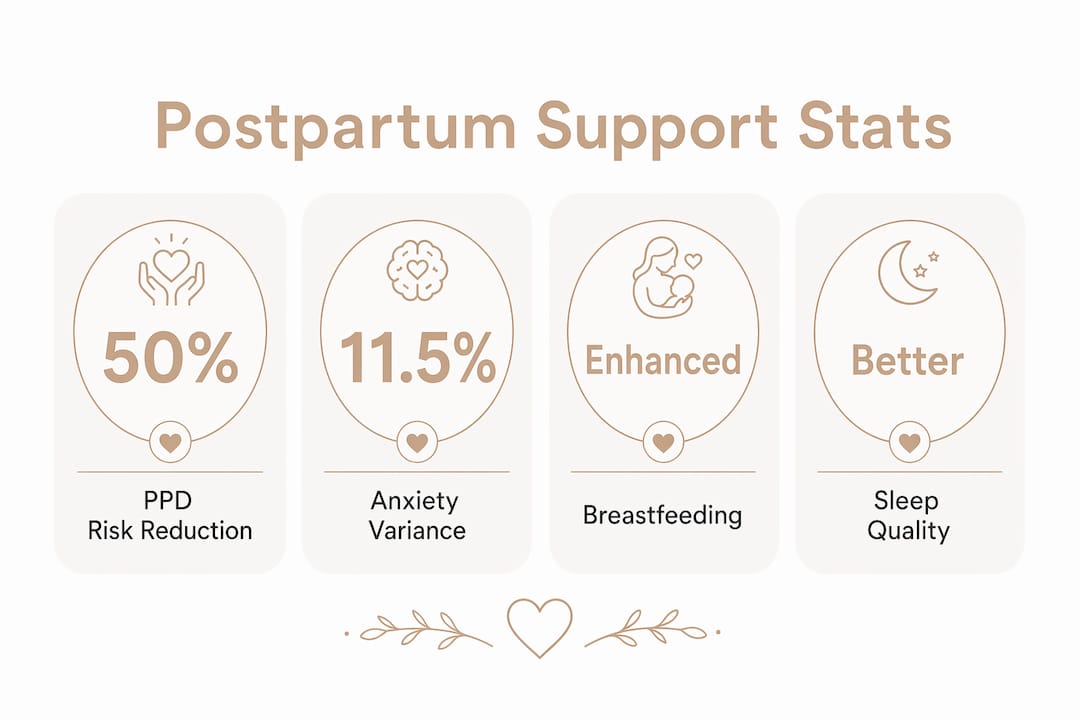
The evidence on partner support is striking. Strong partner support more than halves the risk of postpartum depression in the critical first 6–12 weeks. That is not a marginal benefit. It means the single most accessible intervention for reducing PPD risk is already present in many households.
Perceived spousal support accounts for 11.5% of variance in postpartum anxiety levels. That figure also correlates with better sleep quality and higher wellbeing scores. In practical terms, a mother who feels genuinely supported by her partner sleeps better, worries less, and recovers faster.
Partner involvement also strengthens breastfeeding outcomes. Partner support is the most effective social support for first-time mothers, directly boosting breastfeeding confidence and reducing loneliness. When a partner shares night feeds, offers encouragement, and takes ownership of household tasks, a mother’s breastfeeding self-efficacy rises. That matters because breastfeeding difficulties are one of the most common triggers for early postpartum distress.
Sleep is the mechanism connecting many of these benefits. Breastfeeding success and maternal sleep quality both improve when partners share infant care and provide consistent encouragement. Better sleep reduces depressive symptoms directly. It also gives a mother the cognitive and emotional resources to bond with her baby, manage feeding challenges, and communicate her needs.
| Area of support | Effect on maternal recovery |
|---|---|
| Emotional presence | Reduces anxiety and feelings of isolation |
| Shared infant care | Improves sleep quality and reduces depressive symptoms |
| Breastfeeding encouragement | Increases confidence and duration of breastfeeding |
| Household task ownership | Lowers mental load and prevents burnout |
| Recognising warning signs | Enables early intervention for postpartum mood disorders |
What does effective postpartum support look like in practice?
Knowing that support matters is one thing. Knowing what to actually do is another. The most common mistake partners and family members make is waiting to be asked. Partners who wait passively for instructions add to maternal stress rather than relieving it. Effective support means taking ownership without prompting.
Protecting sleep is the highest priority. Sleep deprivation worsens pain, mood, and anxiety symptoms dramatically. Partners can take one or more night feeds using expressed milk or formula, handle early morning wake-ups, and create a quiet environment during nap times. These are not small gestures. They are the most impactful things a partner can do in the fourth trimester.
Practical support for partners and family members includes:
- Take over household tasks completely. Cooking, cleaning, laundry, and shopping should not require the mother’s direction or involvement.
- Handle infant care proactively. Nappy changes, settling, and bathing are tasks a partner can own entirely during their time at home.
- Validate emotions without trying to fix them. Saying “that sounds really hard” is more helpful than offering solutions or minimising feelings.
- Maintain nutrition and hydration. Prepare meals, keep water within reach during feeds, and make sure the mother is eating regularly.
- Learn the warning signs of postpartum depression. Persistent sadness, withdrawal, inability to sleep even when the baby sleeps, and intrusive thoughts all warrant a conversation with a GP.
Pro Tip: A postpartum recovery routine built around small, consistent habits, such as a warm bath soak, a nourishing meal, and protected rest time, gives a new mother something to anchor her day to. Partners can help by protecting the time and space for these habits to happen.
Early intervention in postpartum depression through partner observation and healthcare referral is critical. Partners should notice and report warning signs rather than attempt to manage or “fix” the situation independently. A GP or midwife referral at the right moment can prevent weeks or months of unnecessary suffering.
Beyond partners: why community and social networks matter too
Partner support is powerful, but it is not the whole picture. Social support from family, friends, and community reduces loneliness and stress, complementing partner involvement to protect maternal mental health. A mother who has both a supportive partner and a wider network of people she can call on is significantly better protected against postpartum mood disorders.
Isolation is one of the most damaging features of unsupported postpartum recovery. Isolation in postpartum creates a shame-silence loop that extends symptoms and delays recovery. When a mother feels she cannot share her struggles, those struggles grow. When she can speak openly, without fear of judgement, distress reduces. This is why community matters as much as practical help.
The role of broader social support includes:
- Family visits that are genuinely helpful, meaning they come to assist rather than to be entertained
- Friends who check in regularly with specific offers of help rather than open-ended invitations
- Healthcare professionals including midwives, health visitors, and GPs who provide consistent monitoring
- Peer support groups where mothers can share experiences with others at the same stage
- Community programmes such as children’s centres and postnatal exercise classes that reduce isolation
Cultural and economic factors shape access to these networks. Mothers without extended family nearby, those facing financial pressure, or those from communities where asking for help carries stigma face a harder path. Recognising these barriers is the first step towards addressing them. Postpartum support is a powerful preventative intervention. Without it, chronic stress and inflammation can affect long-term health well beyond the fourth trimester.
Needing support is not a sign of weakness. Social support interrupts the harmful silence loops that prolong distress. Families who normalise asking for and receiving help create a recovery environment that genuinely works.
Key takeaways
Postpartum recovery requires consistent, practical support from partners, family, and community to prevent depression, reduce anxiety, and enable physical healing.
| Point | Details |
|---|---|
| Partner support halves PPD risk | Strong partner involvement in the first 6–12 weeks more than halves the risk of postpartum depression. |
| Sleep protection is the top priority | Protecting a mother’s sleep reduces pain, anxiety, and depressive symptoms more than any other single action. |
| Proactive help reduces mental load | Partners who take ownership of tasks without being asked lower maternal stress and improve recovery outcomes. |
| Community support prevents isolation | Family, friends, and peer networks interrupt the shame-silence loop that prolongs postpartum distress. |
| Early recognition saves long-term suffering | Spotting warning signs of postpartum mood disorders and seeking professional help early prevents chronic effects. |
Why I think we get postpartum support badly wrong
Most conversations about postpartum support focus on what to buy or what to say. The harder truth is that support is structural. It requires someone to consistently show up, take things off the mother’s plate, and resist the urge to fix her feelings.
I have seen the difference between a mother who has that and one who does not. The unsupported mother is not just tired. She is managing her own recovery while simultaneously managing everyone else’s expectations of her. That is an impossible position, and it produces exactly the chronic stress and inflammation that postpartum support prevents.
The thing that surprises people most is how little the grand gestures matter compared to the small, consistent ones. A partner who takes the baby every morning for ninety minutes so the mother can sleep does more good than a weekend away three months later. Consistency is the intervention.
Partners also need to understand that non-judgmental presence is a skill. Sitting with someone’s distress without trying to resolve it feels counterintuitive. But it is exactly what shifts the emotional environment from one of pressure to one of safety. That shift is where recovery actually begins.
— Nat
Mumbubhub’s postpartum recovery products for new mothers
Recovery is easier when the right tools are within reach. Mumbubhub’s Postpartum Essentials Bundle brings together natural, plant-based products designed to support physical healing and emotional wellbeing in the fourth trimester. From herbal bath soaks that ease perineal discomfort to nipple balm for breastfeeding mothers, each product is formulated without harsh chemicals.
For families looking to give meaningful support, Mumbubhub’s gift kits for new mothers offer curated bundles covering rest, skin care, and comfort. These make genuinely useful gifts because they address real recovery needs rather than decorative ones. A portion of every purchase supports maternal health initiatives, so the care extends beyond the individual mother.
FAQ
Why does postpartum recovery need support?
Postpartum recovery involves intense hormonal shifts, physical wound healing, and a high risk of mood disorders affecting 1 in 5 mothers. Without support, these challenges compound, increasing the risk of postpartum depression and prolonged physical recovery.
How does partner support help with postpartum depression?
Strong partner support more than halves the risk of postpartum depression in the first 6–12 weeks. Practical involvement in infant care and household tasks, combined with emotional presence, produces the strongest protective effect.
What is the most effective thing a partner can do postpartum?
Protecting the mother’s sleep is the single most effective intervention. Partners who take night feeds, manage early mornings, and create quiet rest periods directly reduce pain, anxiety, and depressive symptoms.
How long does the postpartum recovery period last?
The postpartum period is clinically defined as the first 6–12 weeks after birth, though physical and emotional recovery often continues beyond that window. The fourth trimester concept recognises that the first three months are a distinct and demanding transition.
Can social support outside the relationship help postpartum recovery?
Family, friends, and community networks reduce loneliness and stress in ways that complement partner support. Social support from wider networks is directly linked to lower rates of postpartum depression and anxiety globally.