

The role of scent in maternal relaxation: 2026 guide
TL;DR:
- Scent directly influences maternal relaxation by activating the limbic system and stimulating oxytocin release. Clinical research supports the use of lavender, chamomile, and citrus scents to reduce anxiety, depression, and fatigue during postpartum. Safe usage involves proper dilution, timing, and creating personalized scent rituals to enhance bonding and emotional wellbeing.
Scent is defined as one of the most direct routes to emotional regulation available to expectant and postpartum mothers. The role of scent in maternal relaxation works through the olfactory system, which sends signals straight to the limbic system, the brain’s emotional control centre, bypassing the thalamus entirely. This makes aromatherapy for relaxation uniquely fast and effective compared to other sensory interventions. Clinical research from 2026 confirms that specific fragrances, including lavender, chamomile, orange peel, and lemongrass, measurably reduce anxiety, fatigue, and postpartum depression scores. For mothers navigating the physical and emotional demands of pregnancy and the fourth trimester, scent therapy is a low-cost, evidence-backed tool that deserves a place in every self-care routine.
How does the olfactory system affect maternal stress and relaxation?
Smell bypasses the thalamus and connects directly to the limbic system, making it the only sense with this direct emotional pathway. Every other sense routes through the thalamus first, which acts as a relay station before signals reach emotional processing areas. Scent skips that step entirely.
The limbic system governs memory, mood, and hormone regulation. When a calming scent reaches it, the brain responds by stimulating oxytocin production, the hormone associated with bonding, trust, and relaxation. For postpartum mothers, this matters enormously. Oxytocin counteracts cortisol, the primary stress hormone, creating a measurable shift in how the body feels within minutes.
Research also shows that scent influences brainwave activity. Lavender, in particular, promotes alpha wave states associated with calm alertness. This is the same brain state targeted by meditation and breathwork, which means a simple inhalation ritual can produce effects comparable to more time-intensive relaxation techniques for mothers.
Key neurological effects of scent on maternal wellbeing:
- Activates the amygdala, reducing the fear and threat response
- Triggers the hippocampus, linking scent to positive emotional memories
- Promotes parasympathetic nervous system activity, slowing heart rate and breathing
- Stimulates oxytocin release, supporting both relaxation and mother-baby bonding
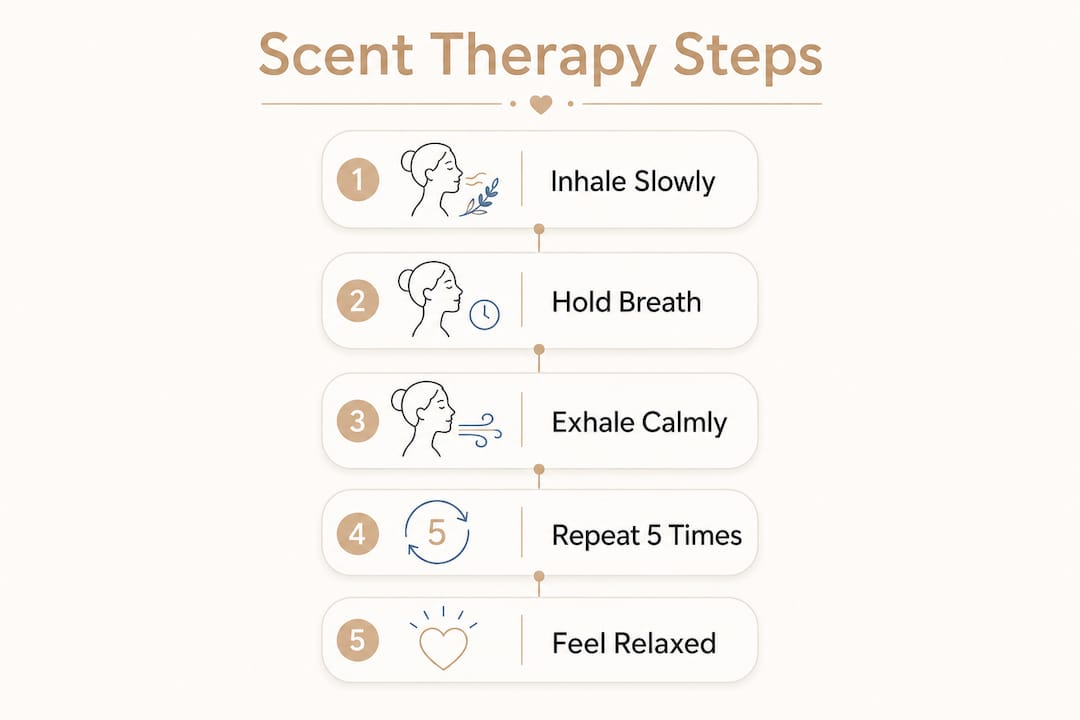
Pro Tip: Inhale your chosen scent slowly for five breaths through the nose, hold for two seconds, and exhale through the mouth. This activates the parasympathetic nervous system faster than passive diffusion alone.
Which scents are proven to support relaxation in mothers?
Lavender is the most clinically studied scent for maternal relaxation. Research shows it reduces anxiety, lowers fatigue scores, and improves mood in both prenatal and postpartum settings. Its active compound, linalool, acts on GABA receptors in the brain, producing a calming effect similar to mild sedatives but without pharmacological risk.

Chamomile works through a comparable mechanism, reducing nervous tension and supporting sleep. Orange peel and lemongrass are particularly effective for postpartum emotional stability. Daily inhalation of orange peel and lemongrass for 15 minutes over seven days produced significant improvements in emotional balance and reduced nervous tension in postpartum women. That finding matters because it shows results are achievable with brief, consistent practice rather than extended sessions.
Cedarwood and vetiver offer a different benefit profile. These deeper, woodier scents may reduce cortisol and influence GABA pathways, promoting restorative sleep. For mothers dealing with broken sleep cycles, this makes them worth considering as part of an evening routine.
| Scent | Primary benefit | Best format |
|---|---|---|
| Lavender | Reduces anxiety and fatigue | Diffuser, pillow spray, bath soak |
| Chamomile | Calms nervous tension, aids sleep | Inhalation, bath soak |
| Orange peel | Lifts mood, reduces postpartum blues | Diffuser, inhalation strip |
| Lemongrass | Improves emotional stability | Diffuser, diluted massage oil |
| Cedarwood | Promotes deep sleep, lowers cortisol | Pillow spray, diffuser |
| Vetiver | Grounding, reduces stress response | Diluted in carrier oil |
Safe usage principles for mothers:
- Always dilute essential oils in a carrier oil before skin contact. A 1% dilution (one drop per 5ml of carrier oil) is appropriate for postpartum use.
- Avoid applying any scented product directly to breast tissue to protect your baby during feeding.
- Use a diffuser or inhalation strip rather than direct skin application during the first postpartum weeks, particularly if you have broken skin.
- Introduce one scent at a time to identify any sensitivities before combining aromas.
How can mothers safely use scent therapy during pregnancy and postpartum?
Timing matters as much as scent choice. The prenatal period, active labour, and the early postpartum weeks each call for different approaches, and understanding this prevents both missed opportunities and unnecessary risks.
During pregnancy, from around 16 weeks onwards, gentle diffusion of lavender or chamomile during rest periods supports relaxation without direct skin exposure. A postpartum self-care ritual built around consistent scent use during pregnancy creates a powerful psychological anchor for later. A scent paired with prenatal relaxation techniques, such as hypnobirthing or yoga, creates a Pavlovian response. When that same scent is introduced during labour, the brain recognises it as a relaxation signal and responds accordingly. This is one of the most underused tools in birth preparation.
- Choose your anchor scent early. Select one scent, ideally lavender or chamomile, and use it consistently during prenatal relaxation sessions from around 16 weeks.
- Practise inhalation technique. Use a personal inhaler or a few drops on a cloth rather than a diffuser during labour, so you control the concentration.
- Transition to postpartum use carefully. In the first days after birth, keep your environment relatively scent-free to allow your baby to imprint your natural scent. Reintroduce your chosen aroma after the first week.
- Use conservative dilutions. Postpartum aromatherapy requires careful dilution around breastfeeding and broken skin. Stick to 1% dilution or use inhalation methods only.
- Build a scent ritual. A postpartum bath soak with a few drops of chamomile or lavender in the evening creates a reliable wind-down cue for both body and mind.
- Try scented jewellery or inhalation strips. These allow you to carry your anchor scent discreetly through the day, providing brief sensory breaks whenever you need them.
Pro Tip: Scent therapy sessions of just 5–15 minutes of intentional breathing with a chosen scent are enough to reset the nervous system and restore a sense of calm. You do not need a long ritual to feel the benefit.
What does the science say about scent and postpartum mental health?
The evidence for aromatherapy’s impact on postpartum mental health is now substantial. Studies consistently show measurable improvements across three key areas: depression, anxiety, and fatigue.
On depression, the results are striking. EPDS scores dropped from an average of 11.87 to 3.6 in mothers who received lavender aromatherapy treatment. The Edinburgh Postnatal Depression Scale (EPDS) is the standard clinical tool for measuring postpartum depression severity, and a drop of that magnitude represents a shift from moderate depression into the non-clinical range. That is a meaningful clinical outcome from a non-pharmacological intervention.
On anxiety, combined approaches show even stronger results. Severe anxiety fell from 21.4% to 0% in postpartum mothers who received facial acupressure alongside lavender aromatherapy. While the acupressure component contributes, the lavender element is consistent with findings from inhalation-only studies.
On fatigue, the numbers are equally compelling. Mean fatigue scores fell from 27.33 to 11.50 in postpartum mothers using lavender aromatherapy, with a statistically significant p-value of 0.000. Fatigue is one of the most persistent and underaddressed challenges in new motherhood, and this finding positions scent therapy as a practical, accessible tool for managing it.
“Aromatherapy offers postpartum mothers a non-invasive, low-cost intervention with clinically measurable effects on depression, anxiety, and fatigue. The evidence base in 2026 is strong enough to recommend its inclusion in routine postpartum self-care.”
| Outcome measured | Before intervention | After intervention |
|---|---|---|
| EPDS depression score | 11.87 | 3.6 |
| Severe anxiety prevalence | 21.4% | 0% |
| Mean fatigue score | 27.33 | 11.50 |
How does scent influence the mother-baby bond and infant wellbeing?
Scent plays a biological role in the mother-baby relationship from the very first moments after birth. Newborns recognise their mother’s natural scent within hours of delivery. That recognition acts as a calming signal, reducing distress and promoting steadier breathing and a more relaxed heart rate in the infant.
This is why the early postpartum period calls for restraint with artificial fragrances. Allowing your baby to imprint your natural scent in the first days after birth strengthens the bond and supports the infant’s neurological sense of safety. Introducing strong perfumes or heavily scented products too early can interfere with this process.
Scent exchanges between mother and baby strengthen postpartum bonding for both parties. Placing a cloth worn by the mother near a baby in a cot, or allowing the baby to sleep with a lightly scented item from the mother, has been shown to calm both mother and child. The effect works in both directions.
Key ways scent supports the mother-baby bond:
- Newborns orient towards their mother’s natural scent within hours of birth, using it as a primary comfort signal
- A mother’s scent promotes steadier breathing patterns and a calmer heart rate in her newborn
- Consistent scent exposure during feeding reinforces the baby’s sense of security and attachment
- Scent-based bonding rituals, such as skin-to-skin contact, amplify oxytocin in both mother and infant simultaneously
For mothers who are separated from their babies after birth, such as in neonatal unit settings, a cloth carrying the mother’s scent placed near the baby provides measurable comfort. This is one of the most practical and underused applications of scent therapy in early motherhood. A new mum self-care checklist that includes scent rituals alongside other recovery practices gives mothers a structured way to build these habits from day one.
Key takeaways
Scent therapy is the most neurologically direct, evidence-backed relaxation tool available to expectant and postpartum mothers, with clinical studies showing measurable reductions in depression, anxiety, and fatigue.
| Point | Details |
|---|---|
| Direct neural pathway | Scent bypasses the thalamus and reaches the limbic system instantly, triggering faster emotional relief than other senses. |
| Lavender leads the evidence | EPDS scores dropped from 11.87 to 3.6 with lavender aromatherapy, placing it as the most clinically validated scent for postpartum use. |
| Timing and dilution matter | Use conservative 1% dilutions postpartum, avoid breast tissue, and keep the first days scent-free to support infant bonding. |
| Create a scent anchor | Pairing a chosen scent with prenatal relaxation builds a Pavlovian response that aids calm during labour and beyond. |
| Brief sessions work | Just 5–15 minutes of intentional scent inhalation is enough to reset the nervous system and reduce stress. |
Why I think scent is the most overlooked tool in postpartum recovery
Most conversations about postpartum wellbeing focus on sleep, nutrition, and social support. Scent barely gets a mention. That gap surprises me, because the neurological case for it is stronger than almost anything else you can do in five minutes without equipment or expertise.
What I find most compelling is the anchor effect. When you pair a scent with a relaxation practice during pregnancy, you are essentially programming your nervous system. That scent becomes a shortcut to calm. Mothers who do this report that the same aroma used during prenatal yoga or hypnobirthing genuinely helps during labour and in the chaotic early weeks at home. That is not placebo. That is conditioning, and it works.
There is also something worth saying about identity. Motherhood asks you to give a great deal of yourself. A scent ritual, even two minutes with a pillow spray or a bath soak, is a moment that belongs to you. The postpartum self-care rituals that stick are the ones that feel personal, not prescriptive. Scent is deeply personal by nature.
My honest advice: choose one scent you genuinely love, not the one a guide tells you to use. Start using it during a quiet moment in pregnancy. By the time your baby arrives, that scent will carry real emotional weight. That is worth more than any supplement or gadget.
— Anisah
Our scent-based products for maternal relaxation
Mum Bub Bub formulates its products specifically for the sensitivities of pregnancy and postpartum recovery, using natural, plant-based ingredients at concentrations safe for mothers and their babies.
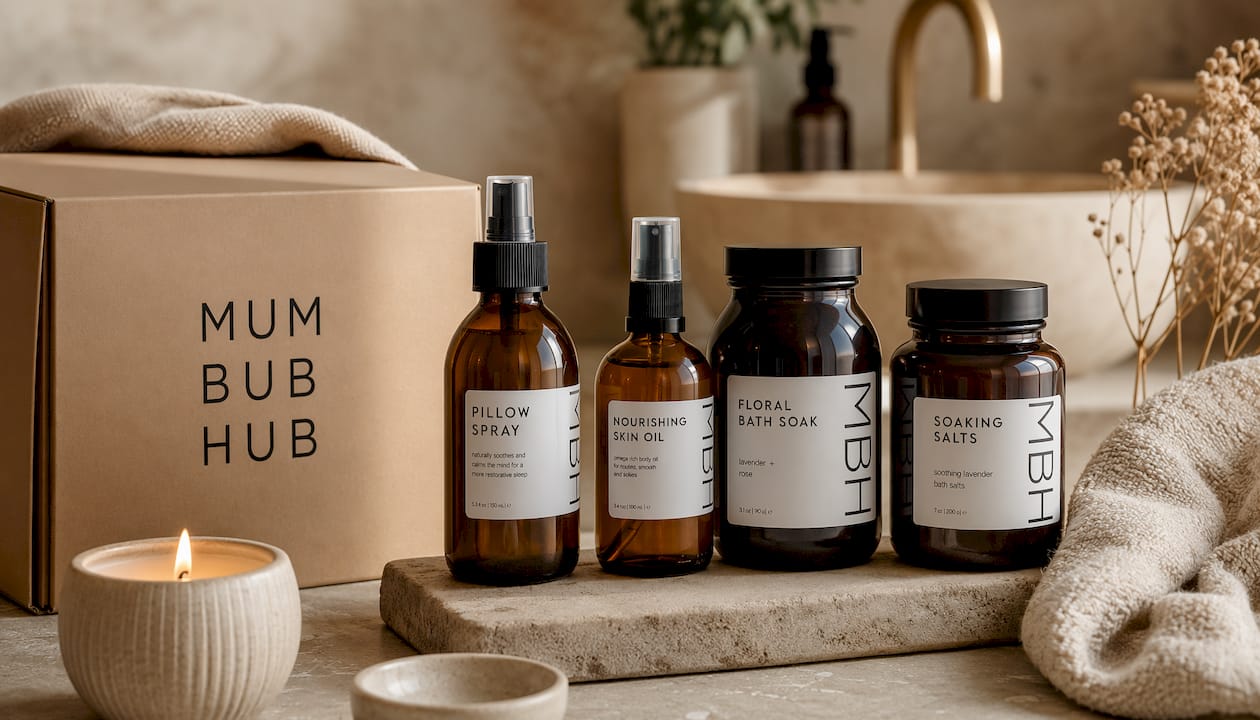
The Relaxing Pillow Spray delivers a calming scent ritual at bedtime without any skin contact, making it ideal for the early postpartum weeks. The Floral Bath Soak combines aromatic botanicals with skin-soothing minerals, turning a short bath into a genuine recovery ritual.
For mothers who want a complete evening routine, the Relax’ Sleep Ritual Bundle brings these elements together in one curated set. Every product in the range is free from harsh chemicals and formulated with the fourth trimester in mind.
FAQ
What is the role of scent in maternal relaxation?
Scent activates the limbic system directly through the olfactory pathway, triggering oxytocin release and reducing cortisol. This makes it one of the fastest non-pharmacological tools for reducing stress and improving mood in mothers.
Which essential oils are safest for postpartum use?
Lavender and chamomile are the most studied and widely recommended essential oils for postpartum relaxation. Use them at a 1% dilution in a carrier oil, or via inhalation, and avoid applying them near breast tissue.
How quickly does aromatherapy for relaxation work?
Clinical studies show measurable changes in anxiety and mood within a single session. Research on lavender aromatherapy recorded significant fatigue score reductions after consistent use over several days, with some anxiety benefits appearing within one session.
Can scent help with postpartum depression?
Research shows lavender aromatherapy reduced EPDS scores from 11.87 to 3.6 in postpartum mothers. Scent therapy is not a replacement for clinical treatment but is a meaningful complementary support for mild to moderate postpartum blues.
Is it safe to use scented products around a newborn?
Keep the environment relatively scent-free in the first days after birth to allow your baby to imprint your natural scent. After the first week, gentle diffusion of diluted lavender or chamomile at low concentrations is generally considered safe, but always consult your midwife if you have concerns.