

Why emotional wellbeing matters postpartum: a UK guide
Postpartum emotional wellbeing is not a luxury or an afterthought. It is one of the most significant factors shaping a mother’s recovery, her relationship with her baby, and her family’s long-term health. Around 1 in 5 women worldwide experience postpartum depression or anxiety after childbirth, yet the majority go undiagnosed and untreated. Understanding why emotional wellbeing matters postpartum means understanding what is at stake when it is neglected.
Here is what the evidence tells us:
- A mother’s emotional state directly affects her ability to bond with her baby, maintain breastfeeding, and respond to her infant’s needs.
- Untreated maternal distress can lead to feeding difficulties, language delays, and long-term behavioural problems in children.
- Poor postpartum mental health increases the risk of self-harm and, in severe cases, suicide.
- Partners are also vulnerable, and their emotional difficulties can compound the pressure on the whole family.
- Recovery is possible. With the right support, most mothers improve significantly, and their children’s outcomes improve alongside them.
The postpartum period also involves a profound psychological shift. New mothers often grieve their former identity, adjusting to a version of themselves they do not yet recognise. That process deserves as much attention as any physical wound.
What are the most common postpartum emotional challenges?
The term “postpartum mental health” covers a spectrum of conditions, and knowing the difference between them matters.

Baby blues
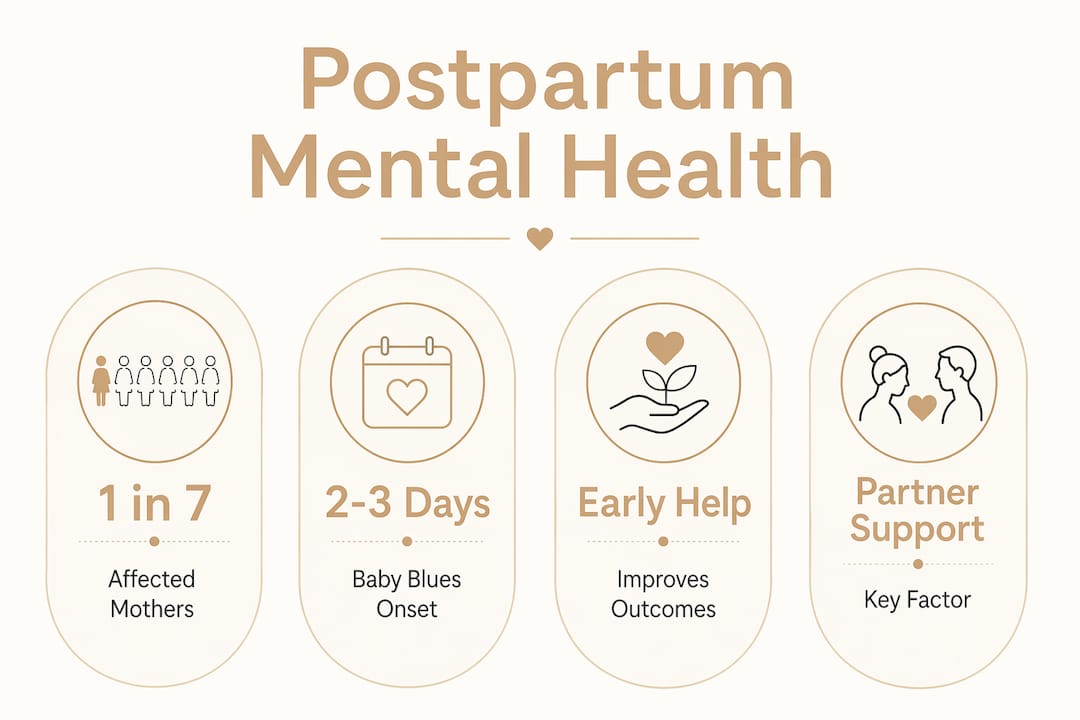
Baby blues affect the majority of new mothers. Symptoms typically begin 2–3 days after delivery and resolve within 10–12 days. They include tearfulness, mood swings, irritability, and mild anxiety. Baby blues do not require clinical treatment, but they do require rest, reassurance, and support.
Postnatal depression
Postnatal depression (PND) is more persistent and more disabling. Symptoms lasting longer than the initial weeks after birth signal that clinical help is needed. These include:
- Persistent sadness, hopelessness, or emptiness
- Severe mood swings and prolonged crying
- Difficulty bonding with the baby or feeling disconnected from them
- Anxiety, intrusive thoughts, or panic attacks
- Exhaustion that sleep does not relieve
- Thoughts of self-harm
Perinatal depression affects approximately 1 in 7 people during pregnancy or within the first year after birth, and up to 50% of cases go undiagnosed because of stigma and reluctance to disclose symptoms. That gap between prevalence and treatment is one of the most pressing problems in maternal healthcare.
Postpartum anxiety
Anxiety is at least as common as depression postpartum, yet it receives far less attention. Mothers may experience constant worry about the baby’s health, intrusive “what if” thoughts, physical symptoms like a racing heart, and an inability to rest even when the baby sleeps.
Postpartum PTSD
Traumatic birth experiences, including emergency procedures, loss of control, or perceived lack of care, can trigger post-traumatic stress disorder. Flashbacks, nightmares, and avoidance of anything connected to the birth are the hallmarks.
Postpartum psychosis
Rare but serious, postpartum psychosis typically develops within the first two weeks after birth. Symptoms include hallucinations, delusions, rapid mood shifts, and confusion. This is a psychiatric emergency requiring immediate medical attention.
Pro Tip: If you are unsure whether what you are experiencing is baby blues or something more, use the Edinburgh Postnatal Depression Scale (EPDS), a validated screening tool your GP or health visitor can administer. It takes under five minutes and can open the door to the right support.
How does a mother’s emotional health shape her baby’s development?
The connection between maternal emotional health and infant outcomes is one of the most well-documented areas in perinatal research. It is not abstract. It plays out in daily interactions, feeding patterns, and the quality of early attachment.
When a mother is experiencing significant emotional distress, her capacity to read and respond to her baby’s cues is reduced. Infants are extraordinarily sensitive to their caregiving environment, and disrupted responsiveness affects how they learn to regulate their own emotions. The consequences can extend well beyond infancy.
The research is consistent on this point. Children born to mothers with untreated postnatal depression show:
- Delays in language development and learning
- Altered cognitive development and early onset of depressive illness
- Difficulties with social interaction and adjusting to school
- Higher rates of obesity in early childhood
- Problems managing stress
The reverse is equally true. When maternal depression is treated, bonding experiences improve, and the risk of behavioural and psychiatric problems in the child decreases. Treatment is not just for the mother. It is for the whole family.
Consider what this looks like in practice. A mother struggling with postnatal depression may find it hard to make eye contact during feeds, to respond to her baby’s vocalisations, or to feel the warmth she expected. None of this makes her a bad mother. It makes her unwell. And with support, those interactions can be rebuilt.
The benefits of postpartum self-care rituals extend beyond the mother herself, feeding directly into the quality of early attachment.
What causes postpartum mental health problems?
No single factor causes postpartum mental health difficulties. They arise from a combination of biological, psychological, and social pressures that converge at one of the most demanding points in a person’s life.
The main contributors include:
- Hormonal changes: Oestrogen and progesterone drop sharply after birth, affecting mood regulation. For some mothers, this shift triggers a significant depressive response.
- Sleep deprivation: Chronic sleep loss impairs emotional regulation, concentration, and resilience. It is not simply tiredness; it is a physiological stressor with measurable effects on mental health.
- Physical recovery: Pain, healing from a caesarean or perineal trauma, and the demands of breastfeeding all place strain on the body and mind simultaneously.
- Previous mental health history: A personal or family history of depression, anxiety, or postpartum psychosis is one of the strongest predictors of postpartum mental health difficulties.
- Birth complications: Traumatic or unexpected birth experiences, including emergency interventions, increase the risk of PTSD and depression.
- Relationship changes: Shifts in partnership dynamics, reduced intimacy, and disagreements about parenting can create significant emotional strain.
- Social isolation: Mothers who lack a strong support network, or who have moved away from family, face a substantially higher risk of poor emotional outcomes.
- Socioeconomic pressures: Financial stress, housing insecurity, and return-to-work anxiety compound the emotional load of new parenthood.
- Cultural and societal expectations: The pressure to appear happy, capable, and grateful can prevent mothers from acknowledging their distress. Social media portrayals of effortless motherhood make this worse.
Multiple biological and psychosocial factors interact to produce postpartum mental health difficulties, which is why no single intervention addresses them all. Understanding your own risk profile allows you to seek support before a crisis develops.
Where can you find postpartum mental health support in the UK?
The UK has a range of services available, from NHS specialist teams to community charities. Knowing where to look makes a real difference.
NHS perinatal mental health services
NHS England’s perinatal mental health teams provide specialist care for mothers experiencing moderate to severe mental health difficulties during pregnancy and up to 24 months after birth. These teams include psychiatrists, psychologists, specialist midwives, and social workers. Referrals typically come through your GP or health visitor, though self-referral is possible in some areas.
NHS Scotland also provides dedicated perinatal mental health services, with a focus on community-based support and early intervention.
Talking therapies on the NHS
Cognitive Behavioural Therapy (CBT) and Interpersonal Therapy (IPT) are both evidence-based treatments for postnatal depression and anxiety. You can self-refer to NHS Talking Therapies (formerly IAPT) in England without a GP referral.
Mind UK
Mind UK is one of the leading mental health charities in England and Wales. It provides information, local support services, and an online community for people experiencing mental health difficulties, including postnatal depression. Mind’s infoline is available on 0300 123 3393.
Helplines and peer support
- PANDAS Foundation: Specialises in perinatal mental health support, with a helpline at 0808 1961 776.
- Association for Post Natal Illness (APNI): Offers one-to-one telephone support from volunteers who have recovered from postnatal illness.
- Tommy’s: Provides midwife-led support and information on pregnancy and postpartum mental health.
- Samaritans: Available 24 hours a day on 116 123 for anyone in crisis.
Community and peer networks
Local children’s centres, NCT groups, and health visitor-led postnatal groups provide informal but genuinely valuable peer support. Connecting with other mothers who understand what you are going through reduces the isolation that makes postpartum mental health difficulties worse.
Pro Tip: Good postpartum mental health does not mean feeling happy all the time. As the NHS perinatal guidance puts it, it means having the resilience and support to navigate challenges. Reframing what “doing well” looks like can reduce guilt and make it easier to ask for help.
Self-care strategies that genuinely support emotional recovery
Self-care after birth is not about bubble baths and scented candles, though those have their place. It is about building small, consistent habits that protect your emotional reserves when they are at their most depleted.
Evidence-backed strategies include creating a with your baby among them:
- Prioritise sleep where you can: Sleep deprivation is a direct driver of emotional dysregulation. Accepting help with night feeds, sleeping when the baby sleeps, and asking a partner or family member to take a shift are not indulgences. They are protective.
- Eat regularly: Skipping meals when you are exhausted is common, but blood sugar instability worsens anxiety and low mood. Simple, nutritious food matters more than elaborate cooking.
- Gentle movement: Short walks outdoors, gentle yoga, or pelvic floor exercises all support mood. You do not need a gym or a structured programme. Ten minutes outside makes a measurable difference to how you feel.
- Mindfulness and breathing: Brief mindfulness practices, even five minutes of focused breathing, can interrupt the anxiety cycle. Apps like Headspace or Calm offer guided sessions designed for new parents.
- Talk about it: Communicating openly with your partner, a friend, or a health visitor about how you are feeling reduces the weight of carrying it alone. Silence tends to amplify distress.
- Limit social media: Curated images of “perfect” motherhood are not a fair comparison for your reality. Reducing exposure during the early weeks protects your self-perception.
- Build a postpartum recovery routine: Structure, even loose structure, provides a sense of agency when everything else feels unpredictable.
Natural therapies, including herbal bath soaks, aromatherapy, and gentle massage, can complement clinical support by creating moments of physical comfort and calm. They are not a substitute for professional help when it is needed, but they do support the kind of postpartum self-care that builds emotional resilience over time.
Pro Tip: There is a difference between resilience and suppression. Pushing through persistent low mood, anxiety, or disconnection from your baby is not strength. Recognising when distress has lasted more than two weeks and seeking clinical support is the stronger choice.
How postpartum emotional challenges affect fathers and partners
Partners are often the first to notice that something is wrong. They observe changes in mood, sleep, appetite, and behaviour that the mother herself may not recognise or may be minimising. That position carries its own weight.
Partners also experience postpartum emotional difficulties. Paternal postnatal depression is a recognised condition, affecting a meaningful proportion of new fathers and partners, particularly in the weeks following birth. Symptoms often look different from maternal depression: irritability, withdrawal, increased alcohol use, and throwing themselves into work rather than tearfulness or expressed sadness.
Common signs of emotional distress in partners include:
- Persistent irritability or anger
- Withdrawal from the family or the relationship
- Difficulty connecting with the baby
- Anxiety about finances, responsibility, or adequacy as a parent
- Sleep problems unrelated to night feeds
- Feeling excluded from the mother-baby relationship
Supporting partners’ wellbeing is not a secondary concern. A partner who is struggling cannot provide the consistent support that aids maternal recovery. The two are linked. When both parents are emotionally supported, the family environment is more stable, and the baby benefits directly.
Partners can seek help through their GP, NHS Talking Therapies, or organisations like Mind UK. Perinatal mental health teams increasingly offer support to partners as well as mothers, recognising that family wellbeing is indivisible. If you are a partner reading this, your mental health matters too. Asking for help is not a sign that you are failing your family. It is how you show up for them.
How we supports postpartum emotional wellbeing through natural care
Physical comfort and emotional wellbeing are more closely connected than they might seem. When a mother’s body is in pain, itching, or simply neglected, her emotional state suffers. When she feels cared for, even in small ways, her capacity to cope improves.
Mum Bub Hub was built around exactly this understanding. The brand’s range of natural postpartum care products uses plant-based, chemical-free formulations designed for the sensitivity of postpartum skin and the specific demands of recovery. Products like herbal bath soaks, perineal sprays, nipple balm, and nourishing body oils address the physical discomforts that can grind down emotional resilience in the early weeks.
Natural, plant-based postpartum care supports emotional wellbeing by reducing physical discomfort, creating moments of intentional self-care, and reinforcing the message that a mother’s body deserves attention and gentleness.
Key ways our products support emotional recovery:
- Herbal bath soaks and soaking salts: Warm baths with botanical ingredients provide genuine physical relief for perineal healing and muscle tension, while the ritual itself creates a pause in the relentlessness of early parenthood.
- Pillow sprays: Calming scents like lavender support sleep onset, addressing one of the most direct drivers of postpartum emotional difficulty.
- Bump and body oils: Nourishing skin during and after pregnancy is an act of self-recognition. Caring for your body communicates, in a tangible way, that you matter.
- Gift sets for new mothers: Thoughtfully curated sets make it easier for families and friends to offer meaningful support, which is one of the strongest protective factors for postpartum mental health.
As a social enterprise, all of our profits goes towards maternal health initiatives, reflecting a commitment that extends beyond the transaction. Our community-oriented approach means that choosing these products connects mothers to a wider network of support and shared experience.
Our self-care and wellness range is formulated specifically for the postpartum period, with ingredients chosen for safety, gentleness, and genuine therapeutic benefit. If you are looking for a place to start, the postpartum essentials collection brings together the products most mothers reach for in the first weeks after birth.
Key takeaways
Postpartum emotional wellbeing directly shapes maternal recovery, mother-infant bonding, and child development outcomes, making early recognition and support the most protective action a family can take.
| Point | Details |
|---|---|
| Prevalence is high | A significant proportion of women worldwide experience postpartum depression or anxiety after childbirth. |
| Baby blues vs depression | Baby blues resolve within about two weeks; symptoms persisting longer require clinical assessment. |
| Child development at stake | Untreated maternal distress is linked to language delays, behavioural problems, and altered cognitive development in children. |
| Partners are affected too | Paternal postnatal depression is a recognised condition; supporting partners protects the whole family. |
| Support is available in the UK | NHS perinatal mental health teams, Mind UK, PANDAS Foundation, and APNI all provide accessible help. |
FAQ
Why is emotional support important for mothers after childbirth?
Emotional support reduces the risk of postnatal depression developing or worsening, and it directly improves a mother’s capacity to bond with her baby. Without it, the isolation and overwhelm of early parenthood can escalate into clinical mental health conditions that affect the whole family.
What is the most common emotional challenge mothers face postpartum?
Postnatal depression is the most widely recognised clinical condition, but postpartum anxiety is at least as prevalent. Baby blues, which affect the majority of new mothers in the first two weeks, are the most common short-term emotional experience after birth.
How does postpartum mental health affect a baby’s development?
Untreated postnatal depression is associated with language development delays, behavioural and emotional problems, altered cognitive development, and difficulties with social interaction in children. Treating maternal depression improves outcomes for the child as well as the mother.
When should a new mother seek professional help for her emotional health?
Seek help if low mood, anxiety, or difficulty bonding with your baby persists for more than two weeks after birth, or at any point if you have thoughts of self-harm. Your GP, health visitor, or NHS Talking Therapies are all appropriate first points of contact.
How can partners support a mother’s postpartum emotional wellbeing?
Partners can help by taking on practical tasks to protect the mother’s sleep, encouraging open conversation about how she is feeling, attending GP appointments with her, and recognising that their own emotional health matters too. NHS perinatal guidance increasingly includes partners in care planning for exactly this reason.