

Why herbal bath soaks help recovery: a guide for new mums
TL;DR:
Herbal bath soaks use warm water and medicinal plants to reduce inflammation, ease soreness, and calm nerves. They improve circulation, target local tissue, and support postpartum recovery through transdermal absorption of active compounds.
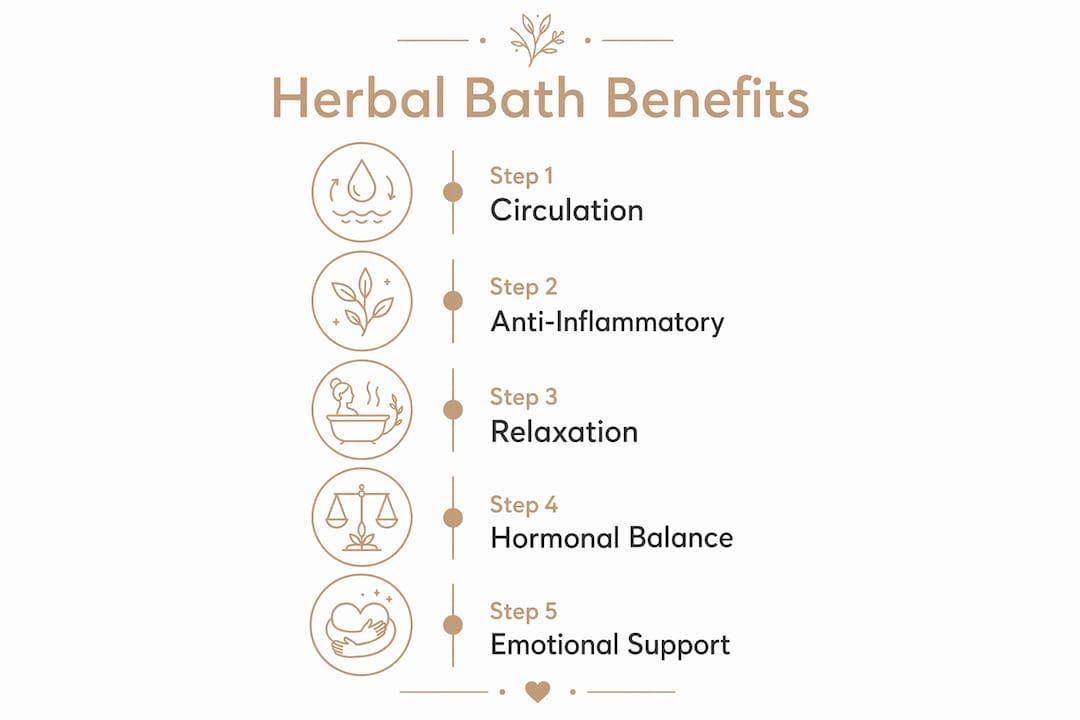
Herbal bath soaks work by pairing warm water with medicinal plants to ease inflammation, soothe muscle soreness, and calm the nervous system. The heat opens pores and improves circulation, the herbs do the rest. For postpartum and pregnancy recovery, that combination is particularly powerful
A few immediate benefits worth knowing:
- Reduced muscle soreness: warmth at a comfortably warm temperature helps ease delayed onset muscle soreness
- Eased joint stiffness: improved blood flow softens connective tissue
- A calmer nervous system: aromatic herbs like lavender trigger the parasympathetic "rest and digest" response
- Reduced swelling: anti-inflammatory plant compounds absorbed through the skin target local tissue directly
Table of Contents
- Why herbal bath soaks help recovery: the science and tradition behind them
- How to use herbal bath soaks safely during postpartum and pregnancy
- What herbal soaks actually do to your body
- What traditional herbal medicine has always known
- How herbal soaks support postpartum and pregnancy recovery specifically
- What clinical studies say about herbal baths
- How long and how often should you soak?
- Herbal soaks versus other natural postpartum recovery methods
- Mumbubhub’s herbal bath soaks for postpartum recovery
- FAQ
- Key takeaways
The science and tradition behind herbal bathing
Warm water alone relaxes muscles and dilates blood vessels. Add herbs and you introduce active compounds the skin absorbs directly, bypassing the digestive system and acting straight on inflamed tissue. Warmth increases skin permeability, so botanical compounds move more efficiently into circulation.
Three herbs do some heavy lifting:
- Yarrow contains natural compounds that help reduce redness, calm irritated skin, and ease minor skin discomforts.
- Chamomile carries apigenin, which binds to brain receptors and promotes relaxation
- Lavender calms the nervous system and supports deeper sleep
Soaking also activates the parasympathetic response, your body's own healing mode, which often gets suppressed in new mothers managing sleep deprivation and physical recovery at the same time.
Worth knowing: immersion in water at 37 to 39°C has been shown to reduce delayed onset muscle soreness after physical exertion, with medicinal herbs amplifying that effect through their anti-inflammatory compounds.
Traditional Chinese Medicine adds another layer to this. It views herbal baths as a way to expel cold from the body, restore internal balance, and encourage deep tissue circulation, producing sustained softness in the muscles rather than just temporary relief.
Using herbal bath soaks safely during postpartum and pregnancy
Temperature matters more than most people realise. Stay within a comfortably warm range, anything hotter risks dizziness, especially in the early postpartum weeks when blood pressure fluctuates.
A few safe usage guidelines:
- Duration: 15 to 20 minutes per soak is enough, longer doesn't mean better
- Frequency: 2 to 3 times a week, not daily, to avoid depleting your skin's natural oils
- Timing: use soaks between other treatments like massage or physiotherapy to keep tissue receptive
- Hydration: drink water before and after, warm baths cause light perspiration
Herb selection by goal:
- Anti-inflammatory: ginger, chamomile, rosemary, witch hazel
- Calming: jasmine flowers, lavender, linden flowers, rose petals
- Circulation-enhancing: comfrey, stinging nettle, yarrow, sage
Contraindications worth knowing: avoid very hot baths if you have low blood pressure or a cardiovascular condition. Check with your midwife or GP before soaking if you have an open perineal wound or active infection. Herb allergies are uncommon but possible, so patch test any new botanical blend.
A small ritual that helps: if you feel lightheaded or have cardiovascular concerns, try a warm half bath where the water reaches only to your navel. This is a gentler alternative that still delivers real circulatory and herbal benefit.
What herbal soaks actually do to your body
The effects go well beyond relaxation. Warm water dilates blood vessels, speeding nutrient delivery to recovering tissue and helping waste removal along. Herbal compounds then act on that primed tissue: anti-inflammatory ingredients reduce swelling, antioxidants in herbs like chamomile and rosemary protect skin cells, and aromatic compounds inhaled through steam support respiratory ease and a clearer head.
There's also the question of stagnation. Traditional Chinese Medicine describes this as "stasis," a kind of congealing of fluids in tissue that restricts movement. Herbal soaks help disperse that stagnation, restoring a range of motion that passive rest alone can't quite achieve. For postpartum mothers, that means less heaviness in the legs, softer pelvic tissue, and an easier return to comfortable movement.
What traditional herbal medicine has always known
Herbal bathing isn't a wellness trend. Ancient practitioners across Greece, Rome, Persia, and China prescribed medicinal baths for pain, fatigue, reproductive recovery, and nervous system disorders. Medieval Middle Eastern bathhouses combined herbal soaks with massage as standard therapeutic care.
Modern wellness experts now frame herbal baths as a living medical tradition, one that bridges centuries of empirical knowledge with a contemporary understanding of circulation and inflammation. The principle hasn't changed: healing happens through the skin as well as within the body.
How herbal soaks support postpartum and pregnancy recovery specifically
Postpartum recovery involves perineal healing, hormonal shifts, muscle fatigue, and emotional adjustment, often all at once. Herbal soaks address several of these at the same time. Warmth restores circulation to the pelvic region, anti-inflammatory herbs reduce perineal swelling, and calming botanicals ease the anxiety that often accompanies the early weeks. In pregnancy, soaks relieve the lower back and hip tension that builds as the body adapts to added weight.
Take a look at the types of postpartum bath soaks available to find the right blend for your stage of recovery.
What clinical studies say about herbal baths
Research on herbal wet compresses and soaks shows measurable reductions in pain intensity and inflammatory markers. Topical herbal applications influence circulation, inflammation, and nervous system regulation, confirming what traditional practitioners observed long before clinical trials existed. The transdermal route is key here, it bypasses standard metabolic processing and delivers plant compounds directly to the site of inflammation.
How long and how often should you soak?
Fifteen to twenty minutes, a few times a week, at a comfortably warm temperature. Daily soaking in hot water can deplete your skin's natural oils and may weaken your body's adaptive response over time. Consistency across weeks matters more than intensity in any single session. Soaks work best as part of a broader recovery plan, sitting alongside massage, rest, and other wellness practices rather than replacing them.
Herbal soaks versus other natural recovery methods
| Method | Primary benefit | Best used for |
|---|---|---|
| Herbal bath soaks | Circulation, inflammation, nervous system | Whole-body recovery, perineal healing |
| Perineal spray | Targeted topical relief | Localised wound care |
| Massage | Deep tissue release | Muscle tension, lymphatic support |
| Mineral-rich bath salts | Skin nourishment, muscle ease | Complementing herbal soaks |
| Rest and sleep | Hormonal regulation | All stages of recovery |
Herbal soaks sit at the intersection of physical and emotional recovery in a way few single methods match. They prepare the body for hands-on therapy and extend the relief between sessions, making them a strong anchor for any postpartum recovery routine. Pairing them with mineral-rich bath salts can support skin health and muscle ease even further.

Formulated for the fourth trimester
Postpartum herbal bath soak
Plant-based, chemical-free, and gentle enough for sensitive postpartum skin. Every ingredient chosen for a therapeutic purpose, not just fragrance
Shop Herbal Bath SoakOur herbal bath soaks for postpartum recovery
Postpartum recovery deserves more than a generic self-care product. Our postpartum herbal bath soak is formulated specifically for the fourth trimester: plant-based, chemical-free, and gentle enough for sensitive skin. Every ingredient earns its place for a therapeutic reason, not just fragrance.

For mothers who want something calmer and more restorative, our floral bath soak blends botanicals chosen to nourish and settle the nervous system. A portion of every purchase supports maternal health initiatives in the UK.
Ready to find the soak that fits your recovery? Shop bath soaks
FAQ
Are herbal bath soaks safe after giving birth?
Yes, for most mothers. Keep water at 37–39°C, avoid soaking if you have an open wound or active infection, and check with your midwife or health visitor if you are unsure.
Which herbs are most effective for postpartum recovery?
Comfrey, chamomile, yarrow, ginger, witch hazel and lavender are the most well-supported choices, offering anti-inflammatory, relaxing, and circulation-enhancing effects respectively.
How often should I use a herbal bath soak postpartum?
Two to three times per week is the recommended frequency, with each soak lasting 15–20 minutes at a comfortably warm temperature.
Do herbal compounds actually absorb through the skin?
Research confirms that warm water increases skin permeability, allowing herbal constituents to penetrate and act on local inflammation and circulation directly.
What makes Mumbubhub’s herbal bath soak different?
Our postpartum herbal bath soak is formulated specifically for after-birth recovery using natural, plant-based ingredients, with no harsh chemicals and a focus on gentle maternal healing.
Key takeaways
Herbal bath soaks aid recovery by combining heat-driven circulation improvements with transdermal absorption of anti-inflammatory and calming plant compounds, making them especially effective for postpartum healing.
| Point | Details |
|---|---|
| Optimal temperature | Soak at 37–39°C to reduce muscle soreness without risking dizziness. |
| Key herbs | Ginger, chamomile, and lavender each target distinct recovery needs: circulation, inflammation, and nervous system calm. |
| Frequency and duration | Two to three sessions per week, 15–20 minutes each, delivers consistent benefit without depleting the body. |
| Traditional and clinical support | Both TCM principles and clinical research validate transdermal herbal absorption as a genuine therapeutic mechanism. |
| Mumbubhub recommendation | Mumbubhub’s postpartum herbal bath soak is formulated for fourth-trimester recovery using natural, plant-based ingredients. |
Recommended
- Types of postpartum bath soaks: your recovery guide – Mum Bub Hub
- Postpartum Herbal Bath Soak | Natural Recovery Sitz Bath for New Mums | Mum Bub Hub – Mum Bub Hub
- Top Postpartum Bath Soaks for Healing & Relaxation – Mum Bub Hub
- Pregnancy bath soak benefits: a guide for expectant mothers – Mum Bub Hub