

Preparing skin for postpartum recovery: your gentle guide
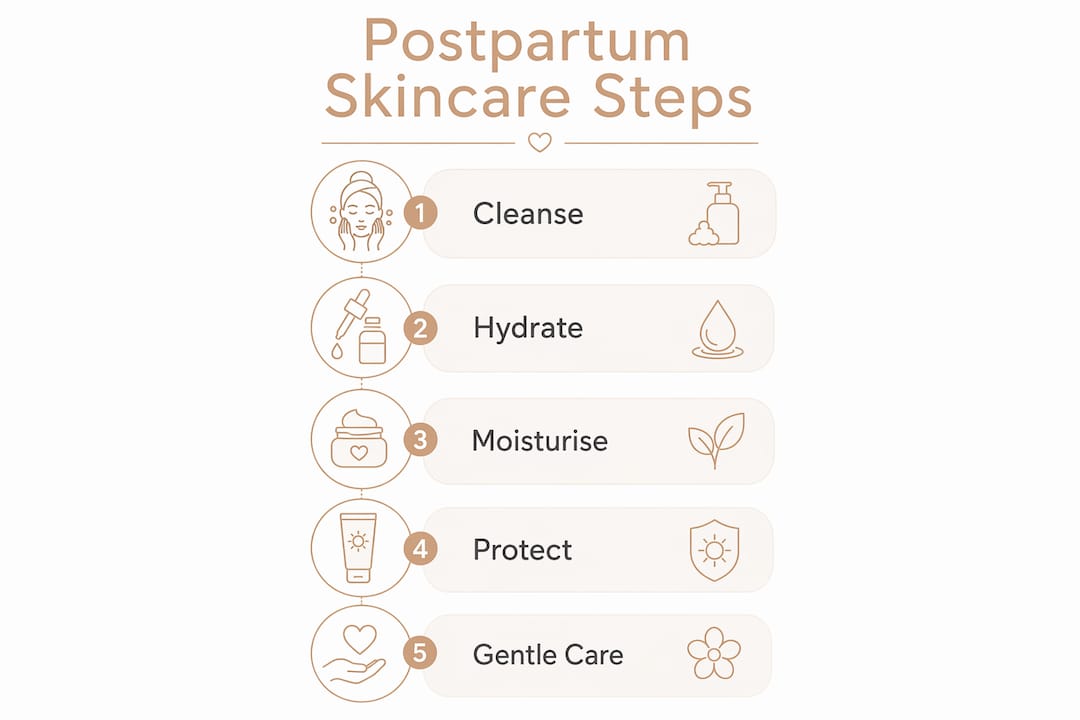
Preparing skin for postpartum recovery means starting with three things: a gentle cleanser, a barrier-repairing moisturiser, and daily mineral SPF. That is genuinely all you need in the first weeks. Board-certified dermatologists consistently recommend a simplified postpartum routine because your skin is in a sensitive rebuilding phase, hormones are crashing, and your mental load is already at capacity.
Here is what that looks like in practice:
- Cleanse with a fragrance-free, non-stripping wash morning and evening
- Moisturise with ceramides, niacinamide, or hyaluronic acid to repair the skin barrier
- Protect with mineral SPF 30+ every morning, even on cloudy days, to prevent melasma darkening
- Hydrate from within: breastfeeding pulls significant fluid from your body, so water intake matters as much as what you apply
- Avoid high-strength retinoids, hydroquinone, and high-concentration salicylic acid while breastfeeding; reintroduce gradually after OB-GYN clearance if you are not nursing
- Skip the actives stack: introducing one new ingredient at a time protects a barrier that is far more fragile than it looks right now
Mumbubhub’s plant-based postpartum range is built around exactly this philosophy: gentle, natural ingredients that support healing without overwhelming sensitive skin.
Table of Contents
- How to build your postpartum skincare routine step by step
- Which ingredients actually nourish postpartum skin?
- Common postpartum skin concerns and how to manage them
- When should you see a doctor about postpartum skin?
- Is it safe to exfoliate or use face masks postpartum?
- Mumbubhub supports your postpartum skin from day one
- FAQ
- Key takeaways
How to build your postpartum skincare routine step by step
A workable routine for new mothers has to survive sleep deprivation. Keep it short.
- Morning: gentle cleanser — use lukewarm water and a fragrance-free, low-pH wash. Hot water strips moisture from already-depleted skin.
- Morning: niacinamide or hyaluronic acid serum — apply to damp skin so humectants can draw in surface water immediately.
- Morning: ceramide moisturiser — seal the serum in with a cream containing ceramides and glycerin.
- Morning: mineral SPF 30+ — a tinted formula with iron oxides protects against both UV and visible light, which matters for melasma management.
- Post-shower body care — apply a body oil or cream to damp skin straight after showering. Applying to damp skin locks in moisture far more effectively than applying to dry skin.
- Evening: gentle cleanse — remove SPF and daily buildup without stripping.
- Evening: hydrating layers — a lightweight serum followed by your ceramide moisturiser supports overnight repair.
- Evening actives (non-breastfeeding only): breastfeeding women should avoid retinoids and hydroquinone entirely. If you are not breastfeeding and have OB-GYN clearance, low-strength retinol (around 0.025%) can be reintroduced from around 6–8 weeks postpartum, twice a week to start.
- Perineal and pelvic skin care — the perineum needs its own gentle attention. A natural perineal balm supports tissue comfort and healing in the early weeks.
- Nipple care — if breastfeeding, apply a lanolin-free nipple balm after each feed to prevent cracking. Choose a formula safe for your baby.
- Introduce one new product at a time — wait at least two weeks between new additions so you can identify any reaction clearly.
Which ingredients actually nourish postpartum skin?
Barrier repair comes first before anything else. Your skin’s ability to retain moisture is genuinely impaired after birth, and piling on actives before it has recovered tends to cause more irritation than benefit.
Safe and effective for all postpartum women, including those breastfeeding:
- Ceramides: rebuild the lipid barrier and reduce water loss
- Niacinamide: calms inflammation, improves barrier function, and gently addresses pigmentation
- Hyaluronic acid: draws water into the skin; apply to damp skin for best results
- Azelaic acid: breastfeeding-safe, addresses both acne and melasma
- Vitamin C: safe during breastfeeding and useful for pigmentation alongside azelaic acid at night
- Plant-based oils (such as oat oil): soothe reactive skin and support the barrier without synthetic fragrance
- Mineral SPF with iron oxides: the only sun protection worth using when melasma is present, as it blocks visible light too
Avoid while breastfeeding:
- High-strength retinoids and prescription tretinoin
- Hydroquinone
- High-concentration salicylic acid
Natural, plant-based balms and body butters, such as those from Mumbubhub or a whipped body butter with clean ingredients, offer a practical way to layer occlusive moisture without synthetic additives. For stretch marks, a pregnancy belly balm with nourishing plant oils applied to damp skin supports hydration and gentle tissue care.
Pro Tip: Apply your hyaluronic acid serum while your face is still slightly damp from cleansing, then layer your ceramide cream on top immediately. This two-step sequence traps water in the skin rather than drawing moisture out of it.
Common postpartum skin concerns and how to manage them
Postpartum skin changes are predictable once you know what drives them. The oestrogen crash after delivery reduces your skin’s natural ability to retain moisture, and the effects show up everywhere.
- Dryness and sensitivity: the most common complaint. Use a ceramide-rich cream twice daily and avoid any product that stings or causes redness, even ones you tolerated before pregnancy.
- Postpartum acne: tends to appear on the jawline and chin from around 6–10 weeks, driven by androgens rather than the hormonal pattern of pregnancy acne. Manage with non-comedogenic hydration and gentle cleansing rather than harsh drying treatments.
- Melasma: may persist for 3–6 months or longer. Consistent mineral SPF and nightly azelaic acid are the two most effective tools. Stopping SPF once the baby arrives is the single most common reason melasma worsens postpartum.
- Dry, cracked hands: frequent handwashing and sanitising take a real toll. Apply a thick moisturiser after every wash, and wear cotton gloves overnight with a generous layer of cream underneath.
- Stretch marks: fresh red or purple marks are still in an active remodelling phase and respond better to topical care than mature silver ones. Regular gentle massage with a plant-based oil supports hydration and circulation in the tissue.
- Hair loss: postpartum hair shedding is a normal, temporary process. It is not related to your skincare routine, and no topical product treats it. Good nutrition and patience are what actually help.
When should you see a doctor about postpartum skin?
Most postpartum skin changes resolve on their own, but some warrant professional input. Persistent skin issues that do not respond to simple barrier-focused care are a signal to seek help rather than push through alone.
- Breakouts that worsen despite gentle, consistent care
- Extreme dryness accompanied by redness, itching, or cracking, which may indicate eczema or contact dermatitis
- Melasma showing no improvement by around four months postpartum
- Any skin concern that is affecting your sleep, confidence, or daily wellbeing
When speaking to your GP or dermatologist, mention your breastfeeding status clearly. It directly affects which treatments are appropriate. Your GP can refer you to a dermatologist on the NHS, or you can seek a private consultation if waiting times are a concern. Mumbubhub’s postpartum skincare FAQs also cover common questions about ingredient safety and when to escalate concerns.
Is it safe to exfoliate or use face masks postpartum?
The short answer: wait, and go gently when you do. Skin barrier function is sensitive after birth, and exfoliants applied too early can disrupt a barrier that is already struggling to hold moisture.
For breastfeeding women, physical scrubs and chemical exfoliants such as AHAs and BHAs are best avoided until the barrier has clearly stabilised, typically several months postpartum. A mild exfoliant used once or twice a week is reasonable once your skin feels calm and resilient, not tight or reactive. Clay masks and enzyme-based treatments follow the same logic: introduce them cautiously, one at a time, and stop if your skin responds with redness or increased sensitivity. Chemical peels, microneedling, and laser treatments should wait until after you stop breastfeeding.
Mumbubhub supports your postpartum skin from day one
Recovery after birth deserves products that work with your body, not against it. Mumbubhub’s range of natural, plant-based postpartum care is formulated specifically for the sensitivity and hormonal shifts of the fourth trimester, without synthetic fragrances, harsh chemicals, or unnecessary additives.
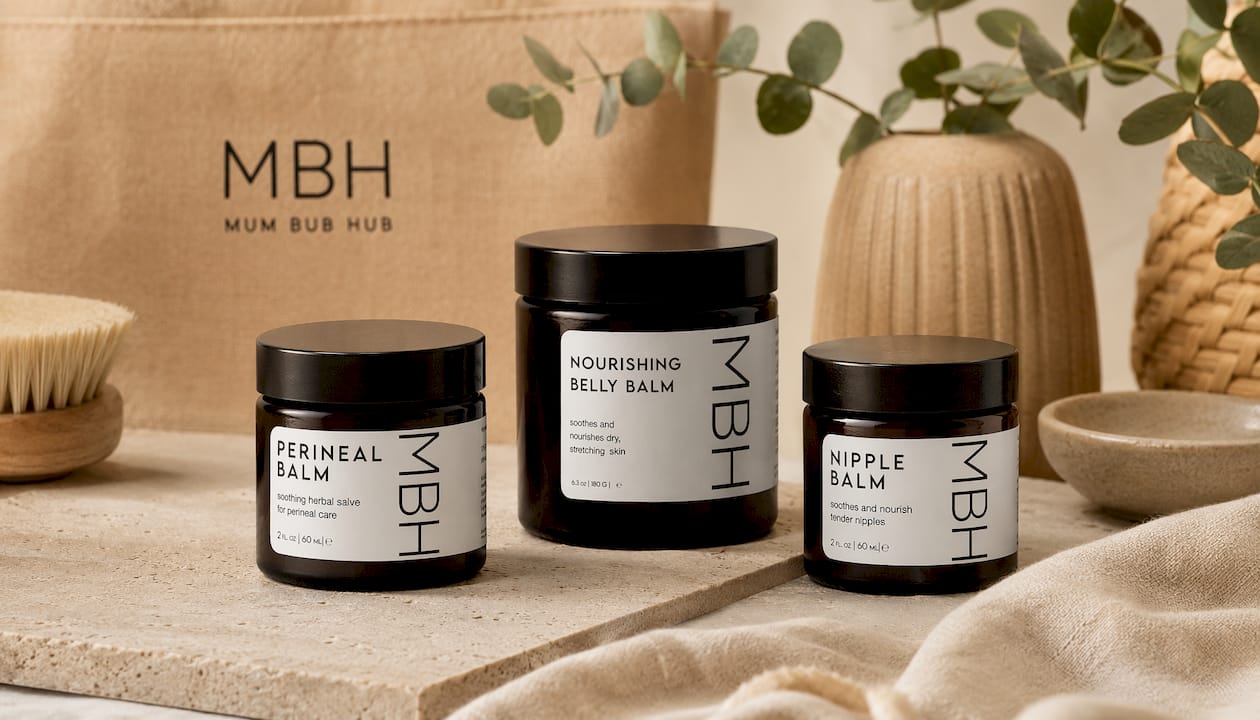
Where most skincare ranges ask you to adapt to them, Mumbubhub starts from what your skin actually needs right now: gentle barrier support, natural hydration, and targeted comfort for the areas that matter most after birth. From a soothing perineal balm for tissue healing to a nourishing belly balm for stretch mark care, every product is designed for the postpartum phase specifically. Browse the full postpartum recovery range and find what your skin needs most right now.
FAQ
What is the safest skincare routine while breastfeeding?
Stick to a gentle cleanser, a ceramide or niacinamide moisturiser, and mineral SPF 30+ daily. Avoid retinoids, hydroquinone, and high-concentration salicylic acid until you have stopped breastfeeding or received clearance from your healthcare provider.
When can I reintroduce retinol after giving birth?
If you are not breastfeeding, most providers give clearance from around 6–8 weeks postpartum, starting at a very low concentration such as 0.025% twice a week. If you are breastfeeding, most dermatologists recommend waiting until after weaning.
How long does postpartum melasma last?
Melasma often fades within 3–6 months as hormones normalise, but consistent mineral SPF use is critical throughout. Without daily sun protection, it tends to deepen rather than fade.
Does postpartum hair loss respond to skincare products?
No. Postpartum hair shedding is a hormonal process unrelated to topical treatments. It resolves naturally, and the most useful support is good nutrition and adequate rest.
Are Mumbubhub products safe to use while breastfeeding?
Mumbubhub’s products are formulated with natural, plant-based ingredients designed for the postpartum period, including for breastfeeding mothers. Check individual product pages for specific ingredient details, and consult your midwife or GP if you have any concerns.
Key takeaways
Preparing skin for postpartum recovery centres on barrier repair, consistent sun protection, and ingredient safety tailored to your breastfeeding status.
| Point | Details |
|---|---|
| Barrier repair comes first | Use ceramides, niacinamide, and hyaluronic acid before reintroducing any active treatments. |
| SPF prevents melasma worsening | Mineral SPF 30+ daily is the single most effective tool for managing postpartum pigmentation. |
| Breastfeeding changes what is safe | Avoid retinoids and hydroquinone while nursing; reintroduce from 6–8 weeks postpartum with OB-GYN clearance if not breastfeeding. |
| Melasma may persist 3–6 months | Consistent SPF and azelaic acid are the evidence-backed approach; see a dermatologist if there is no improvement by month four. |
| Mumbubhub for natural postpartum care | Mumbubhub’s plant-based range covers perineal healing, stretch mark care, and nipple comfort with ingredients safe for the fourth trimester. |