

The role of prenatal self-care in a healthy pregnancy
TL;DR:
- Prenatal self-care involves deliberate health-promoting behaviors during pregnancy to protect both mother and baby. Consistent early care improves pregnancy outcomes and supports successful postpartum recovery, emphasizing the importance of self-efficacy and social support. Building collaborative habits and filter digital information effectively can enhance maternal wellness and fetal health.
Prenatal self-care is the practice of deliberate, health-promoting behaviours during pregnancy that safeguard both mother and baby. Clinicians refer to this as antenatal wellness, a term that covers nutrition, rest, emotional health, physical activity, and routine medical care. The role of prenatal self-care extends well beyond comfort. Maternal wellness directly shapes fetal brain and bone development, and preventive care lowers the risk of serious complications. For expectant mothers and the healthcare professionals supporting them, understanding this connection is the foundation of every good pregnancy plan.
How does prenatal self-care affect pregnancy outcomes?
Early, consistent prenatal care produces measurably better results for both mother and baby. Late prenatal care increases the risk of preterm birth by 21% and raises the likelihood of insufficient gestational weight gain by 23%. Those figures show that timing is not a minor detail. Starting care in the first trimester gives clinicians the window they need to identify risks, adjust nutrition plans, and initiate supplements before deficiencies take hold.
Consistency matters as much as timing. Attending every scheduled antenatal appointment allows healthcare providers to track fetal growth, monitor blood pressure, and catch warning signs before they escalate. Expectant mothers who maintain regular contact with their care team are also more likely to sustain healthy behaviours between appointments. The relationship between patient and clinician functions as an accountability structure, not just a medical check.
Breastfeeding initiation is another outcome tied directly to early care. Mothers who begin prenatal care in the first trimester receive earlier guidance on feeding, which increases the likelihood of successful breastfeeding after birth. This matters because breastfeeding supports infant immune development and maternal recovery simultaneously. The benefits of self-care during pregnancy therefore extend into the postnatal period from the very first weeks of gestation.
Understanding genetic influences on pregnancy also forms part of a thorough prenatal plan. Knowing your genetic profile can inform supplement choices, screening schedules, and risk assessments before complications arise.
Key prenatal wellness practices and how to implement them
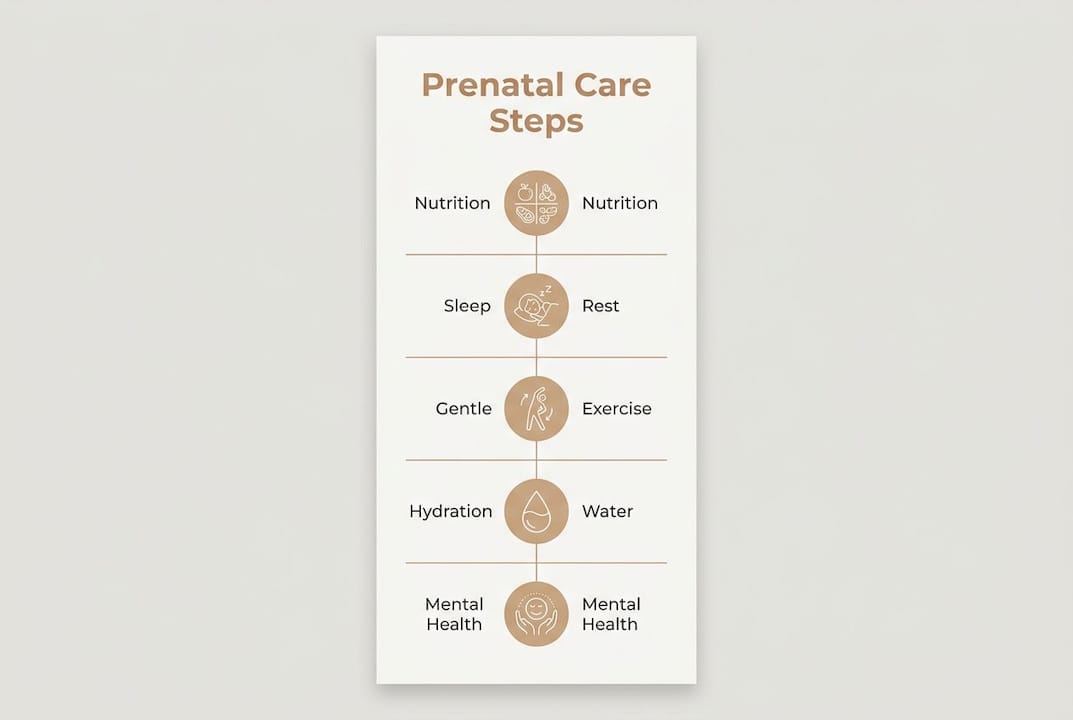
Prenatal wellness covers several distinct areas, each of which requires a different approach.
Nutrition and supplementation
Balanced nutrition during pregnancy focuses on nutrient density, not calorie volume. Folate, iron, calcium, and omega-3 fatty acids each support specific aspects of fetal development. Prenatal vitamins fill gaps that diet alone cannot always cover, particularly for iron and folate in the first trimester. Expectant mothers should discuss supplement choices with their midwife or obstetrician rather than self-prescribing.

Rest and restorative activity
Restorative rest during pregnancy goes beyond a full night’s sleep. Progesterone surges and increased blood volume drive significant fatigue, particularly in the first and third trimesters. Lying down with feet elevated, taking short naps, and scheduling quiet breaks during the day all reduce discomfort and prevent energy depletion. These are not luxuries. They are physiological necessities.
Safe physical activity
Regular, moderate exercise supports circulation, mood, and weight management during pregnancy. Walking, swimming, and pregnancy-specific yoga are widely recommended by midwives and obstetricians. The benefits of exercise during pregnancy include reduced back pain, better sleep, and lower risk of gestational diabetes. Expectant mothers should always confirm their exercise plan with a healthcare provider before starting.
Hydration
Proper hydration supports circulation, digestion, and headache prevention throughout pregnancy. Dehydration presents as dry lips, darker urine, and mild headaches, symptoms that are easy to miss when nausea is also present. Small, frequent sips of water or electrolyte drinks work better than large volumes consumed infrequently, especially during the first trimester when nausea peaks.
Skin and body care
Pregnancy changes skin rapidly. Hormonal shifts affect elasticity, pigmentation, and sensitivity. Choosing gentle pregnancy toiletries formulated without harsh chemicals protects both mother and baby. Belly balms and bump oils support skin elasticity and can reduce the discomfort associated with stretching. For specific guidance on managing skin changes, stretch mark care during pregnancy offers practical, evidence-informed advice.
Mental and emotional wellbeing
Mindfulness-based stress reduction combined with healthy lifestyle education significantly reduces health anxiety in high-risk pregnant women, with improvements sustained at least 1.5 months after the intervention. That finding confirms that mental health support is not supplementary. It is a core component of antenatal care. Breathing exercises, journalling, and peer support groups all provide accessible entry points for expectant mothers who are not yet working with a therapist.
Pro Tip: Keep a simple daily log of sleep, water intake, and mood. Patterns emerge quickly, and sharing this with your midwife gives them far more useful information than a verbal summary at a ten-minute appointment.
What psychological and social factors shape prenatal self-care?
Self-efficacy is the primary psychological driver of healthy prenatal behaviour. Education and counselling increase confidence significantly, which in turn raises the likelihood of positive pregnancy outcomes. Expectant mothers who believe they can manage their health are more likely to attend appointments, take supplements consistently, and seek help when symptoms arise. Building this confidence is therefore a clinical priority, not an optional extra.
Social support amplifies self-efficacy. Spousal and family support correlates with greater prenatal self-care agency, with odds ratios ranging from 1.53 to 2.53 across key health behaviours. Spouses specifically increase micronutrient supplement adherence, with an odds ratio of 1.57. These numbers confirm that pregnancy health is not a solo endeavour. Partners and family members who actively participate in antenatal appointments and household adjustments produce measurable improvements in maternal outcomes.
Digital information presents a more complicated picture. Online searches during pregnancy generate both useful knowledge and significant anxiety. Healthcare professionals stress that coordinated communication between clinicians and expectant mothers is the most effective way to filter digital information into clear, safe guidance. Without that coordination, expectant mothers are left to assess conflicting advice alone, which increases uncertainty and reduces care adherence.
“Prenatal self-care is most effective when obstetricians and patients collaborate to filter digital information into clear, safe, actionable advice, reducing anxiety and improving care adherence.”
Genetic screening before pregnancy represents one area where professional guidance is especially valuable. Understanding genetic risk factors before conception allows expectant mothers to enter pregnancy with a clearer, calmer picture of what to monitor.
Long-term benefits of prenatal self-care for postpartum recovery
Prenatal self-care does not stop mattering at birth. Continuing self-care routines during and after pregnancy produces smoother recovery and sustained wellbeing. The habits built during pregnancy create a foundation that the postnatal body draws on during one of its most demanding periods.
The long-term benefits follow a clear sequence:
- Improved postnatal skin health. Expectant mothers who maintain hydration and use pregnancy-safe skin products during gestation experience less severe skin changes after birth. Elasticity and tone recover more readily when the skin has been consistently nourished.
- Greater emotional resilience. Mindfulness and rest practices established during pregnancy carry directly into the postnatal period. Mothers who have already built these habits are better equipped to manage the emotional demands of newborn care.
- Higher breastfeeding success rates. Nutrition and supplement habits maintained throughout pregnancy support milk production and maternal energy levels after birth.
- Reduced postpartum complications. Routine antenatal care identifies and addresses risk factors before they become postnatal emergencies. Blood pressure management, anaemia treatment, and gestational diabetes monitoring all reduce the severity of postnatal recovery.
Maintaining self-care into the postnatal period requires deliberate planning. The demands of a newborn make it easy to deprioritise personal health. Expectant mothers who identify specific self-care habits before birth are more likely to sustain them afterwards.
Key takeaways
Prenatal self-care, grounded in consistent antenatal contact, sound nutrition, rest, and emotional support, produces better outcomes for both mother and baby at every stage of pregnancy and beyond.
| Point | Details |
|---|---|
| Start care in the first trimester | Late care raises preterm birth risk by 21%; early initiation improves outcomes across all key markers. |
| Self-efficacy drives behaviour | Education and counselling build the confidence expectant mothers need to maintain healthy routines. |
| Social support is measurable | Spousal involvement increases supplement adherence with an odds ratio of 1.57. |
| Rest is a clinical necessity | Progesterone surges and increased blood volume make restorative rest a physiological requirement, not a preference. |
| Prenatal habits shape postnatal recovery | Skin health, breastfeeding success, and emotional resilience all improve when self-care begins before birth. |
Why I think we underestimate the ordinary in prenatal care
The most common mistake I see is treating prenatal self-care as a checklist rather than a practice. Expectant mothers arrive at appointments having ticked the supplement box and the exercise box, but they have not slept properly in three weeks and they are spending two hours a night reading contradictory advice online. The checklist is complete. The person is not well.
What the research consistently shows is that self-efficacy, the quiet internal belief that you can manage this, matters more than any single intervention. You can prescribe the perfect supplement stack and the ideal exercise plan, but if an expectant mother does not believe she is capable of following through, she will not. Building that belief requires time, honest conversation, and a care team that treats questions as welcome rather than inconvenient.
The other thing I would push back on is the idea that self-care is indulgent. Maternal wellness is a foundational strategy for fetal health. When an expectant mother rests, hydrates, and manages her stress, she is not being selfish. She is doing the most direct thing possible to protect her baby. Framing it that way changes how expectant mothers prioritise it, and it changes how partners and family members respond too.
Collaborative care, where clinicians and expectant mothers work together to filter information and set realistic expectations, produces the best outcomes. That is not a soft observation. It is what the evidence says.
— Nat
Natural pregnancy care products from Mumbubhub
Mumbubhub brings together natural, plant-based products designed specifically for the demands of pregnancy and early motherhood.
The pregnancy pamper bundle includes belly balms, bump oils, and bath soaks formulated without harsh chemicals, supporting skin health and rest throughout all three trimesters. For expectant mothers preparing for birth and the weeks that follow, the Postpartum Essentials Bundle and the Rest & Restore Bundle extend the same gentle approach into recovery. Every product in the Mumbubhub range is made with ingredients chosen for safety during pregnancy and postnatal healing, supporting the self-care habits this article has outlined.
FAQ
What is prenatal self-care?
Prenatal self-care, also called antenatal wellness, refers to deliberate health-promoting behaviours during pregnancy. These include nutrition, rest, physical activity, emotional support, and routine medical care.
When should prenatal self-care begin?
Self-care should begin as early as possible, ideally before conception or in the first trimester. Late care increases preterm birth risk by 21%, making early initiation one of the most impactful decisions an expectant mother can make.
How does mental health fit into prenatal self-care?
Mental health is a core component of antenatal care, not a secondary concern. Mindfulness-based interventions significantly reduce health anxiety in pregnant women, with benefits lasting at least 1.5 months after the programme ends.
Can prenatal self-care reduce postpartum complications?
Yes. Consistent prenatal habits, including nutrition, hydration, and routine antenatal appointments, address risk factors before birth and support faster, smoother postnatal recovery.
What role does social support play in prenatal self-care?
Social support from spouses and family directly increases self-care adherence. Research shows spousal involvement raises micronutrient supplement adherence with an odds ratio of 1.57, making partner engagement a clinically meaningful factor in pregnancy health.