

Why aloe vera soothes pregnancy skin: the evidence
TL;DR:
- Applying topical aloe vera during pregnancy is generally safe because it moisturizes and soothes skin irritation. Ingesting aloe, especially whole-leaf extracts or latex, is not recommended due to potential risks like uterine contractions. Choosing pure inner-leaf gel products and conducting patch tests help ensure safe, effective skin care.
Aloe vera soothes pregnancy skin because its gel is up to approximately 99% water, packed with polysaccharides that lock moisture into stretched, sensitive skin and reduce the itching and redness that come with it. Add anti-inflammatory enzymes, vitamins A, C, and E, and amino acids that support skin repair, and you have a plant that addresses several pregnancy skin complaints at once. The short safety note: applying aloe topically is generally regarded as safe during pregnancy. Ingesting it, whether as juice, capsules, or “detox” drinks, is not.
Mumbubhub offers a range of pregnancy-safe products formulated with gentle botanicals, including options that complement aloe’s soothing properties, for expectant mothers across the UK.
Table of Contents
- Why aloe vera soothes pregnancy skin: the mechanisms
- What the clinical evidence actually shows
- Safety in pregnancy: what to watch for
- How to use aloe vera safely during pregnancy
- How to choose an aloe product in the UK
- Key takeaways
- A note on gentle, evidence-informed pregnancy skin care
- Mumbubhub’s pregnancy skin care range
- Useful sources
- FAQ
Why aloe vera soothes pregnancy skin: the mechanisms
Pregnancy skin is under real physical stress. The abdomen stretches rapidly, moisture evaporates faster, and the immune system shifts in ways that make skin more reactive. Aloe’s composition addresses each of these problems.
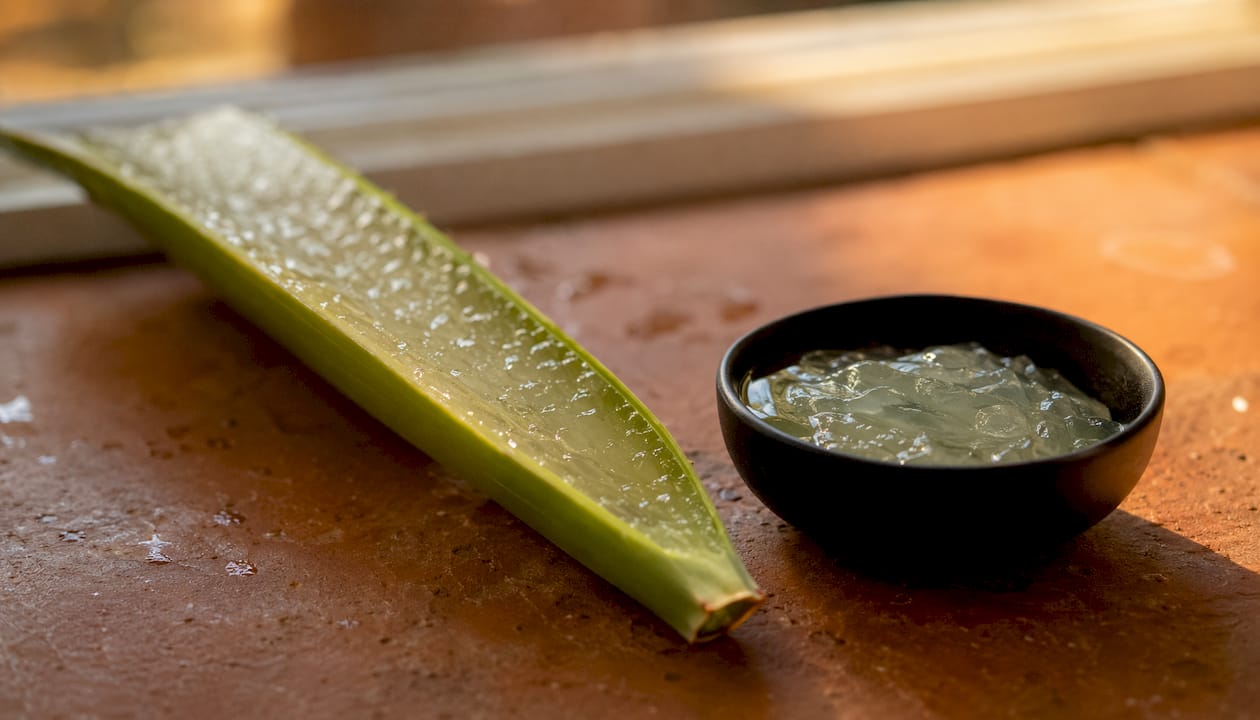
The gel’s extraordinary water content creates an immediate cooling, hydrating effect on contact. But the real work is done by mucopolysaccharides (long-chain polysaccharides, including acemannan), which form a humectant film on the skin surface. Think of it as a breathable seal: moisture stays in, irritants stay out, and the nerve endings just beneath the surface calm down.
The main active groups and what they do:
- Polysaccharides (acemannan): retain moisture, support the skin barrier, reduce pruritus
- Vitamins A, C, E: antioxidant protection, support collagen synthesis and skin repair
- Enzymes (bradykinase): break down inflammation mediators, reducing redness
- Amino acids: building blocks for skin-cell repair and barrier maintenance
- Glycoproteins: promote wound healing and reduce irritation signals
Aloe contains over 75 active constituents, and the evidence suggests these work synergistically rather than any single compound carrying the load. That matters for product choice: a highly processed extract that strips most of these components will not perform the same way as a high-purity inner-leaf gel.
Pro Tip: Always choose products that specify “inner-leaf gel” or “aloe barbadensis leaf juice” on the label. Raw whole-leaf preparations may contain aloe latex, the yellow sap layer between the leaf skin and the clear gel, which can cause skin irritation.
What the clinical evidence actually shows
The strongest claim for aloe in pregnancy skin care comes from a liposome-encapsulated aloe vera study on melasma, a common pregnancy pigmentation concern. Participants using the aloe preparation saw a 32% improvement in MASI score over five weeks, compared with 10% in the control group. That is a meaningful gap, though the liposome delivery system means the result may not translate directly to standard gel products.
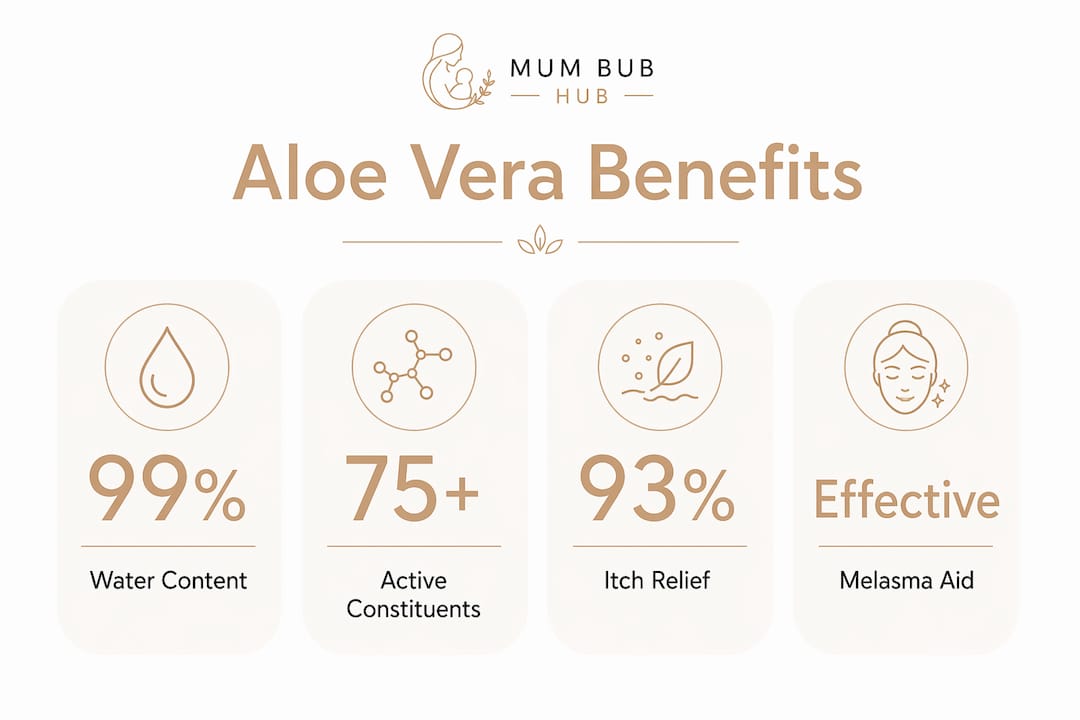
For itching specifically, a clinical trial on pruritus gravidarum found that 93.4% of participants showed a decrease in itching severity after topical aloe treatment. A separate double-blind trial on striae gravidarum found aloe cream more effective than base cream for reducing itching and erythema and slowing the spread of stretch marks.
| Finding | Result | Source |
|---|---|---|
| Water content of aloe gel | approximately 99% | PMC review |
| MASI score improvement (melasma) | 32% vs 10% control over 5 weeks | PubMed MASI study |
| Pruritus gravidarum trial | 93.4% of participants showed reduced itching | Pruritus gravidarum trial |
| Striae gravidarum trial | Aloe cream outperformed base cream for itch and erythema | PubMed striae study |
Limitations worth knowing:
- Most trials use small sample sizes and short follow-up periods
- Liposome-encapsulated formulations may outperform standard gels
- Product quality varies considerably; standardised inner-leaf gel products tend to produce more consistent results than raw plant extracts
For deeper reading, the PMC comprehensive review, DermNet’s aloe overview, and the LactMed database entry are the most reliable starting points.
Safety in pregnancy: what to watch for
Topical aloe is generally regarded as safe during pregnancy. The concern lies entirely with ingestion.
Aloe latex, the yellow layer between the leaf skin and the clear gel, contains anthraquinone glycosides (aloin and emodin). These act as stimulant laxatives and, if ingested in sufficient quantities, may cause uterine contractions. The FDA required removal of aloe-containing OTC laxatives in 2002 because of insufficient safety data. Oral aloe products, including juice, capsules, and whole-leaf extracts marketed for detox, carry the same concern and should be avoided throughout pregnancy.
For topical use, the main risk is allergic contact dermatitis from latex contamination in poorly processed products. This is why inner-leaf gel formulations matter.
Patch-test guidance: apply a small amount to the inner forearm and leave for 24 hours before using on larger areas. Pregnancy commonly heightens skin sensitivity, so reactions can appear even if you have used aloe before without issue.
Stop using and contact your GP, midwife, or dermatologist if you notice:
- Severe burning or stinging that does not settle within minutes
- A spreading rash or hives
- Swelling at or beyond the application site
- Any systemic symptoms (nausea, dizziness) after topical application
Dermatology and pregnancy-care sources consistently recommend informing your midwife or GP before starting any new topical routine, particularly in the first trimester.
How to use aloe vera safely during pregnancy
- Patch test first. Apply a small amount to your inner forearm. Wait 24 hours. If no reaction, proceed.
- Apply to clean, intact skin. Gently cleanse the area first. Do not apply to broken or cracked skin unless directed by a healthcare professional.
- Use a thin layer. A small amount goes a long way. Massage gently into the abdomen, thighs, or wherever skin feels tight or itchy.
- Frequency. Once or twice daily is typical for moisturising and itch relief. Follow product instructions for specific formulations.
- Nipple application. If using aloe for nipple soreness, wash the area thoroughly before nursing to prevent infant ingestion, as advised in this nipple sensitivity and irritation guide. The LactMed database notes benefits but flags this precaution clearly.
- Sunscreen still applies. Aloe is not a sunblock. Continue using a mineral SPF product on exposed skin, particularly given that pregnancy can increase photosensitivity and worsen melasma.
- Storage. Keep pure gel refrigerated and use within the period indicated. For commercial products, check the expiry date and ensure the preservative system is intact.
- When to stop. Worsening irritation, new redness, or any sign of allergy means stopping immediately and noting the reaction to report to your healthcare provider.
For a broader natural pregnancy skincare routine, Mumbubhub’s blog covers how aloe and other gentle ingredients fit together across the trimesters.
How to choose an aloe product in the UK
The label is your first filter. The INCI name to look for is “Aloe barbadensis leaf juice” or “Aloe barbadensis leaf gel”. Either confirms you are getting the clear inner-leaf gel rather than a whole-leaf preparation.
What to look for:
- “Inner-leaf gel” or “mucilaginous gel” stated explicitly
- “Aloe barbadensis leaf juice” or “leaf gel” as the INCI name
- A preservative system listed (natural preservatives such as citric acid or potassium sorbate are common in reputable products)
- UK or EU cosmetic compliance (products sold in the UK must meet UK Cosmetic Regulations)
- Third-party testing or batch certification where available
Red flags:
- “Whole-leaf aloe extract” with no further detail
- “Aloe extract” listed without specifying inner-leaf or leaf juice
- Products marketed as oral detox, laxative, or cleansing drinks containing aloe
- Strong synthetic fragrances or undisclosed botanical blends
- No INCI ingredient list at all
Standardised inner-leaf gel formulations consistently outperform ambiguously labelled products in clinical settings. If a label does not tell you clearly what type of aloe it contains, that ambiguity is itself a reason to choose something else.
For guidance on gentle pregnancy toiletries more broadly, Mumbubhub’s maternity essentials guide covers ingredient considerations across product categories.
Key takeaways
Aloe vera soothes pregnancy skin through its high water content, moisture-locking polysaccharides, and anti-inflammatory actives; topical use is generally safe, but ingestion is contraindicated throughout pregnancy.
| Point | Details |
|---|---|
| How aloe soothes | High water content (~99%) and polysaccharides form a humectant film, reducing itch and redness. |
| Clinical evidence | A 32% MASI improvement vs 10% control and a 93.4% pruritus reduction rate support topical use. |
| Topical vs ingestion | Topical aloe is generally safe in pregnancy; oral aloe (juice, capsules, whole-leaf) is contraindicated. |
| Product selection | Choose “Aloe barbadensis leaf juice/gel” on the INCI list; avoid whole-leaf or unlabelled extracts. |
| Mumbubhub | Mumbubhub’s Pregnancy Belly Balm and Coconut Milk Bath Soak offer pregnancy-safe daily skin support. |
A note on gentle, evidence-informed pregnancy skin care
There is a tendency in pregnancy wellness content to either overstate what a plant ingredient can do or dismiss it entirely because the trial evidence is not from a large RCT. Neither serves expectant mothers well. Aloe’s evidence base is genuinely solid for what it claims: hydration, itch relief, and mild anti-inflammatory support. It is not a treatment for serious skin conditions, and it will not prevent stretch marks with certainty. But for the daily discomfort of stretched, sensitive skin, it is one of the better-supported natural options available.
What gets underplayed is product quality. The difference between a high-purity inner-leaf gel and a poorly processed whole-leaf extract is not a minor formulation detail. It determines whether you get the polysaccharides and vitamins that do the work, or a product that carries latex contamination risk. That distinction matters more than brand name or price point.
At Mumbubhub, the focus is on pregnancy-safe, evidence-informed formulations that expectant mothers in the UK can use with confidence. Always discuss new skincare routines with your midwife or GP, particularly if you have pre-existing skin conditions or sensitivities.
Mumbubhub’s pregnancy skin care range
Pregnancy skin needs consistent, gentle support, and the right products make that easier to maintain daily.
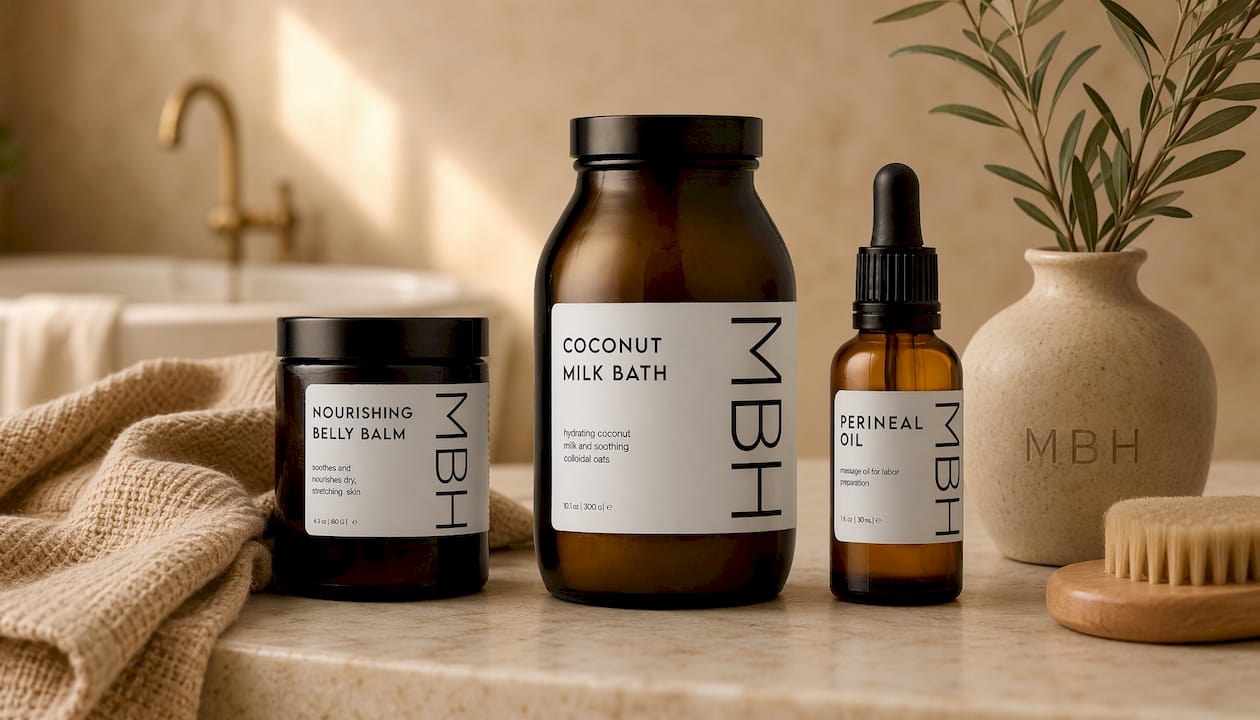
Mumbubhub’s Pregnancy Belly Balm is formulated for daily use on stretching skin, offering the kind of sustained moisturising support that helps manage tightness and itching across the second and third trimesters. For a more immersive option, the Coconut Milk Bath Soak provides full-body skin comfort and relaxation, a useful complement to targeted topical care. If you are preparing for the later stages of pregnancy, the Perineal Massage Oil is formulated specifically for late-pregnancy perineal care with gentle botanicals.
All products are formulated with natural ingredients and designed for pregnancy-safe use. Patch-test before first use, and do not ingest any aloe-based product during pregnancy. Browse the full range at mumbubhub.co.uk and speak to your midwife if you have any concerns about specific ingredients.
Useful sources
For readers who want to go further, these are the most relevant references used in this article:
- PMC comprehensive aloe review: covers water content, polysaccharide composition, and topical applications including hyperpigmentation
- DermNet: aloe vera and the skin: practitioner-level overview of active constituents and clinical uses
- LactMed: aloe: covers latex contamination risks, nipple application guidance, and ingestion contraindications
- MASI study (PubMed): liposome-encapsulated aloe vera and melasma outcomes
- Pruritus gravidarum trial: itching severity outcomes in pregnant women
- Striae gravidarum trial (PubMed): aloe cream vs base cream for stretch marks, itch, and erythema
- NCCIH: aloe vera usefulness and safety: US national centre overview including pregnancy and breastfeeding cautions
- Medical News Today: skincare during pregnancy: dermatology and GP consultation guidance
For personal advice on your own skin during pregnancy, consult your GP, midwife, or a dermatologist. This article is general information, not medical advice.
FAQ
Is aloe vera safe to use on skin during pregnancy?
Topical aloe vera is generally regarded as safe during pregnancy, with no documented reproductive safety signals from skin application. Oral aloe, including juice and capsules, is contraindicated due to laxative effects and potential uterine stimulation.
Why does aloe vera reduce itching on a pregnant belly?
Aloe’s polysaccharides form a moisture-retaining film on the skin surface, reducing the nerve irritation that causes itching. Anti-inflammatory enzymes such as bradykinase further calm redness and pruritus associated with skin stretching.
Can aloe vera help with pregnancy stretch marks?
A double-blind clinical trial found aloe cream more effective than base cream for reducing itching and erythema and slowing the spread of striae, though no topical treatment has been shown to prevent stretch marks entirely.
What type of aloe product should I choose during pregnancy?
Look for “Aloe barbadensis leaf juice” or “leaf gel” on the INCI ingredient list, which confirms inner-leaf gel rather than a whole-leaf extract. Avoid products labelled “whole-leaf aloe” or oral aloe preparations of any kind.
When should I contact my midwife about a skin reaction to aloe?
Contact your midwife or GP if you experience severe burning, a spreading rash, swelling beyond the application site, or any systemic symptoms after use. Patch-test on the inner forearm for 24 hours before applying to larger areas.