

Lavender and pregnancy calm: what you need to know
TL;DR:
- Lavender helps pregnant women relax by calming the nervous system through its active compound, linalool. It can improve sleep, reduce anxiety, and support stress management during pregnancy. Safety guidelines recommend avoiding use before 12 weeks and using low doses during the second trimester with medical guidance.
Lavender is defined as one of the most studied botanical aids for reducing anxiety and promoting relaxation during pregnancy. The role of lavender in pregnancy calm centres on its ability to ease stress and support sleep through gentle aromatherapy, particularly from the second trimester onward. Its active compound, linalool, modulates GABA pathways in the nervous system, producing a measurable calming effect without sedation. Used correctly, lavender offers expectant mothers a safe, plant-based way to manage the emotional weight of pregnancy.
What are the calming effects of lavender during pregnancy?
Lavender’s calming action is physiological, not just psychological. Linalool exerts anxiolytic effects by modulating nervous system activity through GABA receptors, the same pathways targeted by many prescription anti-anxiety medications. That mechanism explains why even brief inhalation can shift the body toward a calmer state within minutes.
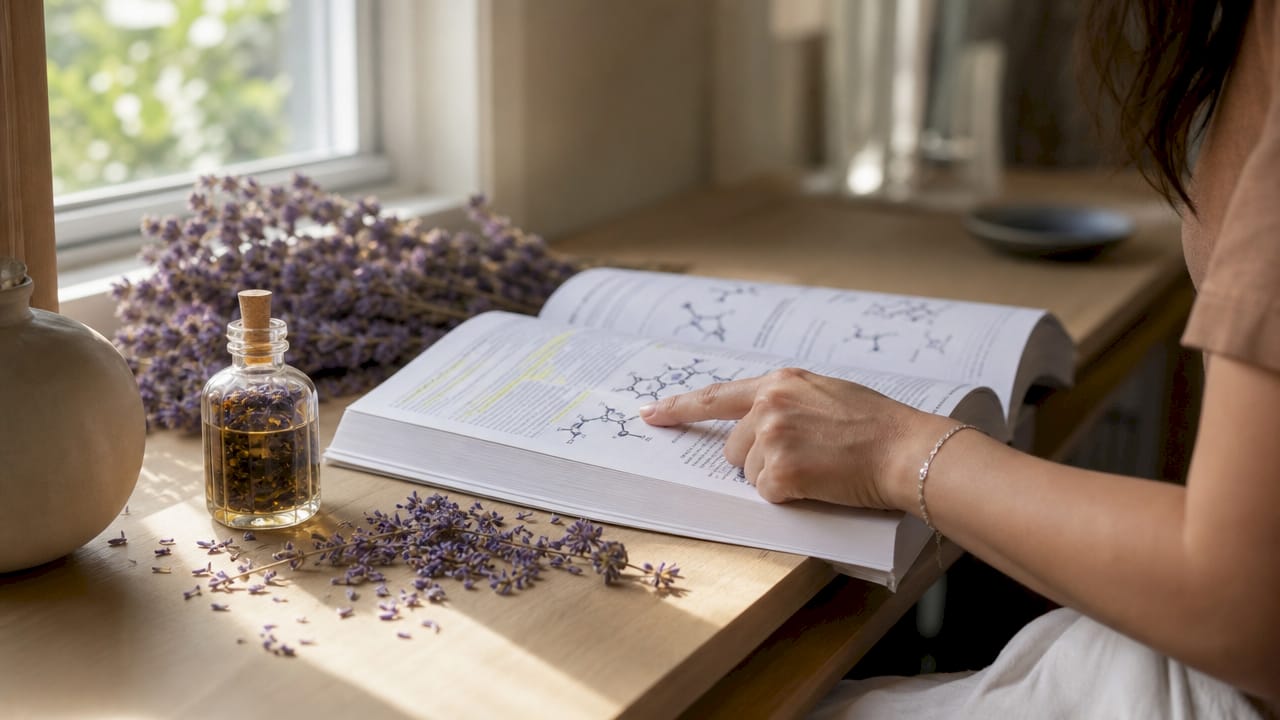
Clinical trials confirm that lavender aromatherapy improves sleep quality and reduces anxiety symptoms in pregnant women. Sleep disruption and anxiety are among the most common complaints during pregnancy, so a natural aid that addresses both simultaneously is genuinely useful. The effect is supportive rather than medicinal. Lavender does not treat clinical anxiety disorders or pregnancy complications. It creates the conditions for rest, which the body can then use to recover.
Lavender aromatherapy also shows promise for managing stress during labour. Diffusing lavender in a birth environment has been used in midwifery settings to reduce perceived pain and emotional distress. The calming effects of lavender in this context work alongside breathing techniques and other non-pharmacological methods, not instead of them.
Key benefits supported by research include:
- Reduced anxiety: Inhalation lowers perceived stress and promotes emotional calm.
- Improved sleep onset: The sedative properties of linalool help quiet an overactive mind at bedtime.
- Labour stress support: Used in birth settings to reduce emotional distress during contractions.
- Nausea relief: Aromatherapy interventions show measurable reductions in nausea scores (see the research section below).
Pro Tip: Diffuse lavender for 20–30 minutes before bed rather than continuously throughout the night. Short, intentional sessions give your nervous system a clear signal to wind down without overexposure.
How safe is lavender for use during pregnancy?
Safety in pregnancy aromatherapy is contextual. The term “safe” depends on dose, method, and individual response rather than implying universal safety for all women in all situations. Lavender is among the better-studied essential oils for pregnancy, but that does not mean it carries zero risk.
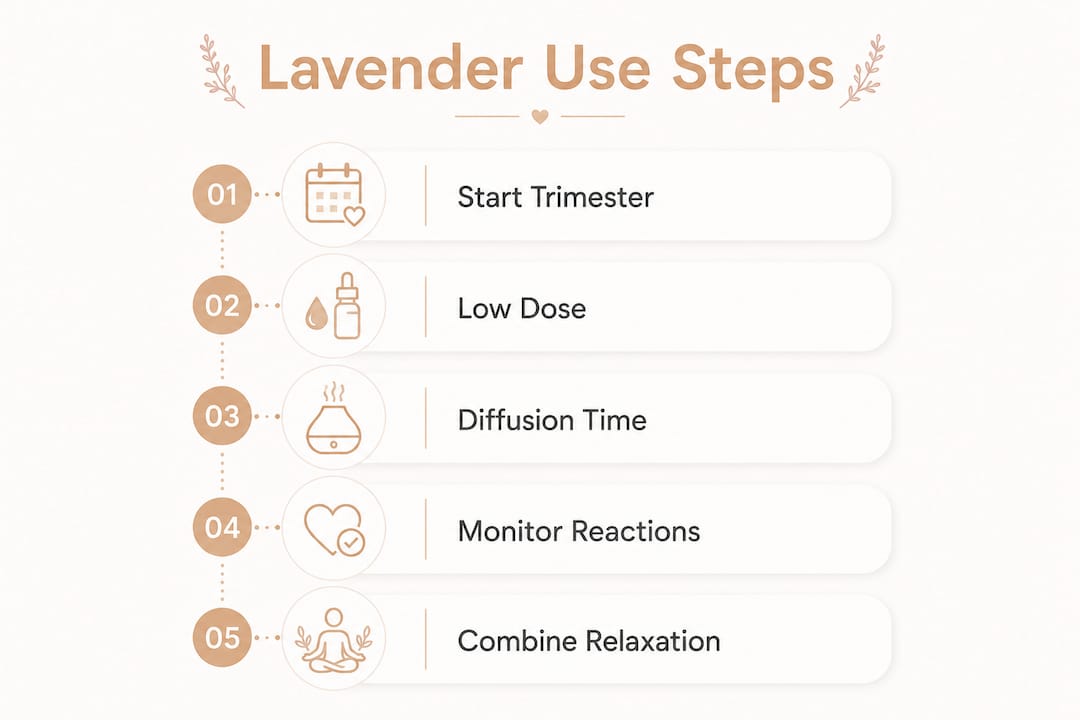
The first trimester requires the most caution. Therapeutic lavender use is not recommended before 12 weeks due to limited safety data for early foetal development. Casual ambient exposure, such as a lavender-scented candle in a well-ventilated room, is a different matter from intentional therapeutic use. The distinction matters.
From the second trimester onward, these guidelines apply:
- Avoid the first trimester entirely. Do not use lavender essential oil therapeutically before 12 weeks.
- Use low dilution for topical application. A 1–2% dilution is the recommended maximum. That equates to roughly 6 drops per 30ml of carrier oil.
- Limit diffusion time. 2–3 drops in a diffuser for 30–45 minutes is the safe upper limit per session.
- Ventilate the room. Always use lavender in a well-ventilated space. Closed rooms concentrate volatile compounds and increase inhalation dose.
- Patch test before topical use. Pregnancy hormones heighten skin reactivity. Apply a small amount to the inner arm and wait 24 hours before wider use.
- Avoid in high-risk pregnancies. Contraindications include threatened preterm labour, vaginal bleeding, preeclampsia, and placenta complications. Medical clearance is required before any essential oil use in these cases.
- Consult your midwife or GP first. This applies regardless of trimester or health status.
Pregnancy also increases olfactory sensitivity. Some expectant mothers experience nausea or headaches triggered by lavender scent due to altered scent perception. If lavender makes you feel worse, stop immediately. Personal comfort overrides any general recommendation.
Pro Tip: Keep a small notebook during the first few weeks of using lavender. Note the time, method, dose, and how you felt afterward. Patterns emerge quickly, and you will have useful information to share with your midwife.
How can you incorporate lavender into your pregnancy self-care routine?
Practical use matters as much as safety knowledge. Knowing lavender is broadly safe after the first trimester is only useful if you know how to apply that in daily life. The gentle toiletries you choose during pregnancy should all follow the same principle: low dose, intermittent use, and attention to how your body responds.
Safe methods for incorporating lavender include:
- Ultrasonic diffusion: Add 2–3 drops of lavender essential oil to an ultrasonic diffuser with water. Run it for no more than 30–45 minutes in a ventilated room. This is the most controlled method for inhalation.
- Diluted topical application: Mix lavender oil into a carrier oil such as sweet almond or jojoba at a 1% dilution. Apply to the wrists, temples, or the soles of the feet. Always patch test first.
- Lavender-infused bath products: Bath soaks and body balms that contain lavender as a formulated ingredient are generally safer than neat essential oil because the concentration is controlled by the manufacturer. Mumbubhub’s pregnancy-safe belly balm uses natural plant-based ingredients designed with this principle in mind.
- Pillow spray: A light lavender pillow spray used 10–15 minutes before sleep allows the scent to dissipate slightly before you lie down, reducing direct inhalation intensity.
- Lavender tea: Occasional lavender tea made from culinary-grade dried flowers is considered low risk after the first trimester, though it should not replace hydration or be consumed in large quantities.
When scent aversion is present, skip lavender entirely. Forcing exposure to a scent that triggers nausea defeats the purpose. Alternatives such as chamomile or a plain warm bath with Epsom salts can provide similar relaxation without the olfactory trigger.
Lavender works best when paired with other relaxation techniques. Combining diffusion with slow diaphragmatic breathing, a warm bath, or a gentle perineal massage oil routine creates a multi-sensory wind-down signal that the nervous system learns to associate with rest.
What does the latest research say about lavender’s effectiveness?
The evidence base for lavender in pregnancy has grown meaningfully. A 2026 quasi-experimental study found that mean nausea scores dropped from 9.34 to 6.34 following lavender aromatherapy interventions in pregnant women with hyperemesis gravidarum. That is a clinically meaningful reduction in one of pregnancy’s most debilitating symptoms.
| Symptom | Before lavender aromatherapy | After lavender aromatherapy |
|---|---|---|
| Nausea score (mean) | 9.34 | 6.34 |
| Anxiety symptoms | Elevated | Reduced |
| Sleep quality | Disrupted | Improved |
The nausea finding is particularly notable because hyperemesis gravidarum is notoriously difficult to manage without medication. Lavender does not replace antiemetic treatment, but it offers a complementary approach that carries minimal risk when used correctly.
Anxiety and sleep improvements are consistent across multiple clinical trials. Lavender aromatherapy decreases anxiety symptoms and supports better sleep in pregnant women, two outcomes that directly affect foetal wellbeing and maternal health. Poor sleep in pregnancy is linked to increased risk of complications, so even modest improvements carry real value.
“Lavender’s main benefit in pregnancy is mental and emotional support rather than direct symptom treatment. It creates the conditions for rest and calm, which the body uses to recover.”
Research limitations are worth acknowledging. Most studies use small sample sizes and short intervention periods. The evidence supports lavender as a useful complementary aid, not a standalone treatment. Ginger remains better evidenced for nausea specifically, but lavender’s dual action on both nausea and anxiety gives it a broader role in pregnancy wellbeing.
Key takeaways
Lavender supports pregnancy calm most effectively when used after the first trimester, at low doses, in well-ventilated spaces, and always with midwife or GP guidance.
| Point | Details |
|---|---|
| Mechanism of action | Linalool in lavender modulates GABA pathways, producing genuine anxiolytic effects. |
| First trimester caution | Avoid therapeutic lavender use before 12 weeks due to limited safety data. |
| Safe diffusion dose | Use 2–3 drops for 30–45 minutes in a ventilated room from the second trimester. |
| Topical dilution rule | A 1% dilution (roughly 6 drops per 30ml carrier oil) is the safe maximum for skin application. |
| Scent aversion | Stop use immediately if lavender triggers nausea or headaches; personal comfort takes priority. |
Lavender in pregnancy: what the research doesn’t always tell you
The studies are encouraging, and I think lavender genuinely earns its place in a pregnancy self-care routine. But the research tends to present lavender as either safe or unsafe, and the reality is far more nuanced than that binary.
What I have found is that the women who benefit most from lavender during pregnancy are those who treat it as a ritual rather than a remedy. They are not reaching for the diffuser because they read a study. They are building a consistent wind-down routine, and lavender is one part of it. That consistency is probably doing as much work as the linalool.
The thing most articles skip over is scent aversion. Pregnancy changes your relationship with smell in ways that are genuinely unpredictable. A scent you loved before conception can become intolerable by week eight. If lavender is one of those scents for you, no amount of evidence about GABA pathways changes that. Your comfort is the only metric that matters.
I also think the first trimester guidance is under-communicated. Many expectant mothers start using essential oils before they even know they are pregnant, or in the early weeks before their first midwife appointment. The advice to wait until after 12 weeks is not alarmist. It reflects genuine uncertainty about early foetal development, and caution in that window costs nothing.
The most useful thing you can do is have one honest conversation with your midwife before you start. Not because lavender is dangerous, but because your midwife knows your specific pregnancy. General guidance is a starting point, not a prescription.
— Nat
Pregnancy self-care from Mumbubhub
Mumbubhub’s pregnancy essentials collection brings together plant-based products formulated with the same low-dose, gentle principles that make lavender safe for expectant mothers. Every product is designed around the idea that pregnancy self-care should feel nourishing, not complicated.
The Pregnancy Pamper Bundle and the Rest & Restore Bundle are both curated with relaxation in mind, using natural ingredients suited to the sensitivities of pregnancy. They make it easy to build a consistent self-care routine without having to research every ingredient yourself. As always, check with your midwife or GP before introducing any new product during pregnancy.
FAQ
Is lavender safe to use during the first trimester?
Therapeutic lavender use is not recommended before 12 weeks due to limited safety data on early foetal development. Incidental ambient exposure carries far less risk than intentional aromatherapy use.
How many drops of lavender oil are safe in a diffuser during pregnancy?
2–3 drops in an ultrasonic diffuser for 30–45 minutes in a well-ventilated room is the recommended safe limit per session from the second trimester onward.
Can lavender help with pregnancy nausea?
Research shows lavender aromatherapy can reduce nausea scores meaningfully in pregnant women. It works best as a complementary approach alongside other treatments, not as a standalone remedy.
What dilution of lavender oil is safe for pregnancy massage?
A 1% dilution for topical use is the recommended maximum, equating to roughly 6 drops per 30ml of carrier oil. Always patch test first due to increased skin sensitivity during pregnancy.
Should I avoid lavender if I have a high-risk pregnancy?
Yes. Lavender should not be used in high-risk pregnancies without explicit medical clearance. Contraindications include threatened preterm labour, vaginal bleeding, preeclampsia, and placenta complications.