

Best postpartum pads for new mums in 2026
TL;DR:
- The best postpartum pads vary from high-capacity hospital-style options for heavy bleeding to breathable organic cotton pads for sensitive skin. Transitioning to thinner overnight pads and reusable period pants helps improve comfort as bleeding lessens over time. Proper pad selection supports healing and reduces discomfort during recovery after birth.
For the first days after birth, a high-capacity, breathable maternity pad is the single most important item in your recovery kit. The best overall pick is a long, unscented, organic cotton maternity pad with a secure adhesive strip — one that handles heavy lochia without bunching, irritating stitches, or leaving you anxious about leaks.
Here is the shortlist at a glance:
- Best overall: Long, high-capacity organic cotton maternity pad — maximum absorbency, soft against healing skin, unscented.
- Best for heavy flow: Hospital-equivalent maxi maternity pad with anti-leak side barriers — the kind issued on postnatal wards, built for the first 24–72 hours.
- Best overnight: Extra-long overnight maternity pad with wings — wider coverage for side-sleeping without the bulk of a hospital pad.
- Best organic: Oeko-Tex certified organic cotton topsheet pad — skin-safe, breathable, and free from synthetic fragrance or bleach.
- Best reusable/period-pants alternative: Heavy-duty postpartum period pants — suitable once flow reduces to a moderate level, washable and comfortable against sensitive skin.
- Best budget: Own-brand supermarket maternity pads — widely available at Boots, Tesco, and Sainsbury’s, reliable absorbency at a low price per pad.
- Convenient bundle option: Mumbubhub’s Postpartum Essentials Bundle and Prep and Recover Bundle include natural, plant-based recovery products alongside maternity pads, making them a practical ready-made kit for UK shoppers.
Table of Contents
- How do the best postpartum pads compare?
- Reviews of the top postpartum pads
- How were these picks chosen?
- What should you look for when buying postpartum pads?
- How many pads will you need, and when should you buy them?
- Midwife-backed tips and practical alternatives
- Which pad is right for your recovery stage?
- Key takeaways
- What actually matters when choosing postpartum pads
- Natural postpartum recovery kits from Mumbubhub
- Further reading and authoritative sources
- FAQ
How do the best postpartum pads compare?
The table below covers the dimensions that matter most when choosing a pad for each stage of recovery. Prices and pack sizes vary by retailer; the price-per-pad figure is the most useful comparison tool because pack counts range from 10 to 30.
| Pad type | Best for | Absorbency | Material | Length/coverage | Comfort/stitches | UK availability | Reusable? |
|---|---|---|---|---|---|---|---|
| Hospital-equivalent maxi maternity pad | First days, heavy lochia | Very high | Cellulose core, soft topsheet | Extra-long (around 30 cm or more) | Bulky but protective; suitable for stitches | Boots, Amazon, supermarkets | No |
| Organic cotton maternity pad | Sensitive skin, organic preference | High | Organic cotton topsheet, Oeko-Tex certified | Long (around 30 cm or more) | Soft, breathable, low irritation | Online, Boots, health stores | No |
| Extra-long overnight pad | Overnight, side-sleeping | High | Breathable synthetic or cotton blend | Extra-long with wings | Thinner than hospital pad; good for later days | Supermarkets, Boots, Amazon | No |
| Cooling/ice maternity pad | Perineal swelling, first 48 hours | Moderate | Gel insert + absorbent layer | Standard maternity length | Soothing; requires more frequent changes | Specialist baby retailers, online | No |
| Postpartum period pants | Weeks 2–6, moderate flow | Moderate–high | Organic cotton or bamboo gusset | Full brief coverage | Very comfortable; not for very heavy early flow | Online, Boots, specialist retailers | Yes |
| Budget supermarket maternity pad | Cost-conscious, general use | High | Synthetic or cotton blend | Long | Functional; check for fragrance | Tesco, Sainsbury’s, Asda, Boots | No |
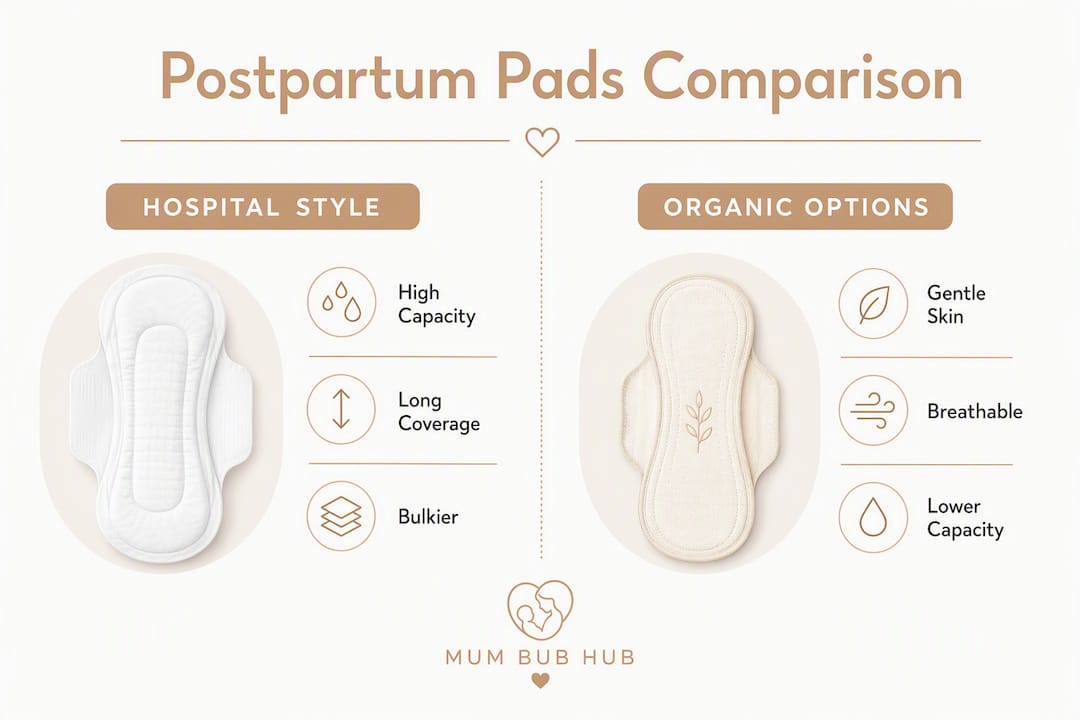
Price-per-pad guidance: A pack of 10 hospital-style maternity pads typically costs £2–£4, putting the price per pad at around 20–40p. Organic options in packs of 12–14 tend to cost £5–£8, roughly 40–60p per pad. Postpartum period pants cost considerably more per unit but are reused across multiple washes, which reduces the long-term cost.
Hospital vs. home supply: Most NHS postnatal wards provide high-capacity maternity pads during your stay, but supply is not unlimited. Independent testing consistently shows that hospital-style pads lead on absorbency and leak control. Bring your own supply for home, where comfort and breathability matter more than pure capacity.
Reviews of the top postpartum pads
Hospital-equivalent maxi maternity pad
Best for: The first 24–72 hours of very heavy lochia.
These are the closest you can buy to what postnatal wards issue. The cellulose core handles a high volume of fluid, the extra length (typically 32–36 cm) protects against leaks when lying down, and the adhesive strip keeps the pad in place even with bulky mesh pants. They are not the most comfortable option for extended wear — the thickness can feel awkward — but for the immediate postpartum phase, capacity takes priority over comfort.
Pros: Maximum absorbency; long coverage; widely available at Boots and supermarkets. Cons: Bulky; not breathable for extended use; usually not organic.
Organic cotton maternity pad
Best for: Sensitive skin, perineal stitches, and anyone prioritising non-toxic postpartum pads.
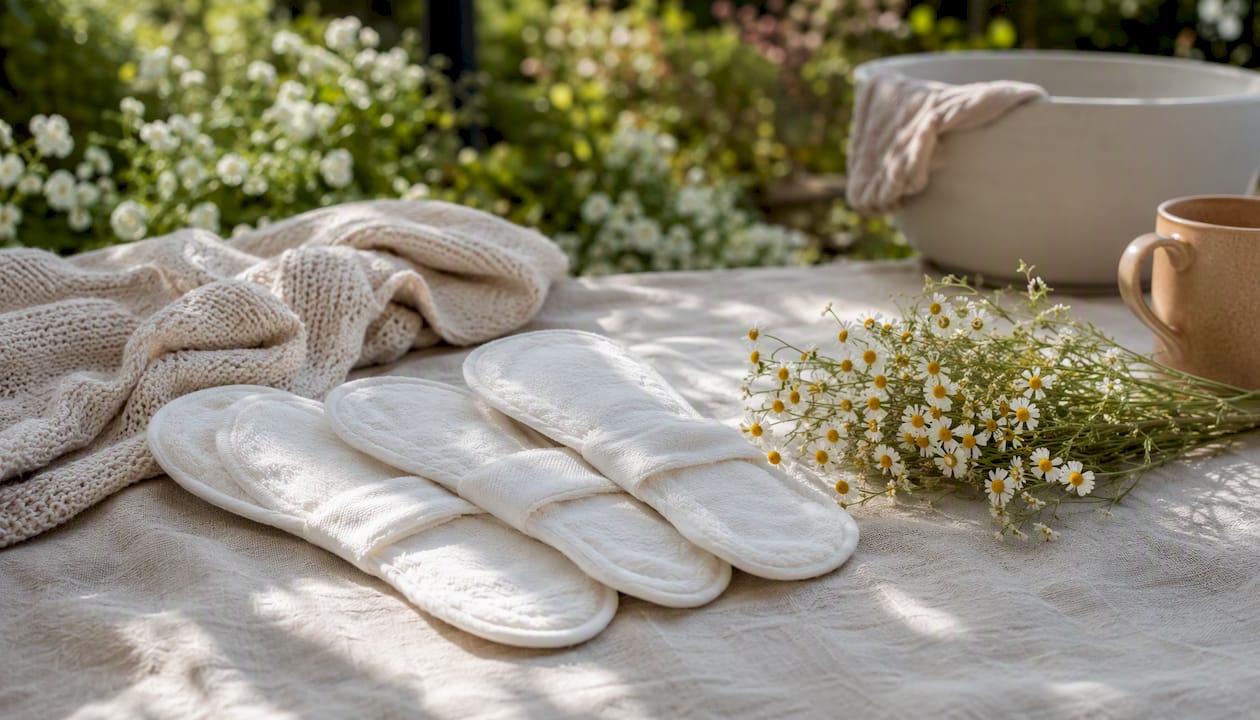
Organic maternity pads with an Oeko-Tex certified cotton topsheet sit directly against healing skin without synthetic fragrance, bleach, or unknown chemical finishes. Eco-focused brands highlight organic cotton topsheets and certifications as key differentiators for postpartum skin sensitivity. The absorbency is high enough for the first days, though not quite at the level of a hospital maxi pad. For anyone with a perineal tear or episiotomy, the softness of an organic cotton cover genuinely reduces friction and discomfort.
Pros: Skin-safe materials; certified organic; breathable; suitable for stitches. Cons: Slightly less capacity than hospital-style pads; higher price per pad.
Extra-long overnight maternity pad
Best for: Nights from day 3 onwards; side-sleeping; the transition phase as flow reduces.
Parent testers have found that flexible overnight-style pads balance absorbency with reduced bulk once the heaviest phase passes. Wings help anchor the pad during sleep, and the thinner profile is noticeably more comfortable than a hospital maxi pad for daytime wear from around day 4–5. Look for a pad that is at least 30 cm long with a secure adhesive.
Pros: Thinner and more comfortable; wings for overnight security; good for the transition phase. Cons: Not sufficient for the very heaviest early lochia; wings can irritate inner thighs.
Cooling/ice maternity pad
Best for: Perineal swelling and bruising in the first 48 hours.
Cooling postpartum pads — sometimes called padsicles — combine a gel insert with an absorbent layer to deliver localised cold relief while managing lochia. Product roundups note these as useful for perineal swelling, though they require more frequent changing than standard pads and should not replace high-capacity maternity pads during heavy flow. You can also make your own by soaking a standard maternity pad with witch hazel and chilling it — see the DIY witch hazel pad guide for a simple method.
Pros: Soothing for swelling and bruising; dual-purpose. Cons: Lower absorbency than standard maternity pads; needs more frequent changes; specialist availability.
Postpartum period pants
Best for: Weeks 2–6, once flow reduces to a moderate level; anyone wanting a reusable option.
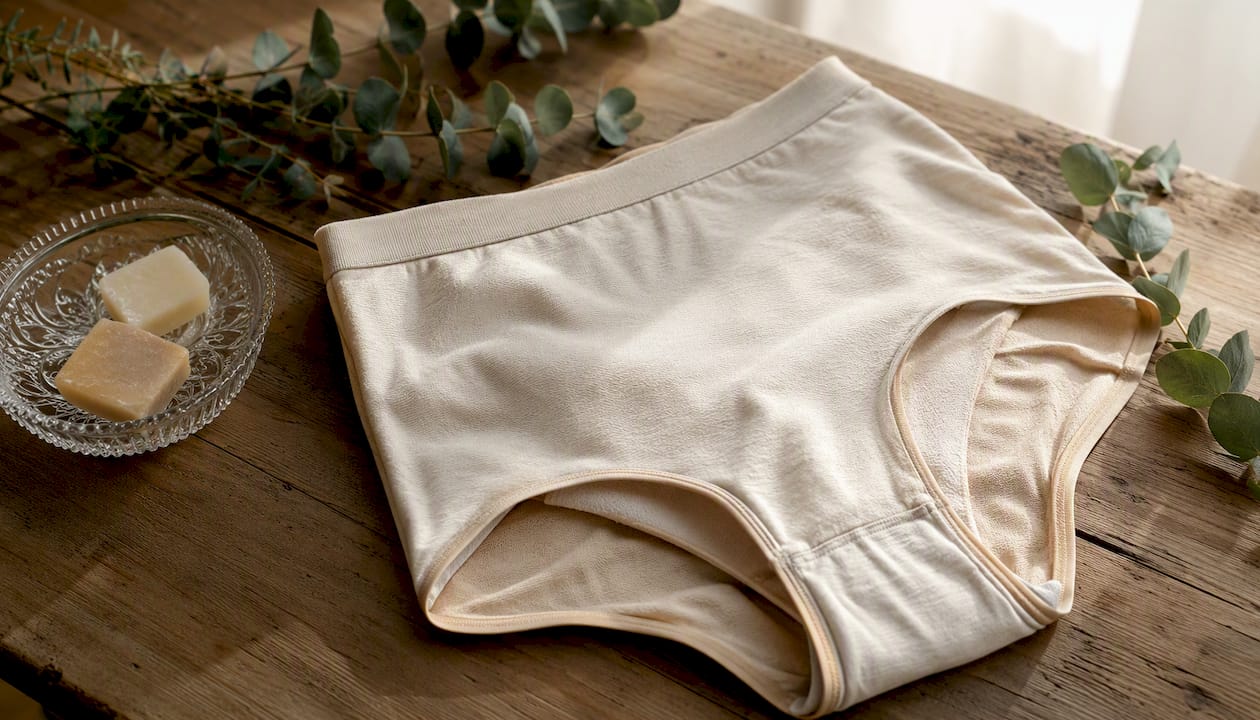
Period pants designed for postpartum use have a reinforced gusset in organic cotton or bamboo and hold a moderate volume of fluid. They are comfortable against healing skin and eliminate the need to position a pad correctly. The practical limit is capacity: during very heavy early lochia, most period pants cannot match a high-capacity disposable maternity pad. Once flow settles, they are a genuinely comfortable and sustainable choice.
Pros: Reusable; comfortable; no pad positioning needed; eco-friendly. Cons: Not suitable for the heaviest early flow; require rinsing and washing; higher upfront cost.
Budget supermarket maternity pad
Best for: Cost-conscious shoppers; backup supply; later lighter flow.
Own-brand maternity pads from Boots, Tesco, Sainsbury’s, and Asda offer reliable absorbency at the lowest price per pad on this list. Check the label for fragrance — some budget pads include a light scent that can irritate healing tissue. Unscented versions are widely available and perform well for the first week.
Pros: Very low cost; widely available; adequate absorbency. Cons: Variable material quality; some contain fragrance; not organic.
How were these picks chosen?
Every pad on this shortlist was assessed against eight criteria: absorbency and fluid capacity, leak protection, softness and comfort against healing skin, breathability, material safety (organic certification, absence of fragrance and bleach), length and coverage, value for money, and UK availability.
The selection draws on editorial roundups from parent-tester panels that divide picks by recovery stage — immediate postpartum, overnight, organic, and reusable — and on hands-on testing notes from UK-based parent reviewers. Midwife input shaped the criteria weighting: capacity and wound safety dominate the early-phase picks, while breathability and skin-friendliness carry more weight for the transition and later-weeks options.
A note on postpartum bleeding and wound care: Lochia (postpartum bleeding) is heaviest in the first 24–72 hours and typically continues for up to six weeks, gradually lightening in colour and volume. Midwives consistently advise using the most absorbent pad available in the early days to monitor flow accurately and protect healing tissue. A pad that is too thin or too short risks leaks that can obscure how much blood you are losing — which matters clinically. If bleeding suddenly becomes heavier again, or you are soaking more than one pad per hour for two consecutive hours, contact your midwife or maternity unit immediately.
Material safety is weighted heavily throughout because postpartum skin is uniquely vulnerable. Broken perineal tissue, stitches, and caesarean wounds all come into contact with pad materials for hours at a time. Fragrance, synthetic dyes, and unknown chemical finishes are unnecessary risks when unscented, certified alternatives exist.
What should you look for when buying postpartum pads?
Choosing the right pad comes down to matching the product’s features to your recovery stage and personal sensitivities. Here are the factors worth checking before you buy:
- Absorbency: Look for pads labelled “maternity” rather than “night-time period” — maternity pads are designed for lochia, which is heavier and thicker than menstrual flow.
- Length and coverage: A minimum of 30 cm is advisable for the first week; extra-long pads (32–36 cm) give better protection when lying down.
- Wings and adhesion: A strong adhesive strip keeps the pad in place in mesh pants or loose postpartum underwear. Wings add security overnight.
- Breathability: A breathable backsheet reduces heat and moisture build-up against healing skin. Avoid plastic-backed pads for extended wear.
- Material: Organic cotton topsheets are gentler on broken skin than synthetic covers. Look for Oeko-Tex certification or a compostable/natural core if eco credentials matter to you.
- Scent-free and hypoallergenic: Fragrance is the single biggest red flag for postpartum pads. Any pad touching a perineal wound or caesarean scar should be completely unscented.
- Suitability for stitches and caesarean wounds: Soft, non-abrasive topsheets are non-negotiable if you have a perineal tear, episiotomy, or caesarean incision. Check that the pad does not have a raised central channel that could press against stitches.
Red flags to avoid: Perfumed pads, pads with unknown synthetic materials, and standard thin period pads used as a substitute for maternity pads in the first week. A regular night-time period pad simply does not have the capacity or the length for heavy early lochia.
Pro Tip: Once your flow reduces to a lighter level — usually from around day 5–7 — switch from a thick hospital-style pad to a thinner, more breathable overnight maternity pad. The reduction in bulk makes a real difference to comfort, particularly if you have perineal stitches.
How many pads will you need, and when should you buy them?
Plan for roughly six pad changes per day during the heaviest initial phase. Reviewer guidance estimates this frequency for heavy flow in the immediate postpartum period, which means a single pack of 10 pads lasts less than two days at peak use.
| Phase | Daily pad changes | Pads needed | Suggested supply |
|---|---|---|---|
| First days (hospital + home) | about six changes per day | dozens of pads | several packs of hospital-style pads |
| Days 4–7 (home, flow reducing) | four to five changes per day | a moderate number of pads | a few packs of overnight/organic pads |
| Weeks 2–4 (lighter flow) | two to three pad changes daily | moderate quantities of lighter maternity pads | |
| Weeks 4–6 (light lochia) | one to two pad changes daily | small supply or switch to period pants |
Total suggested minimum: About 80–100 pads across the full six weeks, based on typical guidance for six pad changes per day in the initial days, with frequency gradually reducing after week two.
A practical buying approach: start with one smaller pack of hospital-style pads to confirm fit and comfort, then buy a bulk pack of your preferred organic or overnight option for home use. This avoids committing to a large quantity of a pad that does not suit your body.
Hospital vs. home: NHS postnatal wards supply high-capacity maternity pads during your stay, but the supply is finite and the priority is clinical function over comfort. For home recovery, breathability and softness become more important. Pack your own preferred pads in your hospital bag as a backup, and have your home supply ready before your due date.
Midwife-backed tips and practical alternatives
When to prioritise absorbency vs. comfort
In the first 48–72 hours, absorbency is the clinical priority. A pad that is too thin or too short can mask how much blood you are losing, which matters for monitoring postpartum haemorrhage risk. Once your midwife has confirmed your bleeding is within normal range and beginning to reduce, comfort and breathability become the primary considerations.
Soft, breathable materials reduce the risk of heat rash, skin irritation, and infection around healing tissue. This is especially relevant if you have perineal stitches or a caesarean wound. Pairing a breathable maternity pad with a gentle postpartum perineal spray can significantly reduce discomfort between pad changes.
Midwife guidance: “Choose the most absorbent pad available for the first few days — you need to be able to see what your body is doing. Once bleeding settles, switch to something softer and more breathable. Your skin has been through a lot, and the materials touching it matter.”
Period pants and reusable pads: honest guidance
Period pants work well once lochia reduces to a moderate flow, typically from around day 5–7 for many mothers, though this varies. The key practical points:
- Rinse reusable pads and period pants in cold water immediately after use to prevent staining and odour.
- Most period pants hold the equivalent of two to four regular pads’ worth of fluid — adequate for moderate flow, but not for the heaviest early lochia.
- Organic cotton or bamboo gussets are the most skin-friendly options for postpartum use.
- Air-dry rather than tumble-dry to preserve the absorbent layers.
Reusables are a genuinely good choice for the later weeks of recovery. They are comfortable, reduce waste, and eliminate the recurring cost of disposables. The honest limit is the first few days: during very heavy lochia, a high-capacity disposable maternity pad is the safer and more practical option.
Which pad is right for your recovery stage?
The decision is simpler than it looks when you map it to where you are in recovery.
For the first 24–72 hours, choose a high-capacity hospital-equivalent maternity pad. Volume and leak protection matter most here, and a long, thick pad with a secure adhesive is the right tool. If you have perineal stitches or a caesarean wound, pair it with an organic cotton topsheet option as soon as flow allows — the difference in comfort against healing skin is noticeable.
From around day 4–5, as flow reduces, switch to a thinner overnight maternity pad with wings. You gain comfort and breathability without sacrificing adequate absorbency for this stage. If you prefer organic and non-toxic postpartum pads throughout, an Oeko-Tex certified organic cotton option covers both the heavy and moderate phases well.
From week 2 onwards, period pants or lighter reusable pads become genuinely practical. They are comfortable, sustainable, and cost-effective for the lighter lochia of the later recovery weeks.
Key action points:
- Heavy flow, first days: High-capacity hospital-style or organic maxi maternity pad.
- Sensitive skin or stitches: Organic cotton topsheet, unscented, Oeko-Tex certified.
- Overnight from day 4: Extra-long overnight pad with wings.
- Weeks 2–6: Period pants or lighter maternity pads; reusables are suitable now.
- Perineal swelling: Cooling/ice pad as a supplement, not a replacement, for absorbent pads.
If your bleeding is unusually heavy, soaking more than one pad per hour for two consecutive hours, or contains large clots, contact your midwife or maternity unit without delay. This is not a situation to manage with a thicker pad — it needs clinical assessment.
For a ready-made UK option that takes the guesswork out of building your recovery kit, Mumbubhub’s Postpartum Essentials Bundle brings together natural, plant-based recovery products in one order.
Key takeaways
The single most important choice is matching pad type to recovery stage: a high-capacity maternity pad for the first days, a breathable organic option as flow reduces, and period pants or reusables from week two onwards.
| Point | Details |
|---|---|
| Start with high capacity | Use hospital-equivalent maxi maternity pads for the first 24–72 hours to monitor flow and protect healing tissue. |
| Switch as flow reduces | Move to thinner, breathable overnight pads from around day 4–5 for comfort without sacrificing adequate absorbency. |
| Choose organic for sensitive skin | Oeko-Tex certified organic cotton topsheets reduce irritation against perineal stitches or caesarean wounds. |
| Plan for 80–100 pads total | Budget for approximately six pad changes per day in the first days, and gradually fewer by weeks four to six. |
| Mumbubhub bundles | The Postpartum Essentials Bundle and Prep and Recover Bundle offer natural, plant-based recovery kits for UK shoppers. |
What actually matters when choosing postpartum pads
The conversation around postpartum pads tends to focus on absorbency ratings and organic certifications, which are both genuinely important. What gets less attention is the material-safety question for broken skin specifically.
A standard period pad — even a good one — is not designed for contact with perineal stitches or a healing caesarean wound. The topsheet materials, adhesive compounds, and any added fragrance are formulated for intact skin. Postpartum tissue is in a different category entirely: it is broken, inflamed, and in contact with the pad for hours at a time. The case for organic cotton topsheets and unscented, certified materials is not just about preference — it is about reducing unnecessary chemical exposure to tissue that is actively healing.
The second thing that gets underplayed is the transition timing. Most guidance says “use maternity pads for six weeks,” which is technically correct but not very useful. The practical reality is that your pad needs change significantly across that period. A hospital maxi pad that is exactly right on day one is unnecessarily bulky and warm by day five. Matching the pad to the phase — rather than defaulting to one product for six weeks — makes a real difference to comfort and skin health.
Mumbubhub’s approach of pairing natural postpartum recovery products with curated bundles reflects this thinking: recovery is not one-size-fits-all, and the products you use should change as your body does.
Natural postpartum recovery kits from Mumbubhub
Pulling together a postpartum recovery kit from scratch takes time you will not have once your baby arrives. Mumbubhub’s curated bundles do that work for you, combining natural, plant-based recovery products in a single order designed for UK mothers.
The Postpartum Essentials Bundle covers the immediate recovery period with skin-safe, chemical-free products formulated for healing postpartum tissue. The Prep and Recover Bundle takes you from birth preparation through early recovery in one kit — useful if you are packing your hospital bag and want your home supply sorted at the same time. For rest and soothing comfort in the first weeks, the Rest & Restore Bundle pairs well with breathable maternity pads and gentle perineal care. The full range also includes the Relax’ Sleep Ritual Bundle, Me Time’ Self Care Bundle, Mum to Be Essentials Bundle, and Pregnancy Pamper Bundle for different stages and gifting needs.
Mumbubhub sells direct to UK customers online. Every product is plant-based, vegan-friendly, and formulated without unnecessary chemicals — the same standard you should expect from any product touching postpartum skin. Browse the full range and order before your due date at mumbubhub.co.uk.
Further reading and authoritative sources
These sources are worth bookmarking for additional detail on postpartum pad choices, clinical guidance, and eco-certifications:
- The best maternity pads 2026 — Emma’s Diary: UK-focused roundup with hands-on testing notes and midwife input; a reliable starting point for British mothers.
- Best postpartum pads — Babylist: Comprehensive US-based product testing roundup; useful for absorbency comparisons and cooling pad guidance (note: US market, some products may differ in UK availability).
- 8 Best Postpartum Pads — What to Expect: Editorial list structured by recovery stage (overall, overnight, organic, reusable); good for understanding how pad needs change across the postpartum period.
- 7 Best Postpartum Pads — The Bump: Parent-tester panel reviews with practical usage guidance including pad-change frequency estimates.
- Postpartum skincare FAQs — Mumbubhub: Answers common questions on material safety and wound care for postpartum skin.
A note on sources: Clinical guidance on postpartum bleeding and wound care should always come from your midwife, health visitor, or GP. The sources above cover product selection and practical usage; they do not replace professional medical advice. If you have concerns about your bleeding, contact your maternity unit directly.
This article provides general information about postpartum pad choices and is not a substitute for professional medical advice. Always follow your midwife’s or doctor’s guidance on postpartum wound care and bleeding.
FAQ
What are the best pads to use after giving birth?
High-capacity, unscented maternity pads are the best choice for the first days after birth. Look for a long pad (at least 30 cm) with a soft topsheet and a secure adhesive; organic cotton options are gentler on healing skin and stitches.
What pads do gynaecologists and midwives recommend?
Midwives consistently recommend the most absorbent maternity pad available for the first 24–72 hours, prioritising capacity and wound safety over comfort. As bleeding reduces, they advise switching to softer, breathable options to protect healing perineal or caesarean tissue.
What is the 5-5-5 rule for postpartum?
The 5-5-5 postpartum rule suggests five days in bed, five days on the bed, and five days near the bed — a structured rest framework for the initial weeks after birth. It is not a clinical protocol but a practical reminder to limit activity and prioritise recovery in the early weeks.
What maternity pads do hospitals use in the UK?
NHS postnatal wards typically supply high-capacity cellulose-core maternity pads, equivalent to the hospital-style maxi pads available at Boots and major supermarkets. These prioritise absorbency and leak control over breathability, which is appropriate for the immediate postpartum phase but less comfortable for extended home use.
When can you switch from maternity pads to period pants?
Most mothers can comfortably switch to postpartum period pants from around day 5–7, once heavy lochia has reduced to a moderate flow. Period pants are not suitable for the heaviest early bleeding, when a high-capacity disposable maternity pad remains the safer choice.