

Postpartum body image: what it is and how to cope
Postpartum body image is the psychological and emotional perception a woman holds of her body after childbirth. It covers how she evaluates her appearance, her body’s physical function, and her sense of self-worth during recovery.
This is not simply about whether you like what you see in the mirror. It is a multidimensional experience that shifts constantly across the weeks and months after birth, shaped by physical changes, emotional upheaval, and the world around you. Pregnancy, Birth & Baby describes it as ranging from genuine appreciation of what the body has achieved to real distress about shape, size, and weight retention.
For many new mothers in the UK, this experience sits somewhere complicated. The body has done something extraordinary, yet the gap between expectation and reality can feel jarring. Organisations such as the Butterfly Foundation and Pregnancy, Birth & Baby provide education and support around body image at every stage of motherhood, and their guidance consistently points to one truth: understanding what postpartum body image actually is forms the foundation of managing it well.
Key aspects of postpartum body image include:
- How you perceive your physical appearance after birth, including weight, skin, and shape changes
- How you feel about your body’s ability to function, feed your baby, and recover
- The emotional weight attached to those perceptions, from pride to grief to frustration
- The external influences shaping those feelings, including media, partners, peers, and cultural ideals
What is postpartum body image, and what changes drive it?
The physical changes that follow childbirth are both predictable and deeply personal. Stretch marks, abdominal muscle separation (known clinically as diastasis recti), skin pigmentation shifts, and weight fluctuations are all common. The NHS notes that stretch marks and skin changes may never fully disappear, though they typically fade over time, and that women should set realistic expectations rather than assume a return to their pre-pregnancy body. Diastasis recti, where the abdominal muscles separate along the midline, often persists beyond 8 weeks and may require physiotherapy to prevent longer-term functional problems.
Skin changes are particularly common. Hyperpigmentation is a very common skin change during pregnancy, with conditions such as melasma and linea nigra typically fading within 6–8 weeks postpartum, though not always completely. Abdominal muscles are overstretched during pregnancy and slow to regain their tone, generally returning to pre-pregnancy levels within a few weeks to months, though this varies considerably.
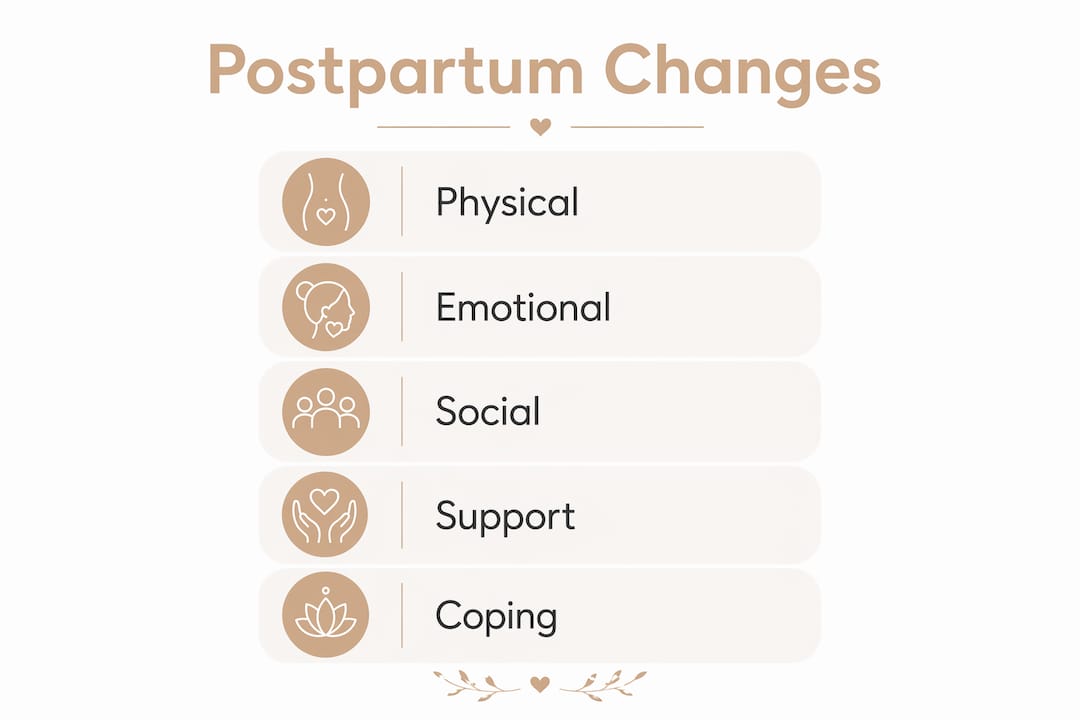
The psychological shifts are just as significant. Many women describe a sense of identity conflict: the body feels unfamiliar, and the self feels caught between who they were before and who they are becoming as a mother. Self-esteem can swing sharply from one day to the next. Emotional responses to physical changes are not vanity. They are a normal part of a major life transition, and research into body image narratives in early motherhood confirms that these experiences are uniquely individual, with some mothers far less prepared for postpartum changes than others.
Common physical and psychological changes affecting body image after pregnancy include:
- Stretch marks and skin laxity on the abdomen, thighs, and breasts
- Diastasis recti causing a visible abdominal gap and core weakness
- Hair loss, skin pigmentation changes, and altered skin texture
- Weight retention that does not resolve quickly despite expectations
- Emotional whiplash between gratitude for the body and frustration with its appearance
- Shifts in sexual identity and confidence that affect self-perception
- Grief for the pre-pregnancy body alongside love for the new role of motherhood
Recovery is not linear. The NHS advises that some postpartum physical changes, including stretch marks, may never fully reverse. Setting realistic expectations early protects both mental health and physical recovery.
How does ‘bounce-back’ culture shape postpartum body image in the UK?
The pressure to “bounce back” after having a baby is one of the most damaging forces acting on postpartum body image. It is not subtle. Celebrity culture, social media feeds, and even well-meaning comments from family members can all carry the implicit message that a woman’s body should return to its pre-pregnancy state quickly, and that failing to do so reflects a lack of effort or discipline. Research into body image narratives in early motherhood found that participants felt real pressure from societal thin ideals to bounce back, which led to altered eating habits and psychological distress.
Media influence is the strongest predictor of negative postpartum body image, according to a systematic review of postpartum body dissatisfaction. Social media compounds this by presenting a curated, filtered version of postpartum recovery that bears little resemblance to most women’s lived experience. Seeing images of flat stomachs and “snapping back” within weeks of birth creates a benchmark that is not just unrealistic but actively harmful.
Partners, family members, and peers also play a role, sometimes without realising it. Offhand comments about weight, comparisons to other mothers, or expressions of surprise at how long recovery takes can all chip away at body confidence. In the UK, where there is a cultural tendency to underplay emotional difficulty and “get on with it,” new mothers may feel additional pressure to appear fine when they are not.
Key social and cultural influences on postpartum body image in the UK:
- Social media portrayals of rapid postpartum recovery and “snap-back” bodies
- Celebrity culture setting unrealistic timelines for weight loss after birth
- Partner and family comments, even when well-intentioned, that centre appearance
- Peer comparison, particularly in mother-and-baby groups or online communities
- UK cultural norms around stoicism that discourage open discussion of body distress
Pro Tip: Practise body neutrality rather than body positivity when positivity feels forced. Instead of telling yourself your body looks great, try acknowledging what it has done: “My body grew and birthed a person. Right now, that is enough.” This functional framing is supported by research on postpartum body appreciation as a more sustainable approach than appearance-based self-assessment.
How does postpartum body image affect your mental health?
Negative body image after childbirth does not stay contained to how you feel about your reflection. It feeds into broader mental health, and the connection is well-documented. Body image concerns are consistently associated with depression, anxiety, lowered self-esteem, and disordered eating in the postpartum period. Research on postpartum body dissatisfaction confirms that body image disturbance is directly linked to depression and anxiety, and that cognitive reappraisal, the ability to consciously reframe how you interpret a situation, is one of the most effective strategies for reducing that disturbance.
The relationship between prenatal and postnatal body image is also worth understanding. A longitudinal study on body image disturbances during pregnancy and postpartum found that body image disturbances in the second trimester of pregnancy predicted worse body image disturbances at six months after birth. Women who used less cognitive reappraisal during the third trimester were more vulnerable to postpartum body image difficulties. This suggests that the groundwork for postpartum body image is laid before birth, and that emotional regulation skills matter as much as physical recovery.
Psychological identity conflict adds another layer. Framing the postpartum body as something to “reclaim” or “get back” positions it as a problem to be solved rather than a body to be lived in. Research on identity shifts in postpartum body image suggests that shifting from a “reclaiming” mindset to an “accepting” one is a crucial step in psychological adjustment.
Signs that body image distress may be affecting your mental health:
- Persistent low mood or tearfulness connected to thoughts about your body
- Avoiding social situations because of how you feel about your appearance
- Intrusive thoughts about weight, shape, or how others perceive you
- Difficulty bonding with your baby when body distress is consuming mental energy
- Restricting food or over-exercising to change your body rapidly after birth
- Feeling that your body is not your own, or that you do not recognise yourself
Body image distress and postnatal depression can overlap and reinforce each other. If negative thoughts about your body are persistent, intrusive, or affecting your daily functioning, speaking to your GP or health visitor is the right next step, not a sign of weakness.
How can you improve postpartum body image? Practical strategies that work
Improving how you feel about your body after birth is not about reaching a particular weight or shape. It is about building a relationship with your body that is kinder, more functional, and more grounded in reality than the one “bounce-back” culture offers. The strategies that work tend to combine physical self-care, emotional regulation, and social support, and research consistently shows that breastfeeding and social support are key determinants of postpartum body satisfaction.
Self-care routines that support body appreciation
Gentle physical self-care is one of the most direct routes to a more positive relationship with your body postpartum. This does not mean intense exercise or restrictive eating. It means postpartum self-care rituals that acknowledge your body’s needs: warm baths with herbal soaks, nourishing your skin with natural balms, resting when you can, and eating food that genuinely sustains you. These acts signal to your nervous system that your body deserves care, not punishment.
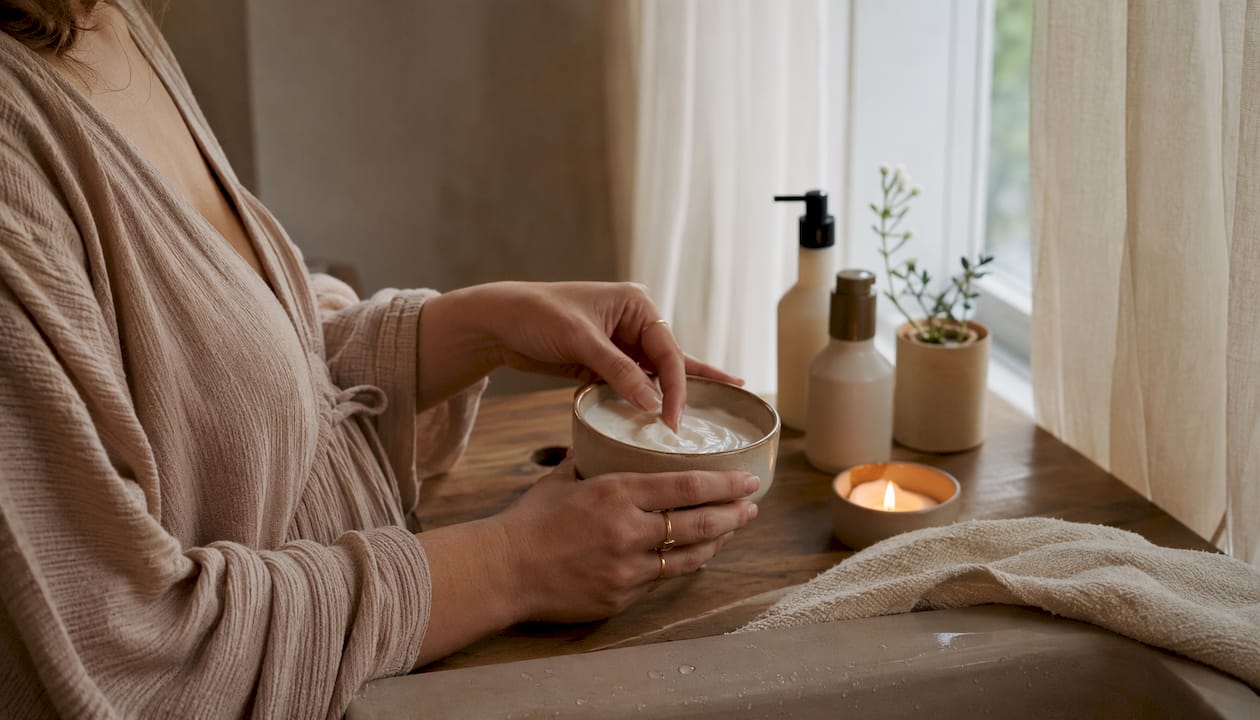
Skin changes are one of the most common sources of postpartum body distress. Understanding why they happen, and what genuinely helps, makes a real difference. Postpartum skin changes are driven by hormonal shifts that no amount of willpower can override, and treating them with gentle, plant-based products is far more effective than harsh interventions.
Cognitive reappraisal and emotional regulation
Cognitive reappraisal means consciously changing the way you interpret a thought or situation. When you notice a negative thought about your body, “I look awful” becomes “My body is still recovering from something enormous.” This is not toxic positivity. It is a skill, and longitudinal research shows it partially mediates the relationship between prenatal and postpartum body image disturbances. Practising it consistently, even imperfectly, builds genuine resilience over time.
The role of partner and family support
Support networks strongly influence postpartum body image by mediating societal pressures and helping with emotional adjustment. Partners who actively affirm a woman’s worth beyond her appearance, who share the mental load of new parenthood, and who create space for honest conversation about body feelings make a measurable difference. If you have a partner, being direct about what kind of support you need, whether that is verbal affirmation, practical help, or simply not commenting on your body, is a conversation worth having early.
Breastfeeding and body image
Breastfeeding has a complex relationship with postpartum body image. For some women, it deepens appreciation of the body’s function. For others, the physical demands and the changes it brings to breast size and shape create new sources of distress. Research confirms that breastfeeding is a key determinant of body satisfaction, though the direction of that relationship varies. If breastfeeding is causing you distress, whether physical or emotional, speaking to a lactation consultant or your health visitor is a practical first step.
When to seek professional help
Body image distress that is persistent, intrusive, or affecting your ability to care for yourself or your baby warrants professional support. A GP can refer you to a counsellor or psychologist, and cognitive behavioural therapy (CBT) has strong evidence for both body image concerns and postnatal depression. If diastasis recti is affecting your physical confidence or causing pain, a referral to a women’s health physiotherapist is appropriate and available on the NHS.
Practical strategies for improving postpartum body image:
- Build a daily self-care ritual, however small, that centres your body’s needs rather than its appearance
- Practise cognitive reappraisal by consciously reframing negative body thoughts
- Curate your social media feed to remove accounts that trigger comparison or inadequacy
- Talk openly with your partner or a trusted friend about how you are feeling
- Join a postnatal group, in person or online, where honest conversation about body changes is welcome
- Seek physiotherapy if diastasis recti or pelvic floor issues are affecting your physical confidence
- Contact your GP or health visitor if body image distress is persistent or affecting your mood
Pro Tip: Mindful movement, such as postnatal yoga or gentle walking, works differently from exercise aimed at changing your body. It reconnects you with what your body can do rather than how it looks. Pair it with self-compassion: treat yourself with the same patience you would offer a close friend who had just been through what you have.
Our approach to postpartum wellbeing
Mum Bub Hub was built on a straightforward belief: new mothers deserve products that are as gentle and considered as the care they give their babies. Every product in the range is formulated with natural, plant-based ingredients, free from harsh chemicals, and designed specifically for the postpartum body. That means no guesswork about whether something is safe to use while breastfeeding, and no products that promise to “fix” a body that does not need fixing.
Our approach to postpartum body image is grounded in the same philosophy. Rather than positioning recovery as a return to a pre-pregnancy self, we encourage mothers to embrace their postpartum bodies with kindness, curiosity, and practical care. Self-care rituals, from herbal bath soaks to nourishing nipple balms, are not luxuries. They are acts of respect for a body that has done something remarkable.
Our postpartum wellbeing philosophy includes:
- Natural, plant-based formulations that are safe for breastfeeding mothers
- Products designed to support physical recovery without harsh or synthetic ingredients
- A community-oriented approach that normalises the full range of postpartum experiences
- Our profits directed towards maternal health initiatives in the UK
- Encouragement to build personalised self-care rituals that fit real postpartum life
Pro Tip: Combining a physical self-care ritual with a moment of intentional reflection, even two minutes while a bath soak does its work, creates a habit loop that supports both body image and mental health. The ritual signals care; the reflection builds the cognitive habit of treating your body as worthy of it. Mumbubhub’s self-care and wellness range is designed with exactly this kind of layered recovery in mind.
Supporting your recovery
Our postpartum recovery essentials bring together everything a new mother needs to care for her body with intention. From herbal bath soaks that ease physical discomfort to natural balms that nourish changing skin, each product is chosen to support both physical healing and a kinder relationship with the postpartum body.
For mothers looking for a considered starting point, the Pregnancy Self-Care Gift Set offers a curated collection of our most trusted products, thoughtfully assembled for the early weeks of recovery. You can also explore whipped body butters as a complementary addition to your self-care ritual, particularly for nourishing skin that has stretched and changed through pregnancy.
FAQ
What does postpartum body image mean?
Postpartum body image is a woman’s cognitive and emotional evaluation of her body after childbirth, covering perceptions of appearance, physical function, and self-worth. It ranges from positive appreciation of the body’s achievements to real distress about shape, weight, and physical changes.
What do postpartum bodies typically look like?
Postpartum bodies vary widely, but common changes include stretch marks, abdominal muscle separation, skin pigmentation shifts, and weight retention. The NHS notes that some changes, such as stretch marks, may never fully disappear but typically fade over time.
What should my body look like three months postpartum?
There is no single answer. At three months, many women are still experiencing significant physical recovery, including hormonal fluctuations, skin changes, and core muscle weakness. The NHS advises setting realistic expectations and avoiding comparisons to pre-pregnancy appearance or to other mothers’ timelines.
Does the postpartum body eventually return to normal?
Some changes resolve over weeks or months, while others, such as stretch marks or altered skin texture, may be permanent. Physical recovery is highly individual, and “normal” after birth is a new baseline rather than a return to the pre-pregnancy body.
When should I seek help for postpartum body image concerns?
Seek support from your GP or health visitor if body image distress is persistent, intrusive, or affecting your mood, your relationship with your baby, or your daily functioning. Cognitive behavioural therapy and women’s health physiotherapy are both available on the NHS and are effective for postpartum body image and related concerns.
Key takeaways
Postpartum body image is shaped by physical changes, emotional regulation, and social environment in equal measure, and addressing all three is what makes recovery sustainable.
| Point | Details |
|---|---|
| Definition matters | Postpartum body image covers appearance, function, and self-worth, not just how the body looks. |
| Physical changes are real and variable | Stretch marks, diastasis recti, and skin changes may persist beyond 8 weeks and sometimes permanently. |
| Mental health links are direct | Body image disturbance is associated with postnatal depression and anxiety; early support makes a difference. |
| Cognitive reappraisal helps | Reframing negative body thoughts is an evidence-based strategy that partially mediates postpartum body image distress. |
| Social support is protective | Partners, family, and peer networks strongly influence postpartum body satisfaction and resilience to media pressure. |