

Perineal massage oil: safe choices for pregnancy
TL;DR:
- Light plant-based carrier oils like sweet almond, jojoba, grapeseed, and sunflower are recommended for perineal massage during pregnancy starting at around 34 weeks. Regular practice three to four times weekly can reduce the risk of perineal trauma and episiotomy, especially for first-time mothers, according to supportive evidence. The oils should be free of synthetic fragrances and essential oils, with options like jojoba and sweet almond being especially suitable for sensitive tissue.
Light, plant-based carrier oils are the right choice for perineal massage during pregnancy. Oils such as sweet almond, jojoba, grapeseed, and sunflower are widely recommended by UK midwives and NHS trusts. Start at around 34 weeks, aim for several sessions per week, and spend a few minutes each time. The Cochrane review on perineal massage and NHS clinical guidance both support the practice, particularly for first-time mothers.
Key starting points:
- Use: sweet almond, jojoba, grapeseed, sunflower, avocado, or rosehip oil
- Start: around 34 weeks of pregnancy
- How often: 3–4 times per week, 5–10 minutes per session
- Avoid: baby oil, mineral oil, petroleum jelly, and neat essential oils
Pro Tip: If you are new to this, start with just two or three minutes and build up. The stretching sensation is normal; sharp pain is not.
Table of Contents
- Which oils are safe for perineal massage in the UK?
- When to start, how often, and who can do it
- How to do perineal massage: step-by-step
- What does the evidence say about perineal massage benefits?
- When you should not do perineal massage
- How to choose a perineal massage oil product in the UK
- Quick answers from UK midwife guidance
- Key takeaways
- A note on evidence, instinct, and getting started
- Mumbubhub’s perineal massage oil: a pregnancy-safe option
- Useful sources
- FAQ
Which oils are safe for perineal massage in the UK?
Leeds Teaching Hospitals NHS Trust lists olive oil, sunflower oil, and sweet almond oil as acceptable options, and explicitly advises against baby oil and mineral oil. Midwife sources go further, ranking oils by texture, absorption, and sensitivity risk.
Recommended carrier oils:
- Sweet almond oil: light, widely available, absorbs well, and rarely irritates. One of the most commonly recommended options across NHS leaflets.
- Jojoba oil: technically a liquid wax, it closely mimics the skin’s natural sebum. The Honest Midwife rates it highly for texture and absorption.
- Grapeseed oil: very light, almost odourless, and absorbs quickly without leaving a greasy residue.
- Sunflower oil: a practical, affordable option that NHS trusts specifically name as acceptable.
- Avocado oil: richer and more nourishing, though slightly heavier than jojoba or grapeseed.
- Rosehip oil: contains fatty acids and vitamin E; good for skin elasticity, though slightly more expensive.
Oils and products to avoid:
- Baby oil, mineral oil, and petroleum jelly. These are petroleum-derived and unsuitable for mucosal tissue.
- Fragranced blends and products with synthetic preservatives or added essential oils.
- Essential oils applied neat (undiluted) to the perineum. Even lavender or tea tree, which feel “natural,” can irritate sensitive tissue at full concentration.
Pro Tip: Coconut oil is popular, but in a cool UK home it solidifies below around 24°C. You will end up with a lump of solid fat rather than a smooth oil, which makes application awkward. Jojoba or sweet almond stays liquid at room temperature year-round.
When to start, how often, and who can do it
CUH patient information recommends starting at around 34 weeks of pregnancy. That gives roughly six weeks of regular practice before a typical 40-week due date, which is enough time to build tissue flexibility and confidence with the technique.
Timing and frequency:
- Start at approximately 34 weeks
- Aim for 3–4 sessions per week
- Each session: 5–10 minutes
- If you start later (say, 37–38 weeks), increase to daily sessions if comfortable
Who can perform it:
- Self-massage is the most common approach. Many women find it easier to do themselves because they can feel the pressure directly and adjust in real time.
- Partner massage is a valid option, particularly for women who find the positioning difficult later in pregnancy. Partners should follow the same hygiene steps (clean hands, trimmed nails) and take direction from the pregnant person throughout.
Positions that work:
- Semi-reclined on a bed with knees bent and feet flat
- Propped against pillows in a bath or on a yoga mat
- One foot raised on the edge of a bath or a low stool (useful for self-massage)
- A mirror can help with initial positioning, though most women stop using one once they are familiar with the technique
How to do perineal massage: step-by-step
Walsall Healthcare NHS and Oxford University Hospitals both provide standardised patient-facing instructions. The steps below draw on those NHS sources and Healthline’s practical guidance.
Before you begin:
- Wash hands thoroughly with soap and water. Clip fingernails short.
- Choose a warm, private space. Have your oil within reach.
- Get into a comfortable position (semi-reclined works well for most).
- Apply a small amount of oil to your thumbs and the perineal area.
The massage:
- Place both thumbs (or index fingers if a partner is helping) approximately 3–4 cm inside the vagina.
- Press gently downwards towards the rectum and hold a steady, firm pressure for 1–2 minutes. You should feel a stretching sensation, similar to the feeling of crowning. This is normal.
- Slowly sweep the thumbs outwards in a U-shaped motion, moving towards the inner thighs and back to the centre. Keep the pressure steady.
- Repeat the sweeping motion rhythmically for 5–10 minutes.
- Apply more oil as needed to maintain smooth, friction-free movement.
Pro Tip: Breathe slowly and deliberately during the stretch. Exhale as you apply pressure. Consciously relaxing the pelvic floor on the out-breath reduces the reflexive tightening that makes the massage harder and less effective.
For a more detailed illustrated guide, Mumbubhub’s step-by-step perineal massage guide covers positioning and partner technique in full.
What does the evidence say about perineal massage benefits?
The Cochrane systematic review is the most cited body of evidence on this topic, and its findings are clear for first-time mothers: antenatal perineal massage reduces the likelihood of perineal trauma requiring suturing and lowers episiotomy rates. PubMed-indexed clinical literature supports these conclusions.
Evidence summary: The Cochrane review found that women who performed antenatal perineal massage were less likely to experience an episiotomy, particularly those giving birth for the first time. The benefit was less pronounced for women who had given birth vaginally before.
Key benefits supported by evidence:
- Reduced risk of severe perineal tearing (third- and fourth-degree tears)
- Lower episiotomy rates, especially for first births
- Increased tissue elasticity and familiarity with the stretching sensation
- Reduced postpartum perineal pain in some studies
Where the evidence is more limited:
- For women who have had a previous vaginal birth, the reduction in tearing risk is smaller
- The evidence does not strongly support a benefit for reducing first- or second-degree tears specifically
- Technique consistency across studies varies, making direct comparisons difficult
NHS midwife guidance recommends perineal massage as a worthwhile option for most pregnant women from 34 weeks, while acknowledging that it is not compulsory and that individual comfort matters.
When you should not do perineal massage
Most pregnant women can safely perform perineal massage from 34 weeks, but there are situations where you should pause and speak to a clinician first.
Contraindications — stop and contact your midwife or GP if you have:
- An active vaginal infection (thrush, bacterial vaginosis, or any STI)
- Unexplained vaginal bleeding
- Placenta praevia or any condition where penetration is contraindicated
- Recent pelvic or vaginal surgery
- Premature labour signs or a history of preterm birth
Allergy and sensitivity checks:
- Do a patch test before using any new oil. Apply a small amount to the inner forearm and wait 24 hours.
- If redness, itching, or swelling occurs, do not use that oil on the perineum.
- Nut-derived oils (sweet almond, avocado) carry allergen risk for those with tree nut sensitivities. Check the label.
Essential oil caution: products labelled as “aromatherapy blends” or “massage blends” may contain concentrated essential oils. These are not suitable for direct application to the perineum, even when diluted for general body use.
How to choose a perineal massage oil product in the UK
Knowing which oil category to use is one thing. Picking a specific bottle off a shelf or website is another. Here is what to check.
Label checklist:
- Ingredients list: should show 100% carrier oil(s) with no added fragrance, no listed essential oils, and no synthetic preservatives
- Allergen warnings: look for nut warnings if you have any tree nut sensitivity (sweet almond and avocado both require this)
- Certifications: organic certification (e.g. Soil Association) or cold-pressed labelling indicates minimal processing
- Single-ingredient oils are the easiest to vet; blended oils are fine but require reading every ingredient
Practical packaging considerations:
- A pump or dropper top keeps hands clean and controls the amount dispensed
- A dark (amber or violet) glass bottle limits oxidation and extends shelf life
- Avoid large bottles if you are buying for the first time; 30–50 ml is plenty for a six-week course
- Store away from direct sunlight and heat
Texture and absorption:
- Lightweight oils (jojoba, grapeseed, sunflower) absorb quickly and leave little residue
- Heavier oils (avocado, rosehip) are more nourishing but take longer to absorb
- For natural skincare formulations that combine multiple plant oils, checking ingredient transparency is as important as the carrier oil itself. Products like Tallow Skin Co’s natural oil blends illustrate how ingredient sourcing and transparency differ across the natural skincare market
Mumbubhub’s pregnancy essentials range includes oils formulated specifically for pregnancy use, with full ingredient transparency and no synthetic additives.
Quick answers from UK midwife guidance
A few practical questions come up repeatedly in NHS leaflets and midwife consultations.
Can I use olive oil? Yes. NHS trusts list it as acceptable, though midwife sources note it can feel heavy and occasionally sensitise sensitive skin. Sunflower or sweet almond is a lighter alternative.
What if I start at 37 weeks? Starting later is still worthwhile. Increase to daily sessions if you can manage them comfortably, and focus on consistency rather than duration.
Do I need a mirror? Not after the first session or two. A mirror helps with initial positioning, but most women find they no longer need it once they know where to place their fingers.
Can I top up the oil mid-session? Yes. Apply more oil whenever the movement starts to feel rough or friction increases. There is no fixed amount.
Are water-based lubricants an alternative? Some NHS leaflets mention them as an option, but plant-based oils are generally preferred because they do not dry out mid-session and are gentler on mucosal tissue.
Key takeaways
Light, plant-based carrier oils used from 34 weeks, three to four times per week, give you the best evidence-based preparation for birth and the lowest risk of perineal trauma.
| Point | Details |
|---|---|
| Best oil choices | Sweet almond, jojoba, grapeseed, and sunflower are the most widely recommended by NHS trusts and midwives. |
| When and how often | Start at around 34 weeks; aim for 3–4 sessions per week, each lasting 5–10 minutes. |
| Oils to avoid | Baby oil, mineral oil, and petroleum jelly are unsuitable for mucosal tissue; avoid neat essential oils. |
| Evidence base | The Cochrane review supports reduced episiotomy and severe tearing risk, particularly for first-time mothers. |
| Mumbubhub option | Mumbubhub’s perineal massage oil is a plant-based, fragrance-free, pregnancy-safe formulation available in the UK. |
A note on evidence, instinct, and getting started
The conversation around perineal massage tends to fall into two camps: those who treat it as an absolute must-do and those who dismiss it as unnecessary discomfort. Neither position is quite right.
What the evidence actually shows is more nuanced. The Cochrane data is meaningful for first-time mothers, but it is not a guarantee of an uncomplicated birth. Perineal massage is one preparation tool among several, and its value lies partly in the physical preparation and partly in helping you become familiar with the sensation of pressure and stretching before labour. That familiarity alone has real value, regardless of what the statistics say about tearing rates.
The oil choice matters less than people think, provided it is a clean, plant-based carrier oil with no synthetic additives. The technique and consistency matter far more. A good-quality sweet almond or jojoba oil used regularly from 34 weeks will serve you better than an expensive specialist product used twice.
Where Mumbubhub’s approach fits well is in removing the guesswork: a pregnancy-specific formulation with transparent ingredients and no added fragrance means you can skip the label-reading and get on with the practice. That is a practical advantage, not a marketing claim.
Mumbubhub’s perineal massage oil: a pregnancy-safe option
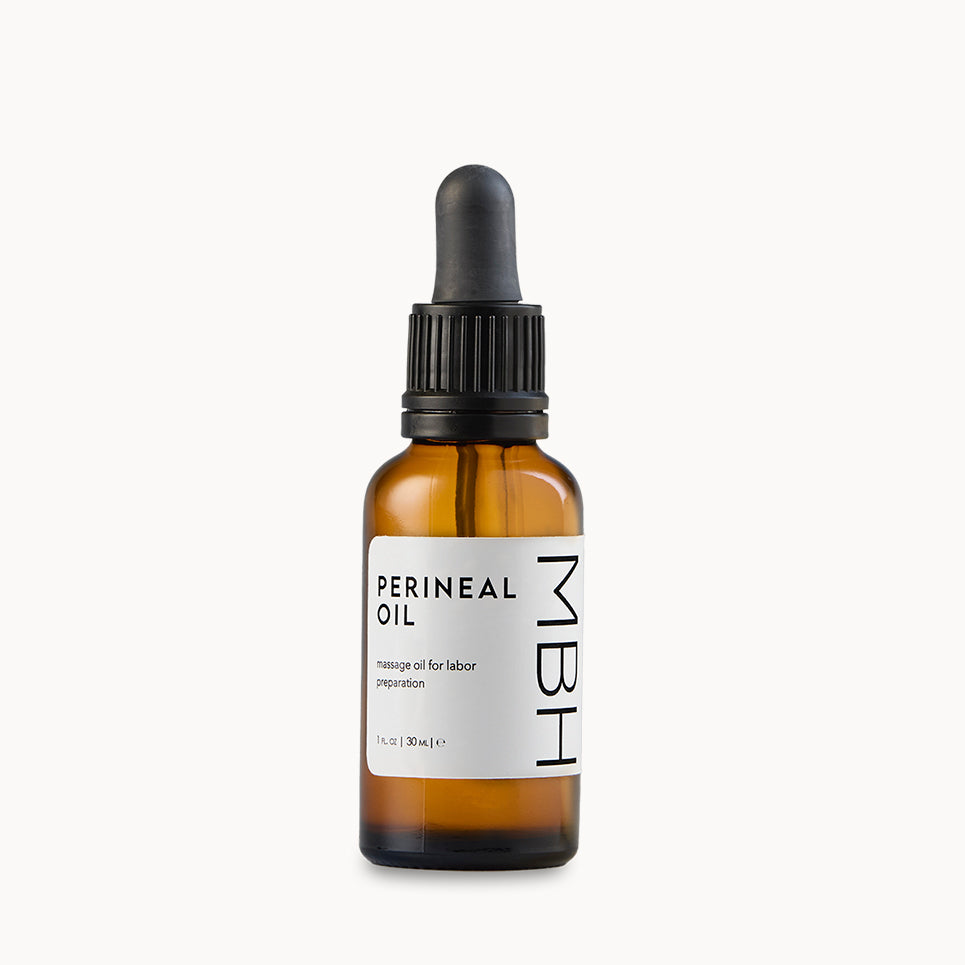
Pregnant women who want to skip the label-checking and get straight to the practice will find Mumbubhub’s perineal massage oil a straightforward option. It is formulated with natural, plant-based carrier oils, contains no synthetic fragrance, no essential oils, and no preservatives — meeting every criterion in the label checklist above.
Use it from 34 weeks, three to four times per week, following the technique steps in this article. Do a patch test on your inner forearm 24 hours before first use. Store the bottle away from direct sunlight.
For those building a broader birth and recovery kit, the Pregnancy Pamper Bundle includes complementary pregnancy care products, and the Postpartum Essentials Bundle covers the recovery period after birth, including perineal care, maternity pads, and soothing balms. The Rest & Restore Bundle is worth considering if postpartum rest and recovery is your priority. For gifting, the Mum to Be Essentials Bundle and the Pregnancy Belly Balm for daily skin care round out the range. Brief-Style Maternity Pads are also available for practical postpartum comfort.
Browse the full range at Mumbubhub and order directly for UK delivery.
Useful sources
- Antenatal perineal massage | CUH
- Antenatal perineal massage - Leeds Teaching Hospitals NHS Trust
- How to Do Perineal Massage: Oils to Use, Benefits, More
- Which Oil is the best oil for perineal massage?
- Cochrane review (perineal massage) - Wiley Online Library
- PubMed entry related to perineal massage research
- Perineal massage
- Perineal massage - OUH patient guide
FAQ
Which oil is best for perineal massage?
Sweet almond, jojoba, and grapeseed are the most widely recommended options. They are light, absorb well, and are unlikely to irritate sensitive tissue. NHS trusts also list sunflower and olive oil as acceptable.
What does the NHS recommend for perineal massage?
NHS trusts recommend plant-based carrier oils such as olive, sunflower, and sweet almond, and advise against baby oil, mineral oil, and petroleum jelly, which are unsuitable for mucosal areas.
Is 37 weeks too late to start perineal massage?
No. Starting at 37 weeks is still beneficial. Increase sessions to daily if possible, and focus on consistency. Even two to three weeks of regular practice can help prepare the tissue.
Does oiling the perineum actually help reduce tearing?
The Cochrane systematic review found that antenatal perineal massage reduces the risk of episiotomy and severe perineal trauma, particularly for women giving birth for the first time. The benefit is smaller for those who have had a previous vaginal birth.
Can my partner do perineal massage for me?
Yes. Partners can perform the massage using the same technique. They should wash hands thoroughly, trim nails, and follow the pregnant person’s guidance on pressure and comfort throughout the session.
Recommended
- Perineal Massage Oil for Pregnancy | Birth Prep from 34 Weeks | Mum Bub Hub – Mum Bub Hub
- Perineal Balm | Soothing Balm for After Birth Recovery | Mum Bub Hub – Mum Bub Hub
- How to Do a Perineal Massage: Step-by-Step Guide – Mum Bub Hub
- Types of natural pregnancy moisturisers: what to choose – Mum Bub Hub