

What is a nursing mum gift: plant-based ideas for UK mums
A nursing mum gift is any item or service chosen specifically to support a breastfeeding mother’s comfort, recovery, and daily accessibility rather than to celebrate the baby. Think nipple balm, one-handed hydration bottles, herbal bath soaks, and IBCLC consultation vouchers rather than babygrows and soft toys. The World Health Organization and NHS both recognise that maternal wellbeing directly supports breastfeeding success, which is why the gift category exists at all.
Core categories at a glance:
- Comfort and healing: topical balms, gentle bath soaks, soft nursing-friendly clothing
- Nourishment and time: lactation teas, ready meals, professional support vouchers
Mumbubhub’s plant-based bundles (Soothing Duo, Rest & Restore Bundle, Mum to Be Essentials Bundle) are ready-made UK options that cover these categories.
Table of Contents
- What makes a gift a nursing gift rather than a newborn gift?
- Why nursing-specific gifts genuinely matter
- What to prioritise when choosing a nursing gift
- UK safety and ingredient checklist for nursing mums
- Curated plant-based nursing gift ideas available in the UK
- When to give a nursing gift and how to present it
- Quick buyer checklist for a nursing mum gift
- Key takeaways
- The gifts that actually get used
- Plant-based nursing bundles, ready to give
- Useful sources
- FAQ
What makes a gift a nursing gift rather than a newborn gift?
The distinction is function. A newborn gift solves the baby’s needs: clothes, toys, nursery décor. A nursing gift solves the mother’s feeding, recovery, or accessibility needs. That shift in focus matters because new mothers in the UK are often overlooked in the gift pile, which skews heavily towards the baby.
Practical contrasts:
- Newborn gift: sleepsuit, muslin squares, baby bath set
- Nursing gift: lanolin-free nipple balm, one-handed water bottle, herbal soak, meal delivery voucher
Sensitivity is the other defining feature. Nursing gifts must account for close skin contact, a newborn’s developing sense of smell, and a mother’s postpartum skin changes. Strong fragrances, synthetic dyes, and hand-wash-only fabrics all create problems a standard gift-giver would not anticipate. Choosing gentle maternity toiletries designed for this stage removes that guesswork entirely.
Why nursing-specific gifts genuinely matter
Research reviewing feedback from many new mothers found that the most appreciated gifts focus on the mother’s recovery and wellbeing rather than baby items. That finding holds across cultures and income levels: practical comfort beats novelty every time.
Lactation professionals are direct about why:
Exhaustion and physical discomfort are the two most common reasons mothers stop breastfeeding earlier than planned. A gift that reduces either, even modestly, has a measurable effect on breastfeeding duration and maternal mental health.
What to prioritise when choosing a nursing gift
Start with function, not aesthetics. The highest-impact nursing gifts solve immediate physical discomforts or reduce repetitive burdens.
- Comfort first: soft, breathable fabrics and topical products that soothe sore skin
- Accessibility: one-handed bottles, easy-access clothing, snacks requiring no prep
- Ingredients: fragrance-free or lightly scented with safe botanicals; avoid concentrated essential oils near a newborn
- Ease of care: machine-washable over hand-wash only; reusable bamboo breast pads are a good example
- Longevity: items used daily for weeks (nipple balm, hydration bottle) beat one-use novelties
- Service or time: a meal delivery or IBCLC session often has a larger positive impact than any physical item
Pro Tip: Avoid gifts that add maintenance. A beautiful hand-wash-only nursing wrap sounds lovely; a machine-washable one gets used. When in doubt, offer time instead of things.
UK safety and ingredient checklist for nursing mums
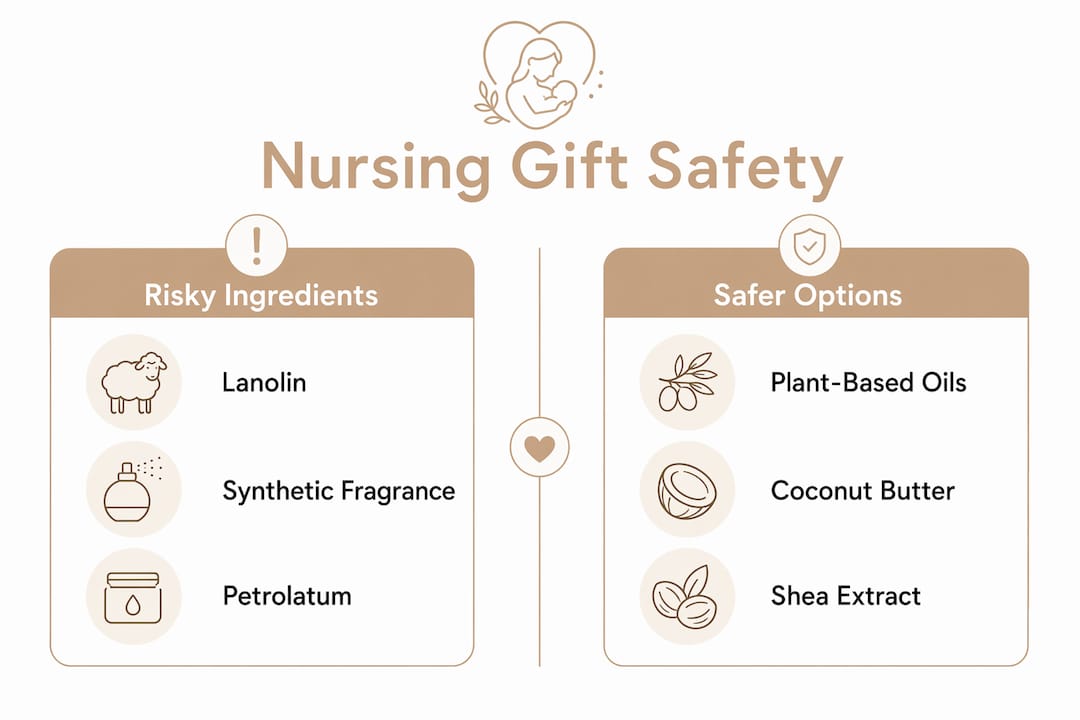
For topical products used during breastfeeding, the guiding principle is simple: what touches the breast can reach the baby. Scented products and concentrated essential oils are widely advised against near nursing because newborns are sensitive to scent and it can affect latching.
Ingredients to avoid or limit:
- High concentrations of essential oils (peppermint, eucalyptus, camphor)
- Synthetic fragrances and parfum
- Alcohol-based topicals on broken or sensitive skin
- Retinoids and salicylic acid in skincare
Generally safe plant-based alternatives:
- Shea butter, coconut oil, calendula, chamomile, aloe vera
- Fragrance-free or very lightly botanical-scented formulations
- Oat-based bath soaks for sensitive skin
For postpartum skincare safety, check ingredient lists carefully and consult an IBCLC or GP if you are unsure about a specific product.
| Product type | Common risky ingredients | Safer plant-based options |
|---|---|---|
| Nipple balm | Lanolin (allergy risk), synthetic fragrance | Shea butter, calendula, coconut oil |
| Body cream | Retinoids, parabens, parfum | Aloe vera, chamomile, fragrance-free base |
| Herbal tea | Sage, parsley (may reduce supply) | Fenugreek, fennel, oat straw |
| Bath soak | Synthetic dyes, strong essential oils | Epsom salts, dried chamomile, oat milk |
When to consult a professional: if the mother has a known allergy, a skin condition, or is taking medication, check with an IBCLC or GP before gifting topical or ingestible products.
Curated plant-based nursing gift ideas available in the UK
The strongest gift categories for breastfeeding mothers are topical healing, hydration, comfortable clothing, ready food, and professional support. Here are practical options across each:
- Nipple balm: a lanolin-free nipple balm made with plant-based ingredients is safe for baby and requires no wiping off before feeding
- Hydration: a wide-mouth, one-handed water bottle; lactation teas with fenugreek or fennel
- Breast pads: reusable bamboo pads for softness and absorbency with easy machine washing
- Bath soak: herbal or oat-based soaks for perineal healing and general relaxation; a foaming tallow bath butter is one gentle option for sleep support
- Clothing: nursing-friendly tops or bras in soft modal or bamboo fabric
- Food: lactation snack boxes, meal delivery vouchers, or a batch of oat-based bakes
- Professional support: an IBCLC consultation voucher for feeding troubleshooting
Mumbubhub bundles worth knowing:
The Soothing Duo pairs a topical balm with a soothing oil for immediate nursing comfort. Both are plant-based and formulated without synthetic fragrance.

The Rest & Restore Bundle focuses on postpartum recovery: sleep support, gentle skincare, and relaxation. It suits the fourth trimester well.
The Mum to Be Essentials Bundle covers antenatal and early postpartum needs in one packaged set, making it a strong choice for a baby shower or pre-birth gift.
When to give a nursing gift and how to present it
Timing by phase:
- Antenatal (from 36 weeks): the Mum to Be Essentials Bundle, nipple balm, and nursing bras are all useful before birth
- First two weeks postpartum: prioritise immediate comfort, healing soaks, and ready food
- Weeks 3–12: hydration, lactation snacks, IBCLC vouchers, and rest-focused products remain relevant long after the initial gifts arrive
Presentation tips:
- Use fragrance-free tissue paper or plain kraft wrap; scented wrapping can be overwhelming
- Include a brief handwritten note listing what each item is for
- For a hamper, add a card offering a specific service: “I’ll bring dinner on Tuesday”
Budget bands:
- Under £20: nipple balm, lactation tea, reusable breast pads, a meal contribution
- £20–£50: a curated bundle such as the Soothing Duo or a meal delivery voucher
- £50+: Rest & Restore Bundle, IBCLC consultation, or a premium hamper combining several categories
Quick buyer checklist for a nursing mum gift
Use this before you buy or pack a hamper:
- [ ] Does it solve a feeding, comfort, or recovery need (not a baby need)?
- [ ] Can it be used one-handed?
- [ ] Is it fragrance-free or very lightly scented with safe botanicals?
- [ ] Is it machine-washable or easy to clean?
- [ ] Have you checked the ingredient list against the safety table above?
- [ ] Have you included a service or time offer (meal, cleaning, IBCLC session)?
- [ ] Does the total sit within a budget the recipient would feel comfortable with?
- [ ] Have you added a note with the recipient’s feeding plan or dietary restrictions?
Key takeaways
A nursing mum gift prioritises the mother’s comfort, recovery, and breastfeeding accessibility over baby items, with plant-based, fragrance-free formulations being the safest and most appreciated choice.
| Point | Details |
|---|---|
| Function over novelty | Choose items that solve feeding, healing, or accessibility needs rather than decorative gifts. |
| Fragrance-free matters | Concentrated scents can affect latching; opt for unscented or lightly botanical products. |
| Ease of care counts | Machine-washable, one-handed, and low-maintenance items get used; high-maintenance ones do not. |
| Time beats things | A meal delivery or IBCLC session often has more impact than any physical product. |
| Mumbubhub bundles | The Soothing Duo, Rest & Restore Bundle, and Mum to Be Essentials Bundle are plant-based, UK-available, and ready to gift. |
The gifts that actually get used
Most people buying for a new mother mean well. The problem is that “thoughtful” and “useful” are not the same thing, and the gap between them is widest in the nursing category. A beautiful candle smells wonderful until you remember that a newborn is inches away. A hand-cream set sits unopened because she cannot spare both hands to apply it.
What I keep coming back to is this: the best nursing gifts remove a burden rather than add an object. A plant-based nipple balm that requires no wiping off before feeding. A bath soak she can use in ten minutes while someone else holds the baby. A meal on the doorstep on a Tuesday. These are not glamorous gifts, but they are the ones mothers mention months later.
Mumbubhub’s approach, formulating products without synthetic fragrance or unnecessary additives, reflects exactly that logic. The postpartum recovery range is built around what a nursing mother’s body actually needs, not what looks good in a photograph.
Plant-based nursing bundles, ready to give
If you want a ready-made option that already passes the checklist above, Mumbubhub’s curated bundles are a practical starting point.
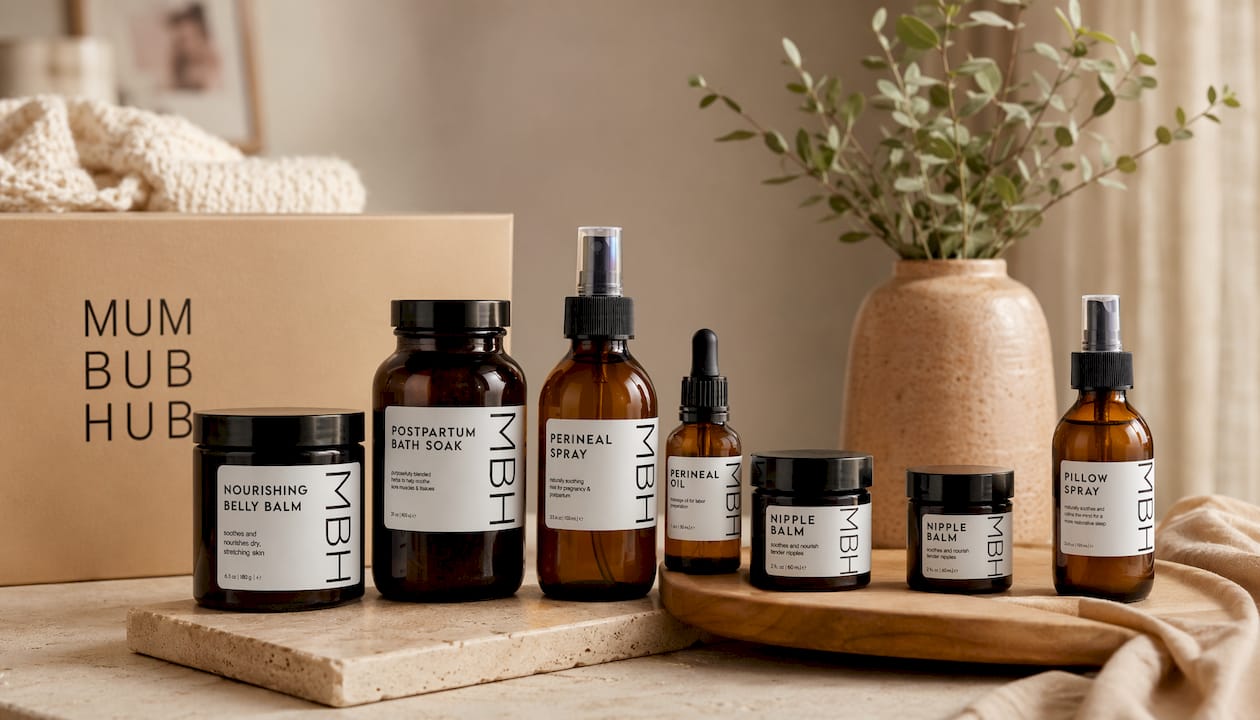
The Soothing Duo addresses immediate nursing discomfort with a plant-based balm and soothing oil, both free from synthetic fragrance. The Rest & Restore Bundle supports the fourth trimester with sleep and recovery products formulated for sensitive postpartum skin. For an antenatal gift, the Mum to Be Essentials Bundle covers the transition from pregnancy into early motherhood in one thoughtfully packaged set.
Every product lists its ingredients transparently, and a portion of Mumbubhub’s profits supports maternal health initiatives. Browse the full range and order directly at mumbubhub.co.uk.
Useful sources
- NHS — Breastfeeding: UK-specific guidance on breastfeeding support, positioning, and when to seek help
- World Health Organization — Breastfeeding: global evidence base for breastfeeding recommendations and maternal nutrition
- Mumbubhub postpartum skincare FAQs: answers to common ingredient and safety questions for postpartum and nursing skin
- Why nipple balm matters for breastfeeding mums: ingredient guidance and application advice from Mumbubhub
- Lactation Room — gifts for expecting mums: IBCLC-informed gift guide covering feeding support and postpartum comfort
- IBCLC directory (UK): search via the International Lactation Consultant Association to find a certified lactation consultant near you
FAQ
What is a nursing mum gift, exactly?
A nursing mum gift is any item or service chosen to support a breastfeeding mother’s comfort, recovery, or feeding accessibility rather than to celebrate the baby. Common examples include nipple balm, herbal bath soaks, lactation teas, and IBCLC consultation vouchers.
Are scented products safe to give a breastfeeding mother?
Heavily scented products are generally advised against near nursing because newborns are sensitive to scent and strong fragrances can affect latching. Choose fragrance-free or very lightly botanical-scented formulations instead.
When is the best time to give a nursing gift?
Antenatal gifts (from around 36 weeks) work well for items like nipple balm and nursing bras. Postpartum gifts are most appreciated in the first 12 weeks, with food, hydration, and rest-focused products remaining useful well beyond the initial newborn period.
What budget should I set for a nursing mum gift?
Meaningful gifts start under £20 (nipple balm, lactation tea, reusable breast pads) and scale to £50 or more for curated bundles or professional support vouchers. The Mumbubhub Soothing Duo and Rest & Restore Bundle sit in the £20–£50 range.
Are Mumbubhub bundles safe for breastfeeding mothers?
Mumbubhub formulates its products with plant-based ingredients and without synthetic fragrance, making them suitable for the nursing period. Check the full ingredient list on each product page, and consult your GP or IBCLC if you have a specific allergy or skin condition.