

Stretch mark oil in pregnancy: what actually works
Using a stretch mark oil during pregnancy is safe, generally helpful for skin comfort and hydration, and widely recommended by midwives — but NHS guidance is clear that stretch marks develop in a majority of pregnant women, and no topical product reliably prevents them. Genetics and the speed of skin stretching are the main drivers. The honest verdict: use a pregnancy-safe oil because it eases dryness, relieves itch, and makes daily skin care feel good — not because it guarantees a mark-free bump.
Key things to know before you buy:
- Stretch marks form when the dermis tears under rapid stretching; topical oils work at the surface and cannot change that process.
- Cochrane review evidence shows no topical preparation has strong, consistent proof of prevention.
- Some plant-based oils (sweet almond, sesame, Aloe vera) show promise in pooled trials, but study methods vary enough that no single product can claim a definitive win.
- Pregnancy-safe formulations, free from retinoids and high concentrations of essential oils, are the non-negotiable starting point.
Pro Tip: If you are unsure whether an ingredient is safe for your stage of pregnancy, photograph the INCI list on your phone and show it to your midwife at your next appointment — it takes thirty seconds and removes all guesswork.
Key takeaways
No topical oil reliably prevents pregnancy stretch marks, but using a pregnancy-safe oil daily from the second trimester supports hydration, relieves itch, and is a sensible part of broader skin care.
| Point | Details |
|---|---|
| Realistic expectations | Oils hydrate and soothe; they do not reliably prevent marks driven by genetics and rapid stretching. |
| Start timing | Begin from around week 13–14, or earlier if skin is already dry or itchy. |
| Ingredients to seek | Sweet almond oil, sesame oil, Aloe vera, centella, and hyaluronic acid have the strongest (if still limited) evidence. |
| Safety first | Avoid retinoids and high-dose essential oils; patch test before full application and consult your midwife with any concerns. |
| Mumbubhub option | Mumbubhub’s plant-based pregnancy bump oil is UK-available, clearly labelled, and formulated for pregnancy-safe daily use. |
Table of Contents
- What do stretch mark oils actually do during pregnancy?
- Which ingredients should you look for, and which should you avoid?
- Safety checklist: when should you stop or speak to a midwife?
- When should you start, and how do you apply it?
- How do you choose a pregnancy-safe stretch mark oil in the UK?
- What does the research actually say?
- Why the “prevention” framing around bump oils misses the point
- Mumbubhub’s pregnancy bump oil and bundles for UK buyers
- Further reading and sources
- FAQ
What do stretch mark oils actually do during pregnancy?
The benefits are real; they are just more modest than most product marketing suggests.
Hydration and barrier support. Oils and emollients seal moisture into the skin’s outer layer, reducing dryness and flaking as your bump grows. A well-hydrated skin surface is more pliable, which is why dermatologists consistently recommend moisturising as part of a natural pregnancy skincare routine even when prevention evidence is limited.
Itch relief. The itching that comes with a stretching belly is one of the most common pregnancy complaints. Oils create a physical barrier that calms surface irritation and reduces the urge to scratch. If your itch is severe or accompanied by a rash, that warrants a separate conversation with your midwife — read more about itchy pregnant belly causes and relief before reaching for any topical product.
Texture and appearance. Regular oiling can improve how skin feels and may soften the appearance of early, red-phase marks. What it cannot do is stop new marks forming once the dermis has already torn.
Comfort and ritual. Daily massage with a warm oil is genuinely calming. The American Pregnancy Association notes that keeping skin supple through hydration, nutrition, and exercise works alongside topical products rather than being replaced by them. A five-minute evening massage is a low-effort habit with real comfort payoff, even if the prevention science is mixed.
Which ingredients should you look for, and which should you avoid?
Ingredients with some supportive evidence
- Sweet almond oil and sesame oil. A meta-analysis of 12 RCTs (n = 1,956) found herbal treatments including sweet almond oil and sesame oil were associated with a reduced incidence of stretch marks versus placebo (OR = 0.47, 95% CI 0.28–0.79), though high heterogeneity between trials means results should be treated with caution.
- Aloe vera. Included in the same pooled analysis with a positive signal; evidence on Aloe vera’s soothing properties for pregnancy skin is among the more consistent in the herbal literature.
- Centella asiatica. A clinical review on PubMed identifies limited evidence that centella may reduce severity; it remains one of the more studied actives in this category.
- Hyaluronic acid and glycerin. Both are well-established humectants. The clinical review rates hyaluronic acid as showing weak evidence for prevention, but its hydration credentials are solid and it is considered pregnancy-safe.
Ingredients that moisturise but do not prevent marks
Cocoa butter and olive oil are popular, but the same PubMed review finds no clear prevention benefit for either. Both are fine for moisturising; just do not expect them to stop marks forming.
Safety checklist: when should you stop or speak to a midwife?
Stop using any topical product immediately if you notice:
- A rash, hives, or significant redness at the application site.
- Severe or worsening skin irritation that does not settle within 24 hours.
- Sudden swelling or skin changes that feel unusual for your stage of pregnancy.
Speak to your midwife or GP if:
- You develop new, severe skin changes across a wide area (not just at the application site).
- There are signs of infection: broken skin, weeping, or warmth around a mark.
- You are unsure whether a specific ingredient is safe, particularly if you are taking any prescribed medication.
Routine safety steps every pregnant woman should follow:
- Patch test first. Apply a small amount to the inside of your forearm, leave for 24 hours, and check for any reaction before using on your bump.
- Avoid broken or inflamed skin. Never apply oil to open skin or active dermatitis.
- Check again if you move to breastfeeding. Some ingredients safe in pregnancy need a second check for breastfeeding; your midwife or a pharmacist can advise.
- Retinoids are a hard no. Review your full skincare routine, not just your bump oil, for hidden retinoid sources. For a full guide to pregnancy-safe skincare, Mumbubhub’s blog covers what to keep and what to swap out.
When should you start, and how do you apply it?
Timing
Most practitioners suggest starting from the beginning of the second trimester (around week 13–14), when the bump begins to grow more noticeably. If your skin is already dry or itchy in the first trimester, starting earlier for comfort is perfectly reasonable. The evidence for prevention is weak at any stage, so the goal from day one is hydration and comfort rather than a race to beat the marks.
How often
Daily application is the standard recommendation. A common routine is a lighter cream or lotion in the morning and a richer oil in the evening, when skin has more time to absorb without clothing friction. Consistency matters more than the exact time of day.
Step-by-step application
- Warm a few drops of oil between your palms before applying — cold oil on a bump is uncomfortable.
- Start at the base of your bump and work upward in slow, circular motions using your whole palm, not fingertips.
- Extend to the sides of your abdomen, hips, and lower back, where marks also commonly appear.
- Use gentle pressure only. Vigorous rubbing adds no benefit and can irritate sensitive pregnancy skin.
- Allow a minute or two for the oil to absorb before dressing.
Pro Tip: Three to four drops of oil is usually enough for a full bump application. More does not mean better absorption — excess oil just transfers to your clothing.
Dos and don’ts
- Do combine oiling with adequate daily water intake and a diet rich in vitamins C and E, which support collagen production.
- Do not ingest topical products, however natural the ingredients.
- Do not apply to the nipple area unless the product is specifically formulated for that purpose.
How do you choose a pregnancy-safe stretch mark oil in the UK?
Buying checklist
- Ingredient panel free from retinoids, high-dose essential oils, and unspecified “fragrance” or “parfum.”
- Clear INCI labelling in full, not just marketing names.
- Manufactured or distributed by a UK-based seller with visible contact details and a clear returns policy.
- Any clinical or dermatological testing statement should specify what was tested and on whom — “dermatologically tested” alone tells you little.
Red flags on packaging
- Medicinal claims (“clinically proven to eliminate stretch marks”) without a cited trial or regulatory approval.
- Essential oils listed without pregnancy guidance or concentration information.
- No batch number, manufacturer address, or safety data.
What to prioritise
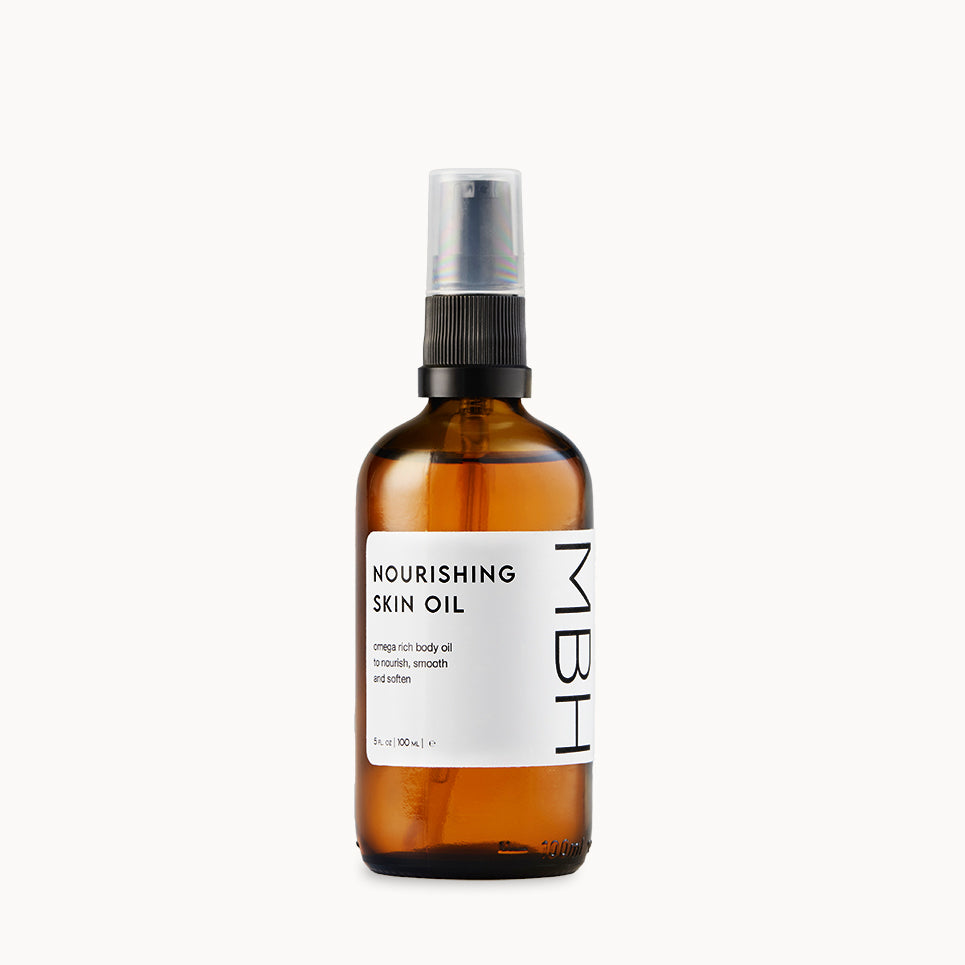
Plant oils with well-established safety profiles (sweet almond, jojoba, rosehip in low concentrations) are a sensible base. Low or no added fragrance is preferable for sensitive pregnancy skin. Mumbubhub’s pregnancy bump oil is formulated with plant-based ingredients, carries clear INCI labelling, and is available with UK shipping — making it a straightforward choice for UK shoppers who want a product designed with pregnancy safety in mind.
What does the research actually say?
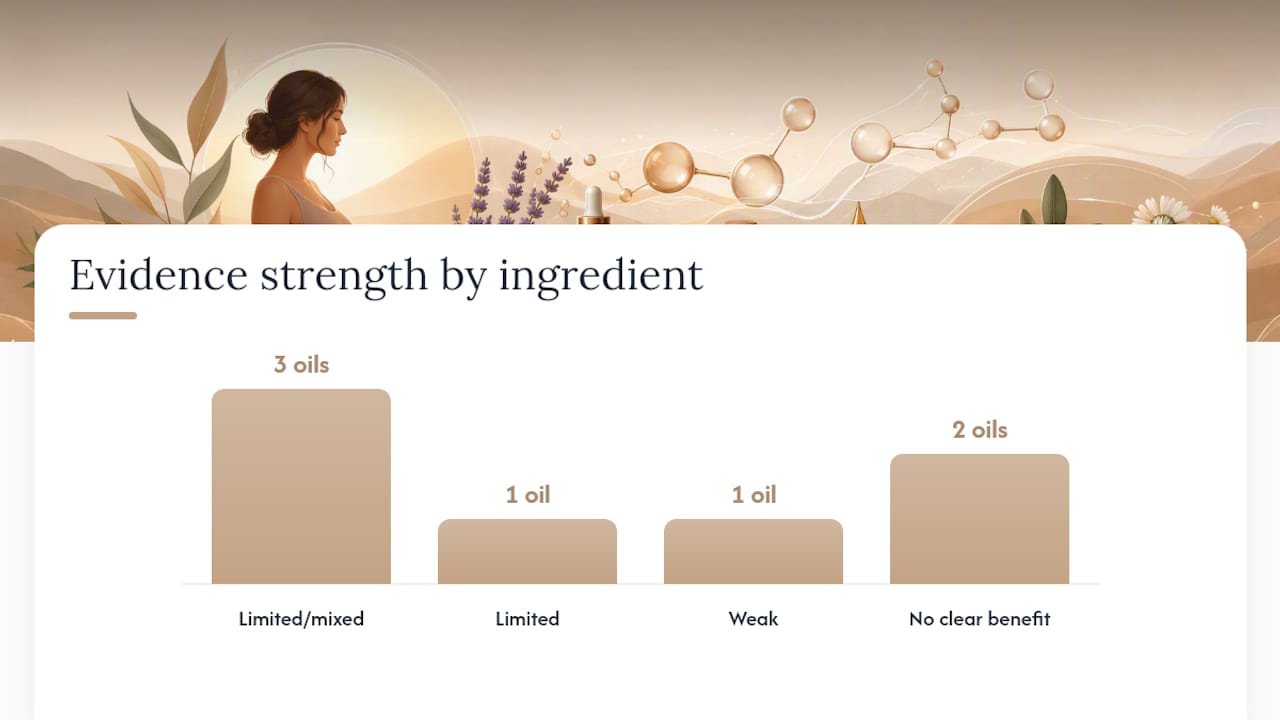
The honest summary: no topical product has strong, consistent clinical evidence to prevent stretch marks in pregnancy.
| Ingredient | Evidence level | Notes |
|---|---|---|
| Sweet almond oil | Limited/mixed | Positive signal in pooled herbal RCTs (OR 0.47); high heterogeneity |
| Sesame oil | Limited/mixed | Included in same meta-analysis; results cautious |
| Aloe vera | Limited/mixed | Pooled positive signal; study methods vary |
| Centella asiatica | Limited | Clinical review notes possible severity reduction |
| Hyaluronic acid | Weak | Good humectant; weak prevention evidence |
| Cocoa butter | No clear benefit | Popular but not effective for prevention per clinical review |
| Olive oil | No clear benefit | Moisturising but no prevention evidence |
The Cochrane review found no statistically significant prevention benefit from any topical preparation; trials were small and heterogeneous. The PubMed clinical review adds that targeting higher-risk women (those with a family history or carrying multiples) may be a more sensible approach than universal prevention claims. Consumer Reports echoes this: moisturising ingredients support skin appearance, but no single active has cracked reliable prevention.
What the evidence does support is comfort. Oils reduce dryness, ease itch, and make the daily ritual of caring for a growing body feel worthwhile — which is a legitimate reason to use them, separate from any prevention claim.
Why the “prevention” framing around bump oils misses the point
The conversation around stretch mark oils tends to get stuck on whether they prevent marks. That framing sets up every product to fail, because the honest answer is almost always “not reliably.” What gets lost is the more useful question: does daily oiling make pregnancy more comfortable?
The answer to that is yes, and the evidence for comfort is not contested. Dry, itchy skin on a growing bump is genuinely unpleasant. A daily oil massage takes five minutes, costs very little relative to the discomfort it addresses, and has a strong safety profile when the right ingredients are used. The ritual itself has value — it is a moment of deliberate physical care during a period when your body is doing something extraordinary and often uncomfortable.
The marks that do appear are largely written in your genetics before you even buy a product. Knowing that is not defeatist; it is freeing. You can use a bump oil for the right reasons — comfort, hydration, a small daily act of self-care — without the weight of expecting it to do something it was never designed to do. That shift in framing is what Mumbubhub builds its pregnancy range around: products that are honest about what they offer and genuinely useful for what they claim.
Mumbubhub’s pregnancy bump oil and bundles for UK buyers
Mumbubhub’s pregnancy bump oil is plant-based, free from retinoids and synthetic fragrance, and formulated specifically for use during pregnancy. It fits neatly into the evening step of a daily routine: a few drops warmed between the palms, massaged gently over the bump, hips, and lower back. The INCI list is published in full on the product page, so you can check every ingredient against your midwife’s guidance before you buy.
For gifting or a broader care kit, several bundles pair well with the bump oil:
- Mum to Be Essentials Bundle — the most complete option for expectant mothers, covering pregnancy and early postpartum.
- Prep and Recover Bundle — useful for shoppers planning beyond pregnancy into birth preparation and recovery.
- Postpartum Essentials Bundle — for those thinking ahead to the fourth trimester.
- Rest & Restore Bundle — a self-care pairing for relaxation and skin comfort.
- Soothing Duo — a lower-priced entry point for first-time buyers.
- Me Time Self Care Bundle — pairs well with the bump oil for a fuller evening routine.
Browse the full pregnancy essentials collection to find the right fit, or contact Mumbubhub directly with any ingredient questions before ordering.
Further reading and sources
For readers who want to go deeper into the evidence:
- Stretch marks in pregnancy - NHS
- Topical preparations for preventing stretch marks in pregnancy | Cochrane
- Stretch marks during pregnancy: a review of topical prevention (PubMed)
- The effectiveness of herbal remedies in preventing striae gravidarum: A systematic review and meta-analysis
- Best stretch mark cream for pregnancy | Consumer Reports
- How to Prevent Stretch Marks | American Pregnancy Association
Discuss any of these findings with your midwife, particularly if you are in a higher-risk group (multiple pregnancy, significant weight gain, strong family history). For product questions, Mumbubhub’s team is reachable via the website.
FAQ
What is the best oil for stretch marks during pregnancy?
Sweet almond oil, sesame oil, and Aloe vera have the most trial evidence among plant-based options, though all findings come with caveats around study heterogeneity. Mumbubhub’s pregnancy bump oil uses plant-based ingredients with a clear INCI list, making it a practical UK choice.
Can you use stretch mark oil throughout pregnancy?
Yes, pregnancy-safe oils free from retinoids and high-dose essential oils can be used throughout pregnancy. Patch test before starting and check the ingredient list with your midwife if you have any concerns.
When should you start oiling your bump to prevent stretch marks?
Most guidance suggests starting around week 13–14 (the beginning of the second trimester), though starting earlier for comfort and hydration is fine. The NHS notes that no topical product is proven to prevent marks, so the goal is skin comfort rather than guaranteed prevention.
Does oiling your bump actually stop stretch marks forming?
Not reliably. Stretch marks are largely determined by genetics and the rate of skin stretching, and no topical oil has strong clinical evidence to prevent them. Daily oiling does support hydration and itch relief, which are worthwhile benefits in their own right.